

Pregnancy Timeline
–
Pregnancy: Popping noise in the belly — should you be concerned?
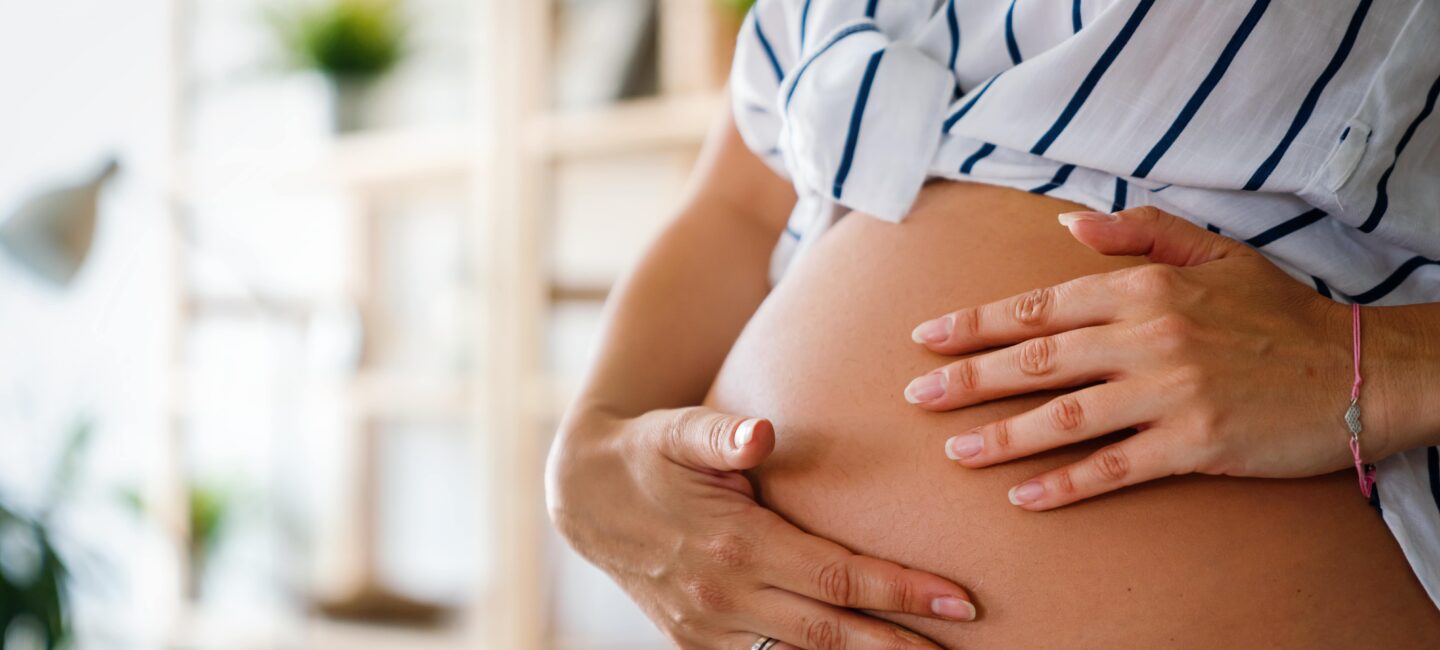
We can no longer count the number of bodily changes that pregnancy brings. After all, creating and sheltering a little human for 9 months requires quite a few adaptations from our body!
However, sometimes, some of these changes can be painful. Today we’re talking about the pubic symphysis: what it is, how to relieve the pain, and most importantly, how to prevent it!
The pubic symphysis is a fibrous cartilage tissue located in front of the bladder and above the genitals. It connects the two sides of the pelvis, forming the junction between the two pubic bones (left and right). Normally, it has very little mobility.
During pregnancy, hormonal changes cause the pelvic ligaments to loosen. This loosening makes the joints (including the pubic symphysis) more mobile, allowing the bones to move and create space for the baby.
Unfortunately, this loosening can also cause discomfort or even very intense pain.
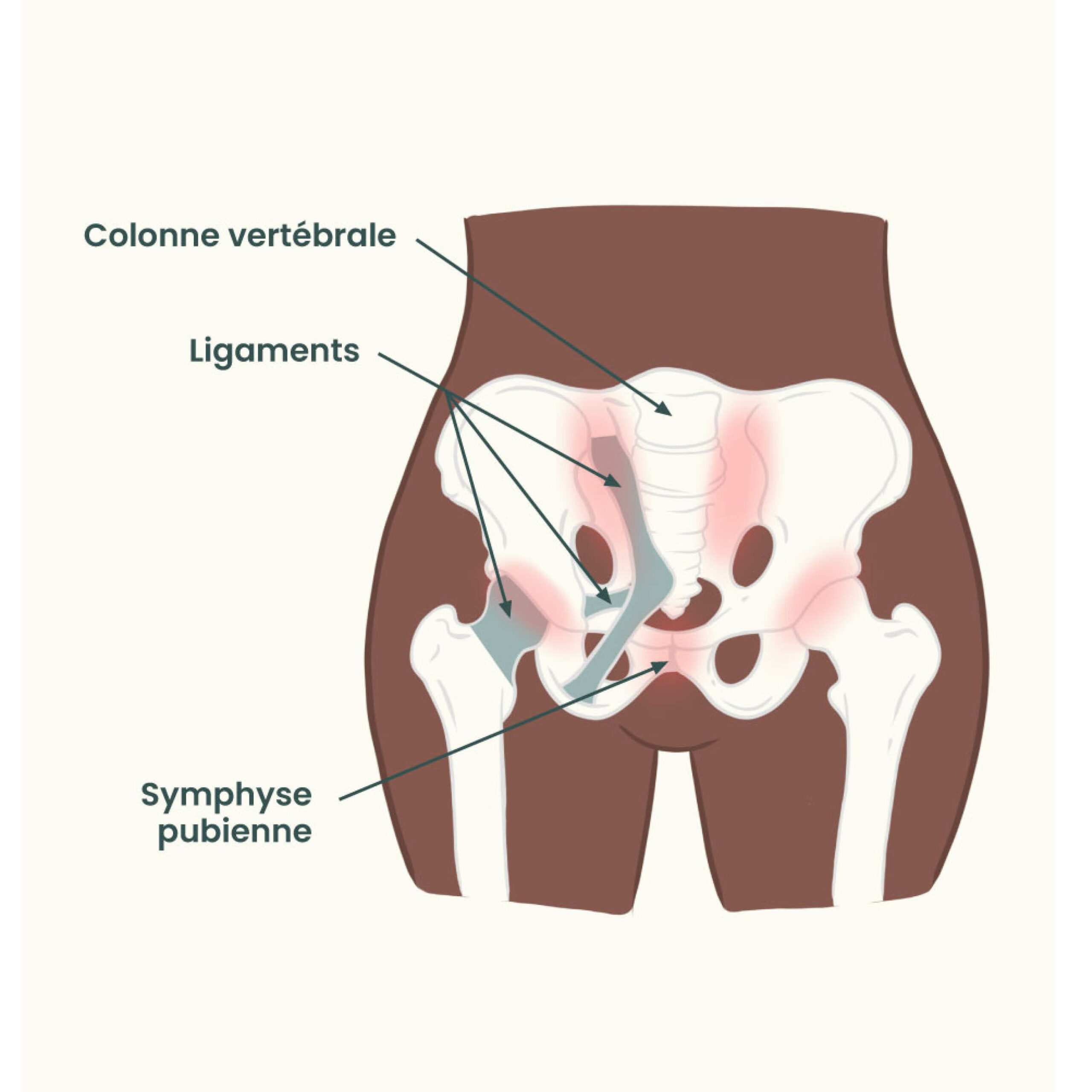
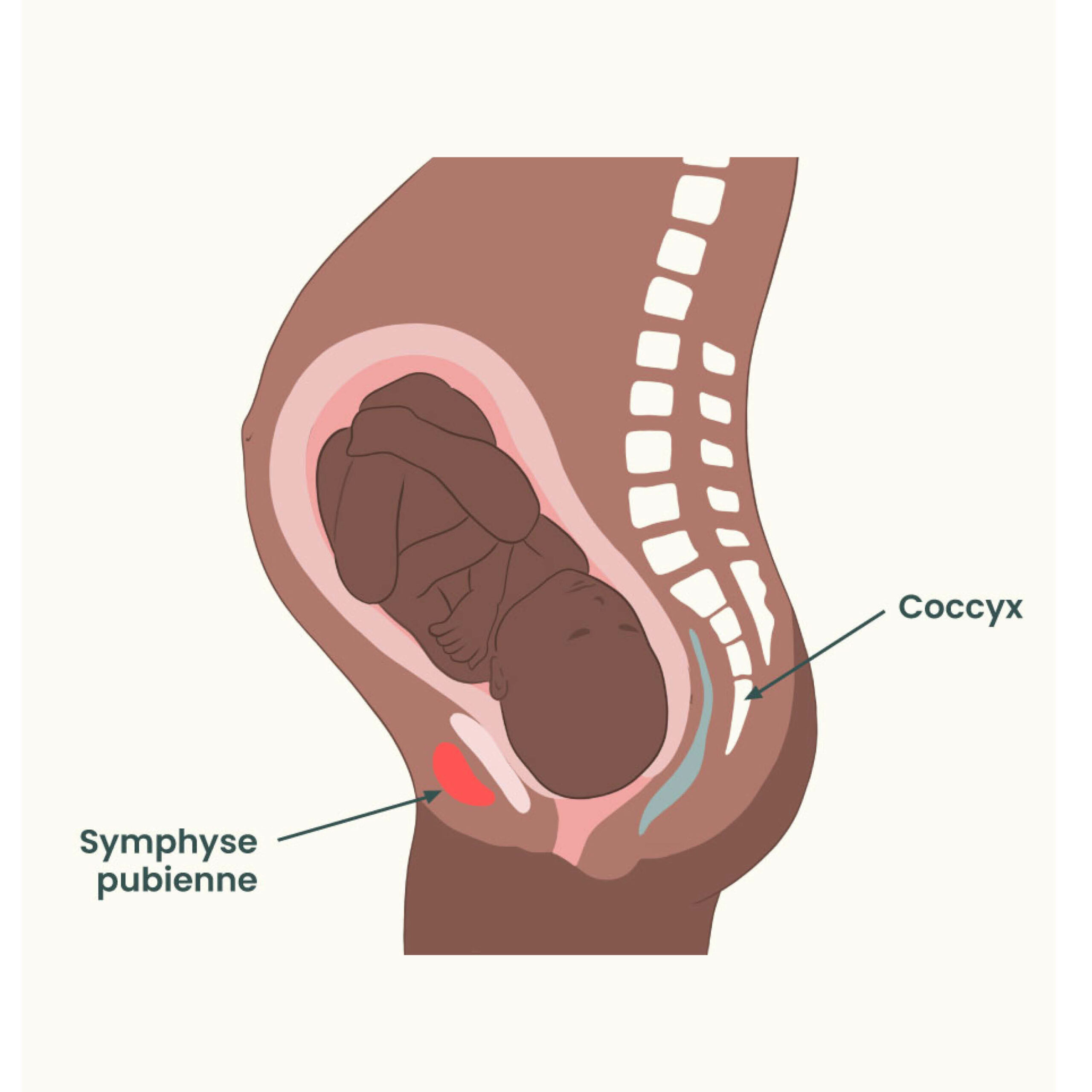
There are several reasons that can explain pain in the pubic symphysis area during pregnancy.
In case you were wondering: yes, it’s hormones again! Relaxin is a hormone secreted a few weeks before childbirth. It relaxes the pelvic ligaments and the pubic symphysis.
A diastasis (or separation) is a widening at the level of the pubic symphysis, which is often painful. These pains usually occur in the third trimester, when childbirth is near.
The pain can range from mild discomfort to intense pain felt during physical effort or even just walking a few steps.
Sometimes, the pain is so sharp that it requires walking with crutches. This is called Lacomme’s syndrome. It tends to affect women who have already experienced multiple pregnancies.
The pain can also worsen depending on your fatigue, your posture (especially at night), or appear only during specific movements.
Want to learn more? Feel free to download the May app, where you’ll find plenty of resources to support and guide you throughout your pregnancy.
In general, these types of musculoskeletal problems are not serious or dangerous for your health or your baby’s. Uncomfortable, yes. Painful, often. But not serious — that’s at least the positive side.
That said, the pain can be hard to bear: don’t hesitate to consult the healthcare professional following your pregnancy. They can determine whether it really is a pubic symphysis problem and recommend exercises, postures, treatment, and/or sick leave depending on your situation.
It is also possible that you may be referred to a rheumatologist: a specialist in musculoskeletal pain (not just rheumatism).
❗And of course, in case of sudden, severe, and/or unusual pain, listen to your body and go to the emergency room quickly!
Unfortunately, there’s no miracle cure that works for all women without exception, but you can still try one of these solutions:
Good news: you can take action to prevent and/or reduce pubic symphysis pain by adopting a few habits.
Your joints and muscles dislike immobility! Unless contraindicated, you can try (re)taking up gentle physical activity such as walking, swimming, water aerobics, stationary biking, yoga, Pilates, stretching…
Be careful, though: in case of significant pelvic pain, long walks are discouraged, as they can cause considerable discomfort.
Always adapt your program to your pregnancy. In any case, remember to listen to yourself. You can ask your doctor’s advice and practice reasonably (for example, avoid sports with risks of blows or falls).
This applies to life in general, but it’s especially important during pregnancy. If you suffer from pubic symphysis pain, some positions can be particularly uncomfortable. It’s important to learn to recognize and avoid them.
In general, try to keep your back straight, avoid crossing your legs, push off with your arm to roll onto your side when getting up in the morning, bend your knees and keep your back straight when bending down.
The pregnancy belt is specially designed to help you maintain your pelvis in the right position and support the weight of your belly. Ideally, choose a thin model without stays so as not to restrict your movements.
The pregnancy ball is very useful for relieving pain and forces you to sit upright. As a bonus, the ball allows you to move during otherwise static moments (watching a movie or series, for example). Ask for advice to choose one suited to your size.
Indeed, weight gain is an aggravating factor for musculoskeletal pain. Limiting weight gain helps prevent ligament pain. This doesn’t mean depriving yourself, but rather trying to adopt a healthy diet. And if you need help, don’t hesitate to consult healthcare professionals — that’s what they’re there for!
Magnesium helps relieve ligament pain. You can find it in certain foods, such as bananas, but also in some dietary supplements. For supplements: ask a healthcare professional for advice.
Last but not least: childbirth. As mentioned earlier, pubic symphysis pain usually fades after delivery. Your hormones will gradually return to “normal” levels and your pubic symphysis will become fixed again (since it’s the mobility caused by relaxin that creates the pain).
Rest assured: pubic symphysis pain is not dangerous for you or your baby. We know, however, that it’s uncomfortable and even very painful, so we hope you’ll soon find what works best to relieve it!
Photo: nd3000, Envato
This text was translated from French by an artificial intelligence. The information, advice, and sources it contains comply with French standards and may therefore not apply to your situation. Make sure to complement this reading by visiting the May US/UK app and consulting the healthcare professionals who are supporting you.
These resources might interest you
Pregnancy: Popping noise in the belly — should you be concerned?