



The ring of fire is a sensation, sometimes feared, that occurs during childbirth. What exactly is it? What do you feel during dilation and the pushing phase? Can a good childbirth preparation help you avoid an episiotomy or a cesarean section? The ring of fire during childbirth: let’s take a closer look.
What is the ring of fire during childbirth?
The ring of fire is a figurative expression used to describe a very specific sensation experienced by many women during childbirth. This phenomenon occurs during the pushing phase, precisely when your baby’s head begins to pass through the vulva, also known as “crowning.” At this moment, your perineum stretches to its maximum to allow the largest part of your baby—its head—to pass through.
This intense stretching causes a strong burning sensation, hence the name “ring of fire”. This sensation can feel like a burning ring, with varying intensity. Although this moment is often feared, it usually lasts only a few minutes, just long enough for your baby’s head to fully emerge.
Want to learn more? Feel free to download the May app, where you’ll find plenty of resources to support and guide you throughout your pregnancy. 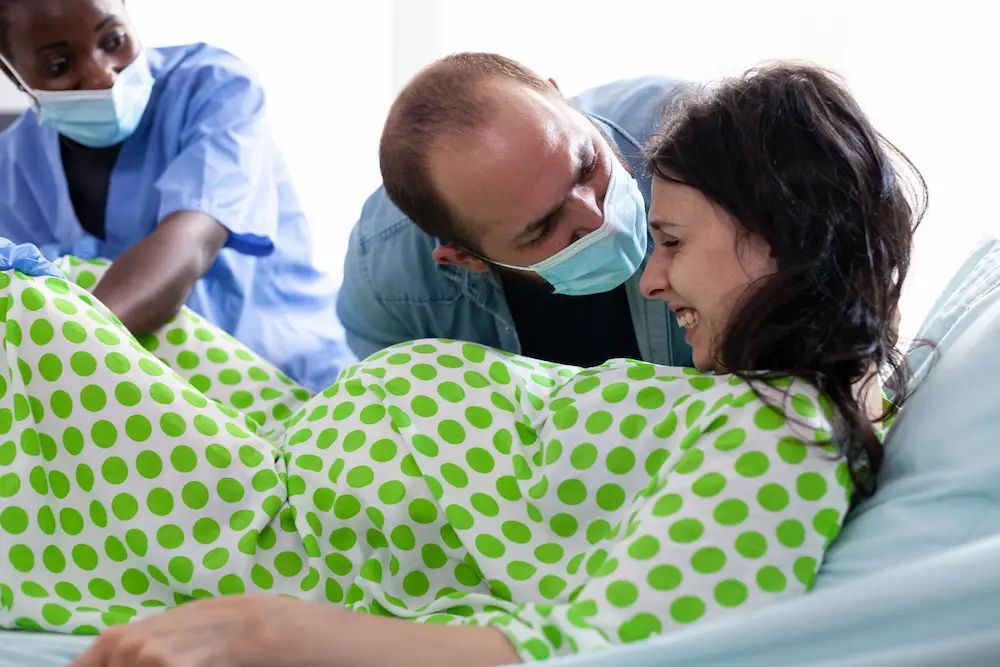
Sensations experienced during the ring of fire in childbirth
To better understand this very particular moment, it is helpful to explore both the physical causes and the emotional feelings that accompany it.
Ring of fire: causes of the burning sensation
This sensation comes from the extreme stretching of the tissues of the perineum and vulva, as your baby’s head—the largest part of their body—begins to emerge. Several factors can influence the intensity of this sensation:
- The elasticity of your perineum: the more flexible it is, the less intense the burning sensation will be.
- The speed of pushing: a rapid exit increases pain; slower progression, guided by the midwife, allows tissues to stretch gradually and reduces discomfort.
- The presence or absence of an epidural: with a very effective epidural, the sensation may be greatly reduced or even absent. If the dose is lowered to better feel contractions and assist pushing, the burning sensation may still occur.
- The birthing position: some positions can promote better stretching of the perineum.
- The number of previous births: during a first birth, tissues are generally less flexible, which can intensify the sensation.
Ring of fire: emotional and psychological experience
Beyond the physical sensation, the ring of fire is also an emotionally intense stage. The intensity of the pain can be striking, but it is often accompanied by deep excitement, as it signals your baby’s imminent birth. This phase may also come with a feeling of loss of control.
The burning sensation is sudden and can cause anxiety, especially during a first birth. At the same time, a natural surge of adrenaline occurs, providing the energy needed for the final push. Managing these emotions can be easier with good childbirth preparation, a trusting relationship with the medical team, and the use of breathing and relaxation techniques. 
Preparing for and anticipating the ring of fire during childbirth
Preparing for this key moment, both physically and mentally, and anticipating the support you will receive at the maternity ward helps you approach your baby’s delivery with more confidence and calm.
Physical and mental preparation
Good childbirth preparation plays an essential role in having a more positive birth experience. Sessions offered by midwives or at the maternity ward cover effective techniques that help you navigate each stage, from dilation to your newborn’s birth. Here are some tips and exercises to prioritize:
- Controlled breathing: learning to breathe calmly during contractions and especially while pushing helps oxygenate your body and relax the perineum during crowning. Deep breathing exercises or “exhaling breaths” are particularly recommended.
- Relaxation: relaxation sessions, sophrology, or guided meditation can help you stay confident and better manage childbirth pain.
- Visualization: imagining your baby’s progress through the pelvis, or seeing each contraction as a wave bringing you closer to meeting your baby, can strengthen your ability to let go.
- Pelvic mobility exercises: practicing gentle movements before birth promotes perineal flexibility and facilitates delivery.
- Perineal massage: this can help soften the perineum and make you more familiar with the area.
- Learning about epidurals and alternatives: understanding how an epidural affects the perception of the ring of fire helps you anticipate your choices on the big day and discuss them with the anesthesiologist or obstetrician.
The role of medical support and your partner during childbirth
Support from the medical team and the person accompanying you to the maternity ward is crucial for experiencing the ring of fire with greater calm.
- Midwives, gynecologists, obstetricians: these professionals ensure your safety and your baby’s. During crowning, they guide you on how to push, encourage you to slow down if needed, and protect your perineum to reduce the risk of tearing or episiotomy.
- Your partner or support person: the person accompanying you plays a key role. Their presence, encouraging words, a hand to hold, or a reassuring look can provide the energy and confidence you need.
- Communication with the team: don’t hesitate to express your needs, fears, or wishes to healthcare professionals. They will adapt their support whether you choose an epidural, are awaiting a cesarean, or wish to attempt a natural birth.
What are the effects after the ring of fire?
After experiencing the ring of fire during childbirth, many mothers wonder what to expect, both physically and psychologically. Physically, the perineum has undergone exceptional stretching. It is completely normal to experience:
- A lingering burning or tingling sensation, sometimes accompanied by slight numbness.
- Swelling or mild pain in the perineal area.
- Perineal injuries: despite careful attention from midwives, small tears or, more rarely, an episiotomy may occur. These are quickly treated by the midwife, often with local anesthesia.
- Difficulty sitting or walking in the first few days, especially if the tissues were heavily strained or stitches were required.
Psychologically, going through the ring of fire can leave a strong emotional imprint. It is common to need time to process the experience, especially after a long labor, the use of forceps, or a vaginal birth attempt followed by a cesarean. To support good recovery, here are some tips:
- Don’t hesitate to ask for help: the maternity team can offer appropriate care and answer your questions about recovery after birth or postpartum.
- Practice gentle hygiene: avoid rubbing the perineal area, allow it to air dry, and change sanitary protection regularly.
- Don’t push yourself: adopt comfortable positions for breastfeeding and rest, using cushions if needed.
- Stay attentive to your body: if you experience intense pain, heavy bleeding, or fever after childbirth, report it promptly to your midwife or gynecologist.
Finally, keep in mind that recovery is unique to each woman: whether you gave birth with or without an epidural, vaginally or by cesarean, your body and mind need gentleness and time to recover from this stage.
Midwives and the entire maternity team remain your best allies in navigating the aftermath of the ring of fire and fully enjoying your newborn. In summary, the ring of fire is a brief but potentially intense sensation during childbirth. It is explained by several natural mechanisms of the body that help you bring your baby into the world. Preparing for it, understanding what is happening in your body, and being supported by a caring team make all the difference in experiencing it more calmly. Right after this intense moment comes one of the most powerful experiences: meeting your baby.
**
Photo credits: africaimages | DC_Studio | YuriArcursPeopleimages | VittorioGravino
This text was translated from French by an artificial intelligence. The information, advice, and sources it contains comply with French standards and may therefore not apply to your situation. Make sure to complement this reading by visiting the May US/UK app and consulting the healthcare professionals who are supporting you.