





Pregnancy Timeline
–

Headaches are among the most frequently encountered discomforts during pregnancy. Why do these headaches occur? Should you be concerned about them? How can they be relieved during pregnancy, and when should you seek medical advice?
Headaches during pregnancy: let’s take a closer look.
Pregnancy is a period that is particularly prone to headaches. Headaches are generally more common during the first trimester of pregnancy, mainly due to hormones such as estrogens, beta-hCG, or progesterone, which are produced in large amounts.
They are generally less frequent during the second trimester, commonly referred to as the “honeymoon phase” of pregnancy, due to the stabilization of hormone levels resulting in fewer pregnancy-related discomforts.
In addition to hormones, the main causes of headaches are:

There are different forms of headaches, which vary according to several criteria:
The term “headache” refers to all headaches, regardless of their origin or cause. There are two types of headaches:
When headaches are intense, recurrent and do not improve with acetaminophen and rest, they are considered a migraine attack. This neurological condition, which evolves in episodes, manifests as headaches affecting only one side (left or right) of the head.
Migraines may sometimes be associated with vomiting, visual flashes, and/or intolerance to light and sound. If you experience these symptoms, you should seek medical advice.
Want to learn more? Feel free to download the May app, where you’ll find plenty of resources to support and guide you throughout your pregnancy.
Headaches can be treated with medication. To do so, pain relievers such as acetaminophen may be taken. Specific anti-migraine medications or anti-inflammatory drugs before the 6th month of pregnancy may sometimes be prescribed by your doctor.
In all cases, self-medication should be avoided, and you should consult a healthcare professional if headaches persist despite taking acetaminophen. Ibuprofen, on the other hand, is not recommended during pregnancy due to the risk of miscarriage or cardiac complications for the baby.
Warning: taking aspirin is not harmless and is contraindicated from the 6th month of pregnancy onward.
Complementary medicine has also proven effective. This is particularly the case with acupuncture or homeopathy. If you prefer other remedies, we recommend applying warm or cold compresses to your forehead or neck and taking a warm bath.
To relieve headaches during pregnancy, feel free to:
Warning: essential oils are generally not recommended during pregnancy unless advised by a specialized healthcare professional.

When headaches are severe and accompanied by fatigue, visual disturbances, dizziness, or other neurological symptoms, it is necessary to seek urgent medical care. It is also recommended to consult in cases of persistent headaches that do not subside with rest or acetaminophen.
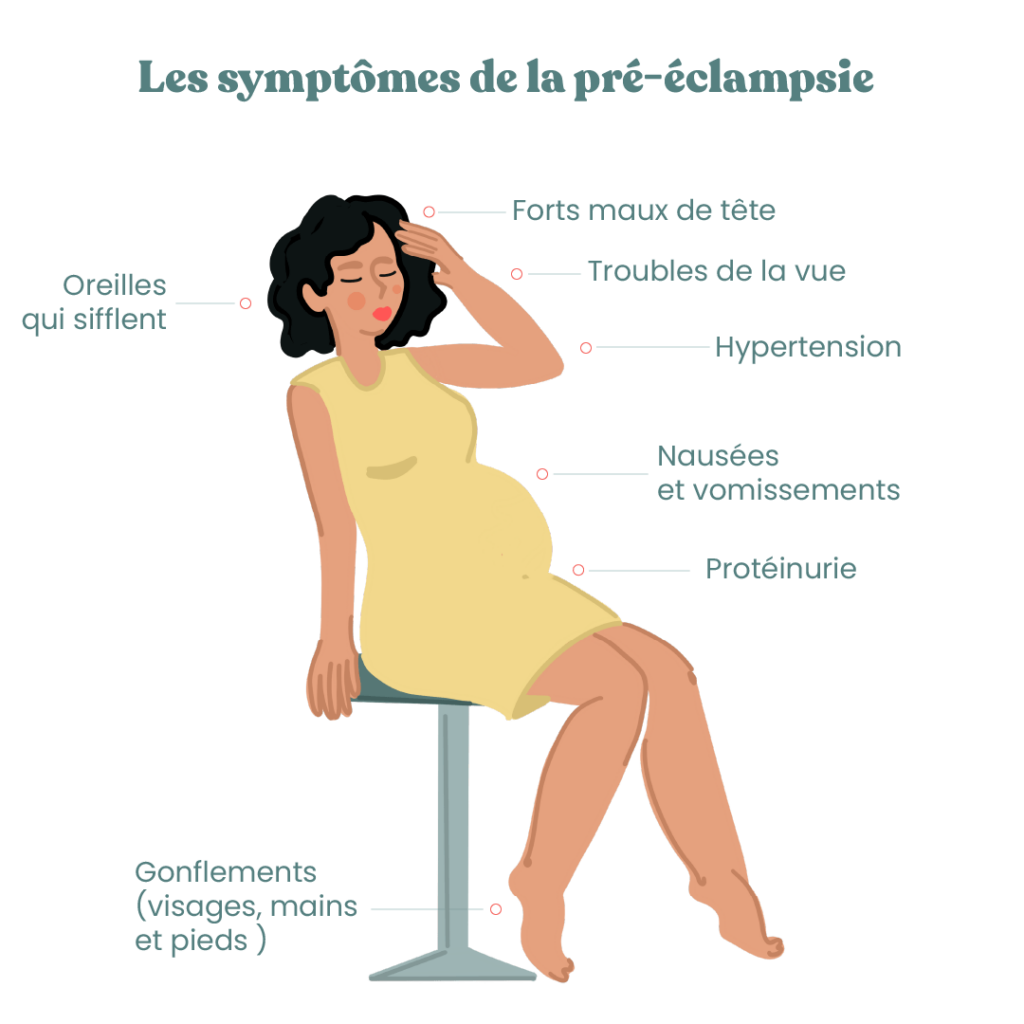
Repeated headaches after 20 weeks of pregnancy may be a symptom of preeclampsia, a serious pregnancy complication characterized by gestational hypertension. In this case, they are often associated with:
Not all symptoms are necessarily present; experiencing just one of them is still a warning sign to monitor.
If headaches persist despite being prescribed acetaminophen by your healthcare professional, it is important to consult.
Although most headaches are benign, they can also be a sign of serious pregnancy-related conditions. Pay close attention to the onset of symptoms and do not hesitate to seek medical advice.
“If you regularly suffer from migraines and are taking preventive treatment, try to plan ahead for pregnancy and consult beforehand to adjust your treatment accordingly. If you are already pregnant and taking medication, promptly seek your doctor’s advice to determine whether you can continue or need to change it.”
In summary, headaches during pregnancy are common and most often benign. Although they can be uncomfortable, they are generally relieved through simple measures: rest, hydration, a healthy lifestyle, and, if necessary, pregnancy-compatible treatment prescribed by your healthcare professional.
However, certain headaches, when intense, persistent, or accompanied by unusual symptoms, may be a sign of a more serious complication. It is therefore essential to listen to your body, avoid self-medication, and consult promptly if in doubt.
**
Photo credits: Prostock-studio | BLACKDAY
This text was translated from French by an artificial intelligence. The information, advice, and sources it contains comply with French standards and may therefore not apply to your situation. Make sure to complement this reading by visiting the May US/UK app and consulting the healthcare professionals who are supporting you.
Some of the links below may no longer be active. In that case, please feel free to refer directly to the relevant websites.
These resources might interest you


Negative blood test but no period : understanding the causes