


Pregnancy Timeline
–
Pregnancy: Popping noise in the belly — should you be concerned?

Shaken baby syndrome can occur in any family. Understanding it and preventing it gives you the best chance of avoiding the worst. What is shaken baby syndrome? What are the symptoms? How can it be prevented? Let’s take a closer look.
Shaken baby syndrome, also known as Non-Accidental Head Trauma (NAHT), occurs when a baby or young child is violently shaken by an adult. The child’s brain is then tossed around inside the skull, which can cause irreversible tearing of certain cerebral arteries, and consequences on their neurological, motor, or psychological development.
These violent shakes generally occur when the baby is held under the arms or by the chest. In most cases, the adult loses patience in response to the baby’s crying and shakes them violently back and forth to make them stop. According to the French Health Insurance system, in most cases the perpetrators are primarily fathers or childcare providers, while mothers account for only about 10% of cases.
This is an extremely important issue to be aware of, as several hundred children are unfortunately victims every year. This act is punishable by imprisonment.
Want to learn more? Feel free to download the May app, where you’ll find plenty of resources to support and guide you throughout your journey as a new parent.
Symptoms appear immediately after the shaking. According to a list established by the French government, the main symptoms include:
If you notice these symptoms, call 15 or 112. The sooner the baby receives care, the greater the chances of reducing long-term damage.
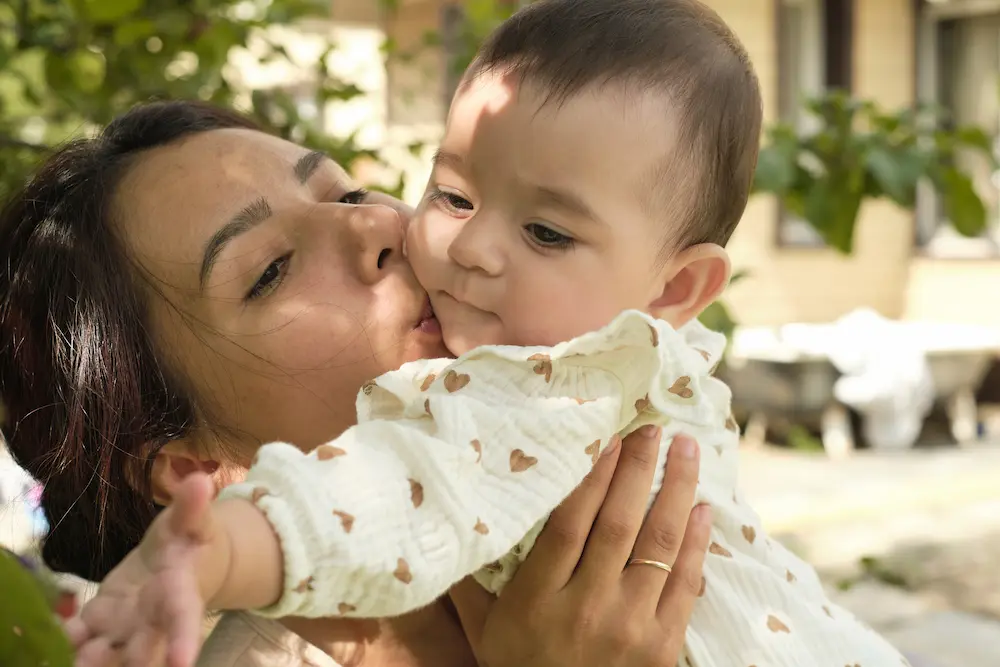
When an infant is violently shaken, serious damage can occur to the brain, eyes, and spinal cord. This is because a young child’s head is proportionally heavier than their body, their neck muscles are underdeveloped, and their brain, still immature, is particularly fragile.
The shaking can tear blood vessels and damage nerve tissue, particularly due to repeated compression of the brain and spinal cord.
The most common injuries include subdural hematomas caused by ruptured cerebral veins, as well as retinal hemorrhages. Other neurological and ocular damage may also occur.
According to information provided by the Ministry of Solidarity and Families in its awareness campaign, among shaken babies, one in ten dies. 75% of those who survive are at risk of facing the following consequences:
These consequences may require long-term rehabilitation and therapy.
According to the ministry, most victims are between two and four months old and face a high risk of recurrence. On average, an infant who has been shaken has already been shaken around ten times.
At the first suspicion of shaken baby syndrome, the child must be hospitalized.
Immediately call emergency services by dialing 15 or 112. Rapid care, with early diagnosis, is essential to limit neurological damage. While waiting for help to arrive, place the baby in the recovery position if they are experiencing seizures or vomiting.
Also check their temperature and treat any fever. Finally, make sure they do not need to drink, eat, or be changed, and dress them appropriately for the temperature.
Once admitted to the hospital, healthcare professionals will perform a thorough clinical examination. At the same time, parents will be questioned about the onset of symptoms. Additional tests may be carried out to detect any injuries: blood tests, eye examinations, brain CT scan, MRI, skeletal X-rays, etc.
To protect the child, healthcare professionals are legally required to report signs of abuse to the public prosecutor.

Shaken baby syndrome most often occurs following an episode of intense crying by the baby. You may feel tension, chills, trembling, headaches, stomach aches, a feeling of tightness, a lump in your throat, and the urge to shake or shout. Know that these emotions do not make you a bad parent. Other parents feel the same way.
When you can no longer stand the crying, you can:
You can also call the Enfance et Partage association via the “Allo Parents Baby” hotline at 0 800 00 34 56 (Monday to Friday from 10 a.m. to 1 p.m. and from 2 p.m. to 6 p.m.).
In addition, the parent is not always the perpetrator. It can happen with another member of the child’s circle or a caregiver. It is possible to detect signs of abuse by paying attention to the baby’s behavior. In general, signs of discomfort, distress, or unease in the presence of a specific adult, or the appearance of bruises, marks, or hematomas—especially in a baby who cannot move independently—may indicate mistreatment.
Also, when it comes to having your child cared for by someone outside your circle, it is preferable, whenever possible, to choose someone trained in early childhood care.

To support families affected by shaken baby syndrome, you can, for example, follow support groups on social media:
Shaken baby syndrome is still too common, but many initiatives are in place to prevent, inform, and combat this form of non-accidental violence committed by an adult who is sometimes unaware of the consequences of their actions. Caring for a baby is far from easy, but it is possible to find support and comfort from loved ones or professionals. Do not stay alone.
In summary, shaken baby syndrome is a severe form of abuse with often irreversible consequences, which can lead to the child’s death. It most often results from a moment of losing control in response to crying. However, this act can be prevented through better awareness and prevention.
**
Photo credits: yavdat | seventyfourimages | Image-Source | Prostock-studio
This text was translated from French by an artificial intelligence. The information, advice, and sources it contains comply with French standards and may therefore not apply to your situation. Make sure to complement this reading by visiting the May US/UK app and consulting the healthcare professionals who are supporting you.
Some of the links below may no longer be active. In that case, please feel free to refer directly to the relevant websites.
These resources might interest you
Pregnancy: Popping noise in the belly — should you be concerned?