
Pregnancy Timeline
–
Pregnancy: Popping noise in the belly — should you be concerned?
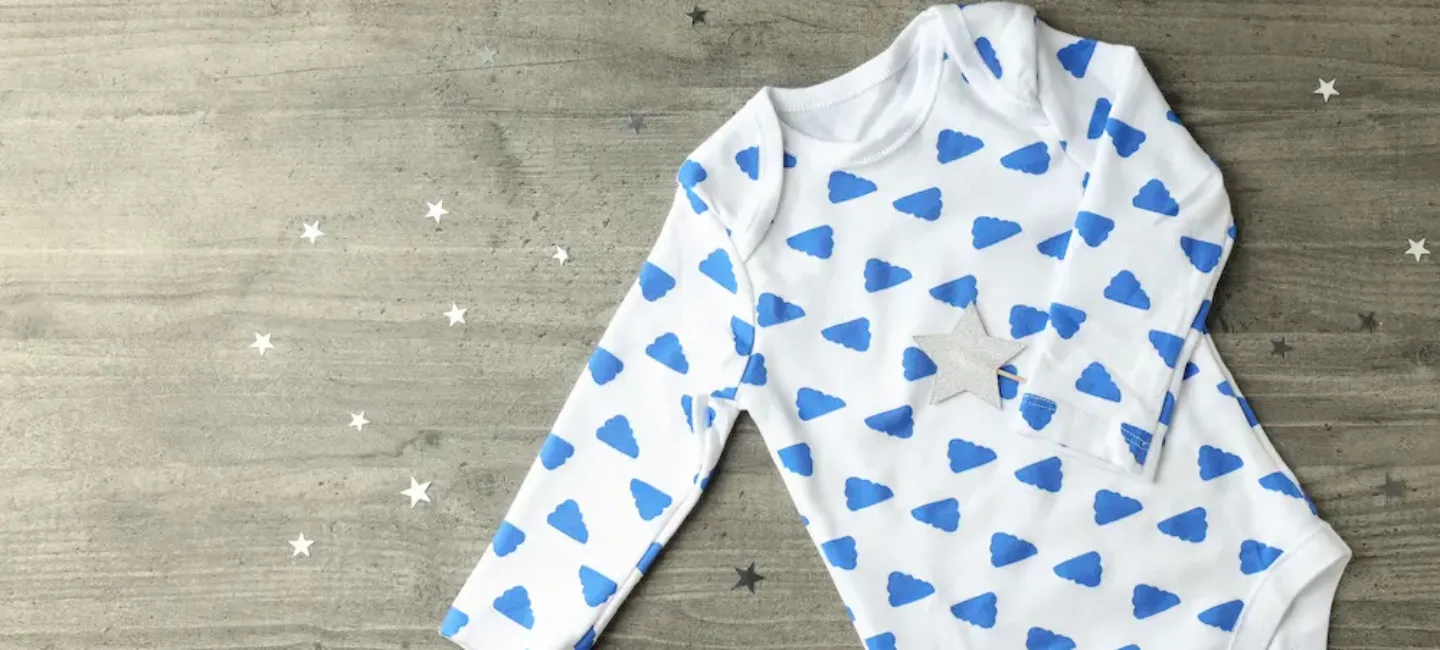
Choosing what your baby wears to sleep plays an important role in both their comfort and the quality of their sleep. What outfit should your baby sleep in, depending on their age, level of independence, and the temperature? What is the difference between a onesie and baby pajamas? Let’s take a closer look.
Understanding the differences between a onesie and pajamas helps you choose the clothing best suited to your baby’s needs, comfort, and sleep, from their very first months.
Originally, the onesie was designed to meet babies’ need for comfort while making life easier for parents. This garment stands out thanks to its one-piece design, which covers the body, arms, legs, and sometimes even the feet with built-in footies. It usually fastens with snap buttons or a zipper. Some versions even include a small hood to keep your baby’s head warm. The onesie is therefore an essential garment from birth, as it helps maintain body heat without restricting movement, while remaining very comfortable.
Pajamas, on the other hand, differ from a onesie thanks to their two-piece structure, consisting of a T-shirt and separate pants. Depending on the season, pajamas may have long or short sleeves. In addition to cute designs, pajamas may include practical details such as an elastic waistband on the pants or snap buttons at the crotch. The main difference between a onesie and baby pajamas therefore lies in their shape: a onesie is a full-body suit, while pajamas are a two-piece outfit.
The onesie has the advantage of wrapping your child’s body, covering almost all of it. This means that even if your baby moves a lot during the night, a onesie helps reduce the risk of becoming uncovered by preventing their tummy or back from being exposed. Pajamas also provide good protection, as long as the pants are properly fitted and the T-shirt is the right size. However, a two-piece set can sometimes allow drafts around the belly if the child moves a lot.
Want to learn more? Feel free to download the May app, where you’ll find plenty of resources to support and guide you throughout your journey as a new parent. 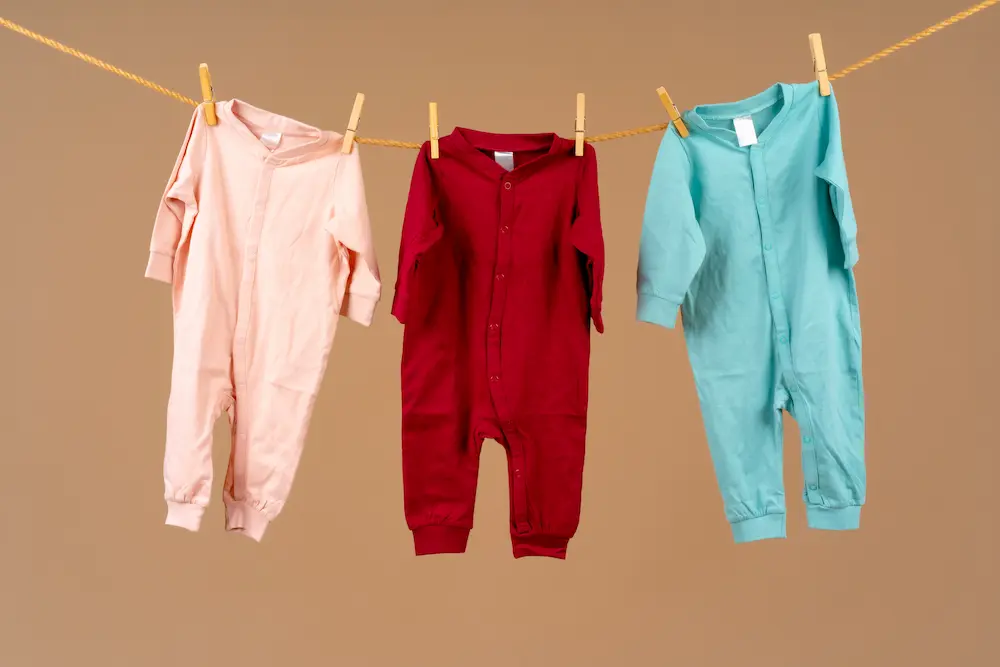
Choosing between a onesie and pajamas for your baby depends on several factors. The outfit should be adapted to the season, the room temperature, and your child’s comfort needs. Here are some general guidelines for choosing sleepwear based on the seasons:
It is also recommended to prioritize your child’s comfort and safety. Here are some tips for choosing the right sleep outfit for your baby:
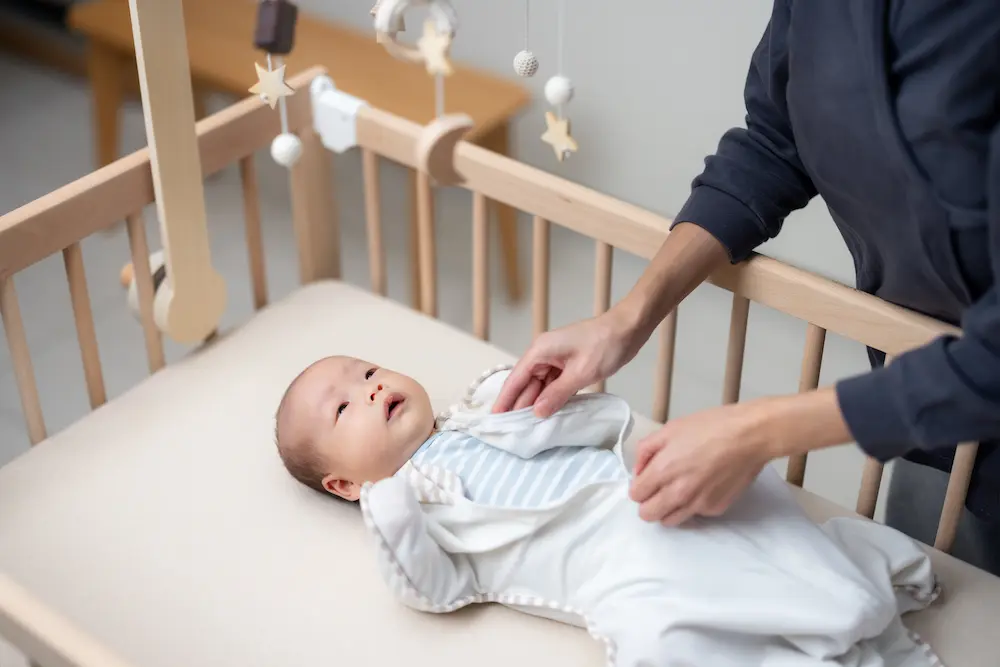
Here are some tips to simplify your daily routine while ensuring your baby’s comfort and hygiene.
As a parent, it is essential to be able to dress and change your baby quickly, especially during nighttime diaper changes or everyday little accidents. The onesie is easy to put on thanks to its snap buttons located at the front, back, or crotch. This allows you to change your baby’s diaper without having to undress them completely. Pajamas offer an interesting alternative once your baby becomes more independent.
Short or long sleeves adapt to the season, and the separation between top and bottom makes dressing easier for older children who want to participate. If your baby is very active or starting potty training, two-piece pajamas allow you to change only the pants in case of small accidents.
Here are some tips for easy care and to ensure the durability of your baby’s onesies and pajamas:
Always keep several onesies and pajamas in your baby’s wardrobe so you can handle everyday little accidents. In summary, onesies and pajamas are two essentials in your baby’s wardrobe, each meeting specific needs depending on age, activity level, and the season.
The onesie, which is snug and reassuring, is particularly suitable for newborns and cooler nights, while two-piece pajamas offer more freedom of movement and support your child’s growing independence.
**
Photo credits: AtlasComposer | FabrikaPhoto | leungchopan
This text was translated from French by an artificial intelligence. The information, advice, and sources it contains comply with French standards and may therefore not apply to your situation. Make sure to complement this reading by visiting the May US/UK app and consulting the healthcare professionals who are supporting you.
Some of the links below may no longer be active. In that case, please feel free to refer directly to the relevant websites.
These resources might interest you
Pregnancy: Popping noise in the belly — should you be concerned?