



The appearance of the first teeth varies from one child to another and is part of a natural process influenced by several factors. Should you worry if your baby still has no visible teeth at 8 months? What are the early signs, and how can you best support the arrival of the first teeth?
8 months no teeth: let’s take a closer look.
The appearance of the first teeth in infants
The eruption of baby teeth generally follows a specific order, although the timing of their appearance can vary from one baby to another.
The main stages of teething
Every baby has their own teething timeline. Some show their first “toothy” smile as early as 4–6 months, while others will have no teeth at 8 months or even later. This difference is usually not serious, especially if the gums look healthy and supple, and the rest of development is progressing normally.
Here is the most common order in which the first teeth appear:
- 1️ – Lower central incisors around 6 months
- 2️ – Upper central incisors around 8 months
- 3️ – Upper lateral incisors around 10 months
- 4 – Lower lateral incisors around 12 months
- 5️ – Lower first molars around 12–18 months
- 6️ – Lower and upper canines around 18–24 months
- 7️ – Lower and upper second molars around 24–30 months
Good to know: these numbers are only guideline ages. Keep in mind that every child has their own pace.
Factors that influence teething
This timeline is not set in stone, and several factors can influence the appearance of the first teeth:
- Genetics: if you or your co-parent got teeth late, your child may follow the same pattern.
- Environment: your baby’s general health, episodes of illness, or infections can temporarily slow down teething.
- Nutrition: a balanced diet rich in essential vitamins and minerals (especially fluoride and calcium) supports healthy dental development.
- Early oral care: cleaning the gums with a damp gauze pad or a soft baby toothbrush, even before teeth arrive, helps lay the groundwork for healthy gums and teeth.
Since every child is unique, there is no absolute standard. The main thing is to watch for signs of teething and maintain your baby’s oral hygiene.
Want to learn more? Feel free to download the May app, where you’ll find plenty of resources to support and guide you throughout your journey as a new parent.
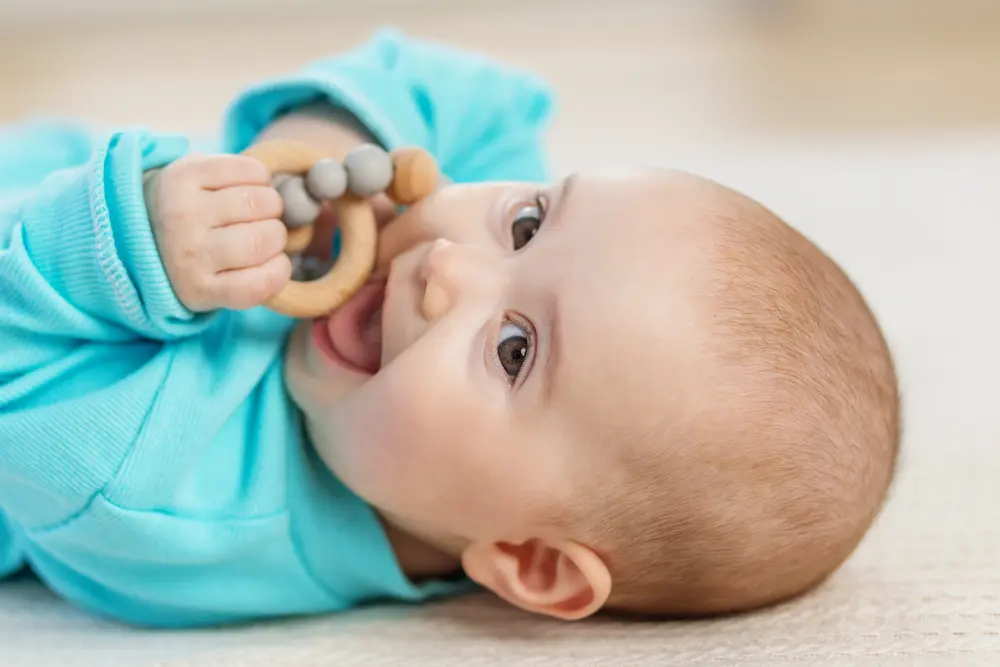
Should I worry if my 8-month-old baby has no teeth?
Not seeing any baby teeth come in by 8 months is generally not a cause for concern. In fact, teething can begin at very different ages: some babies get their central incisors as early as 4 months, while others only around 14 months.
However, it may be helpful to consult a pediatrician if:
- No teeth have appeared after 12 months.
- The gums show abnormalities such as significant swelling, an unusual color, or lesions.
- Other developmental delays are observed, especially related to growth, language, or motor skills.
- Your baby seems especially uncomfortable or has persistent pain not relieved by usual methods.
Generally, your pediatrician will also check your child’s teeth during the routine monthly checkups in the first year. 
Oral hygiene for babies
Even if your 8-month-old baby does not yet have teeth, it is important to provide good oral hygiene:
- Clean the gums daily: use a gauze pad or reusable wipe moistened with water to gently massage the gums after each meal or feeding. This removes milk and saliva residue while also stimulating the future jaw and blood circulation.
- Avoid sugar: limit sugary drinks and snacking, even before teeth are there, in order to prepare a healthy oral environment for the upcoming eruption.
- Do not use fluoride toothpaste before the first baby teeth appear: as soon as the first tooth comes through, choose an age-appropriate toothpaste with the fluoride dosage recommended by your dentist.
How can you recognize the signs of teething?
Before the first teeth break through your baby’s gums, several signs may appear. Here are the characteristic, though sometimes subtle, signs of teething:
- Swollen and red gums: the gums may become thicker, sensitive, or even slightly painful, especially where future incisors or molars will emerge.
- Excessive drooling: a noticeable increase in saliva is common. Saliva plays a natural role in protecting the gums and teeth.
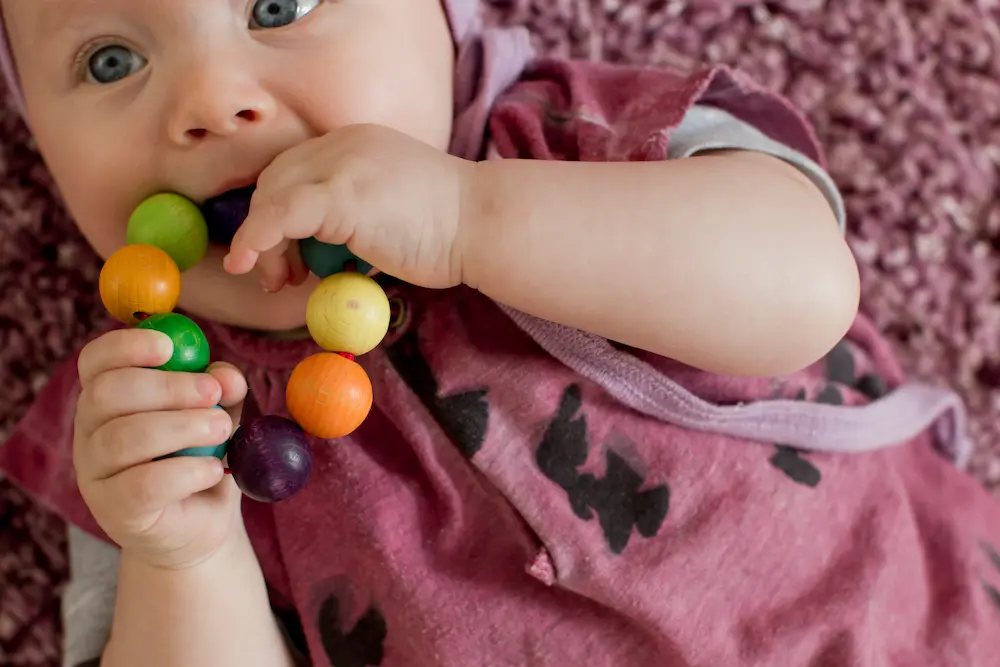
- An urge to chew: your baby tries to chew on everything within reach (toys, fingers, fabrics, etc.) to relieve pressure on their gums.
- Irritability: teething can make your baby crankier, making crying more frequent.
- Sleep disturbances: trouble falling asleep or more frequent waking during the night.
- A change in appetite: your baby may refuse certain foods or nurse differently.
- Fever: during teething, a mild teething-related fever below 38.5°C (101.3°F) may occur. A higher fever should prompt you to seek medical advice.
Good to know: for sensitive gums, a gentle massage can help relieve pain. To do this, make light circular movements, without moving your fingers, along the contour of the upper lip and then the lower lip. If your baby tolerates it, you can also massage their gums with clean hands.
You can also give your baby a chilled teething ring to chew on. For even more effective relief, place the teething ring in the refrigerator beforehand (never in the freezer).
The absence of teeth in your 8-month-old baby is not a problem. Every child develops at their own pace, influenced by different factors. The main thing is to stay attentive to the condition of their gums and their overall well-being. By adopting the right habits, you can calmly support the development of your child’s teeth while keeping an eye on the arrival of their baby teeth.
**
Photo credits: macniak | OlhaRomaniuk | YuriArcursPeopleimages | ImageSourceCur
This text was translated from French by an artificial intelligence. The information, advice, and sources it contains comply with French standards and may therefore not apply to your situation. Make sure to complement this reading by visiting the May US/UK app and consulting the healthcare professionals who are supporting you.