


Pregnancy Timeline
–
My husband doesn’t support me during pregnancy: how can we improve the situation?

A baby’s birth weight is often one of the first pieces of information people ask about after delivery. It can be reassuring, sometimes raise questions, and often sparks many comparisons. What are the “normal” birth weight ranges? What factors influence it? What risks are associated with it?
Baby’s birth weight: here’s what you need to know.
A baby’s birth weight is an important indicator, but there is great diversity among newborns. The growth charts included in your child’s health record booklet help track your infant’s birth weight over time, taking other characteristics into account (such as length, for example) and ensuring that weight gain is steady and balanced.
In France, most full-term babies, born between 37 and 41 weeks of amenorrhea (WA), weigh between 2.5 and 4 kilograms at birth. Low birth weight refers to babies weighing less than 2.5 kg, and macrosomia refers to babies weighing more than 4 kg.
Each baby has their own weight curve that takes into account their body build and head circumference.
Want to learn more? Feel free to download the May app, where you’ll find plenty of resources to support and guide you throughout your journey as a new parent.

From the very first days, and during regular check-ups, careful monitoring of your baby’s weight gain helps quickly detect any potential growth delay or, on the contrary, excess weight.
Growth charts are valuable tools to track changes in your baby’s weight, length, and head circumference according to their age. They can be found in the health record booklet given at birth. At every appointment—whether at the maternity ward, with a midwife, at a Maternal and Child Health center (MCH), or with a pediatrician—the healthcare professional measures:
Good to know: in addition to your child’s health record booklet, you can consult these growth charts on the website of the French Association of Ambulatory Pediatrics (AFPA) according to your child’s sex: girls’ growth chart and boys’ growth chart.
Analyzing the weight curve helps ensure that your baby’s weight gain follows a steady path suited to their age and birth weight. Every infant grows at their own pace, but it is reassuring to see that their weight falls within a reference percentile range. A sudden deviation could signal a health concern, breastfeeding difficulties, obesity, or growth delay.
Good to know: it is normal for your baby to lose a little weight in the first few days (between 5% and 10% of their birth weight), then regain it before the tenth day. After that, weight gain should be about 200 g per week during the first month.
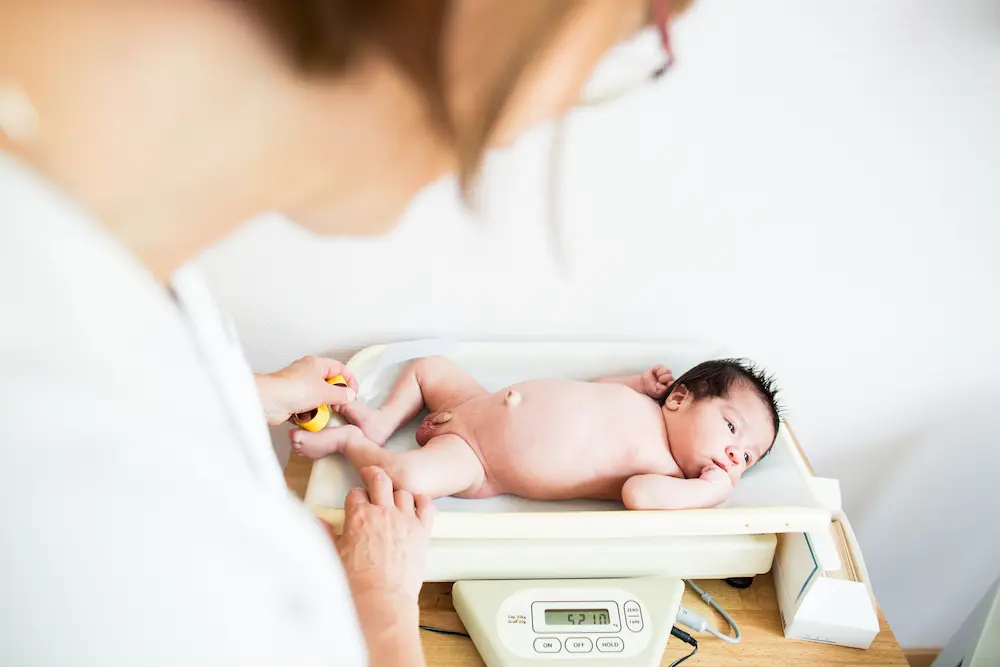
A baby’s birth weight depends on many factors:
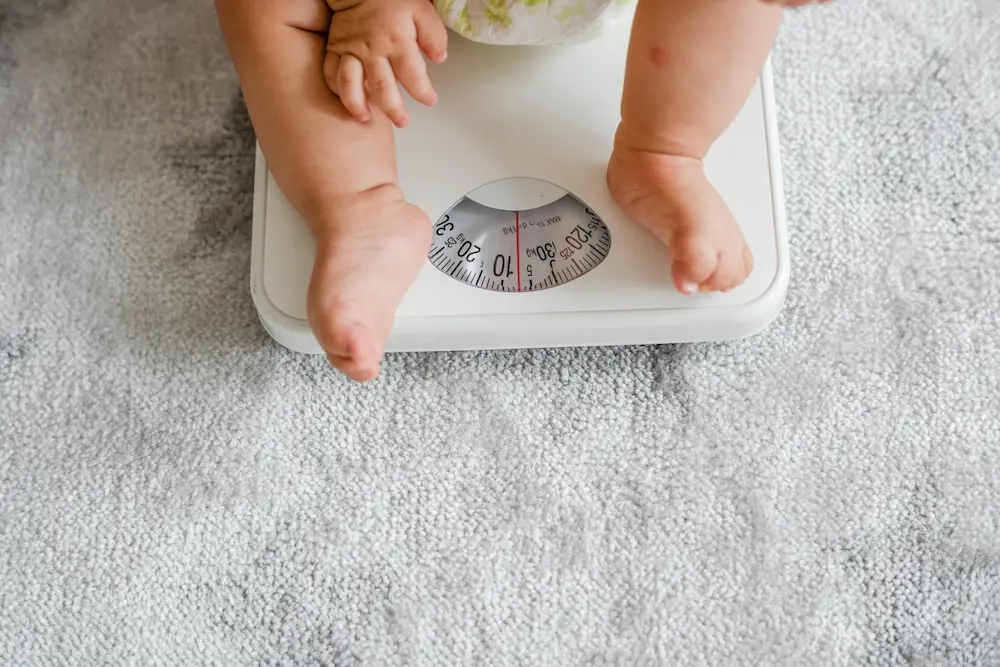
A baby’s birth weight is a key indicator that can influence your child’s health from the very first days and even in the longer term.
Low birth weight often concerns premature babies or infants with intrauterine growth restriction (IUGR). These newborns may face several challenges:
A birth weight above 4,000 grams (4 kg), known as macrosomia, can also involve specific risks:

A baby’s birth weight is only a starting point. Whether you choose breastfeeding or bottle-feeding, a few key principles apply to support your baby’s growth.
In summary, a baby’s birth weight is a valuable reference point, but it does not alone define your child’s health or future. Every infant has their own growth rhythm. The key is not to compare with averages but to ensure steady and balanced development. If you have any concerns about your baby’s weight gain, feedings, or development, never hesitate to seek advice from a healthcare professional.
**
Photo credits: Prostock-studio | Gajus-Images | astrakanimages | Rawpixel
This text was translated from French by an artificial intelligence. The information, advice, and sources it contains comply with French standards and may therefore not apply to your situation. Make sure to complement this reading by visiting the May US/UK app and consulting the healthcare professionals who are supporting you.
Some of the links below may no longer be active. In that case, please feel free to refer directly to the relevant websites.
These resources might interest you
My husband doesn’t support me during pregnancy: how can we improve the situation?