


Moles can appear within the first weeks of life and are most often part of normal skin development. How can you recognize a harmless mole? What signs should raise concern? What precautions should you take to protect your child’s skin? Mole on my 2-year-old baby: let’s take a closer look.
Appearance of a mole in a 2-year-old baby: what are we talking about?
It is common to see moles appear in children from a very young age. Here’s why.
Moles: definition and types
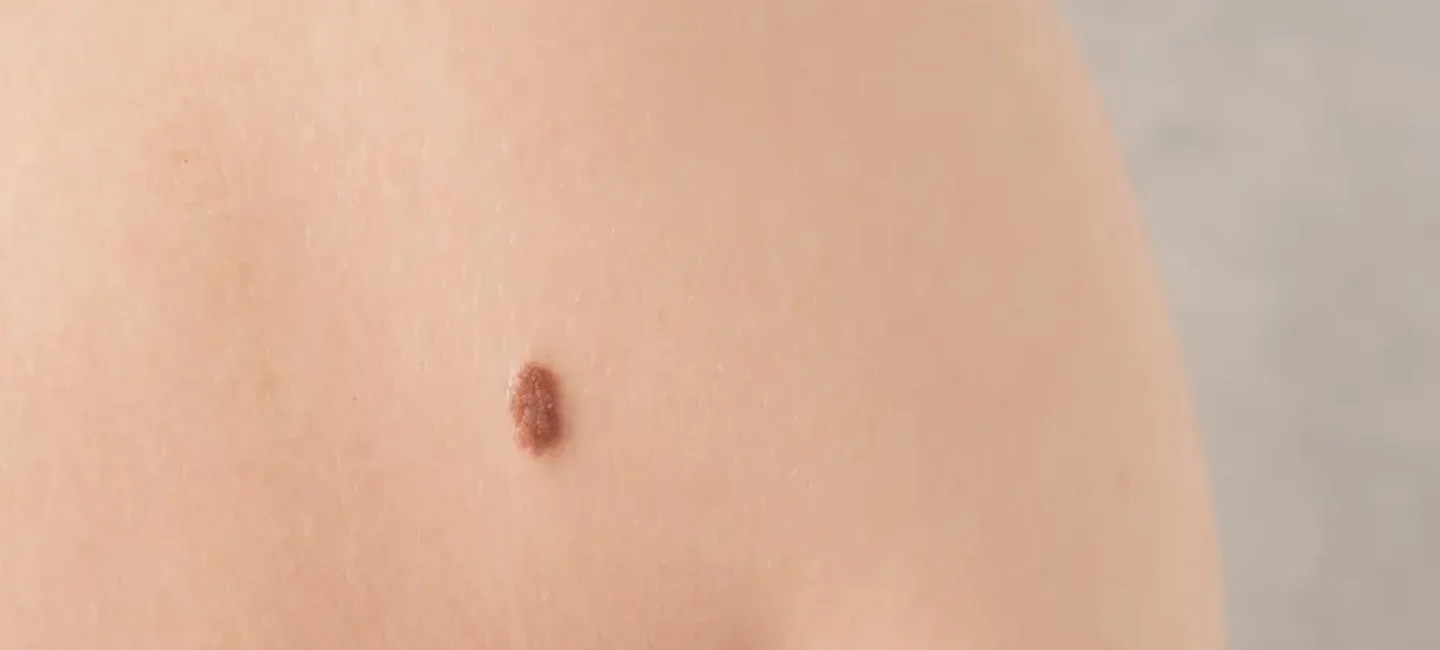
A mole, also called a nevus, is a benign skin lesion formed in the epidermis by a cluster of pigment cells called melanocytes. From a very early age, it is therefore possible to notice a mole on your baby’s skin. There are two main types of moles in children: Congenital mole:
- Present at birth or appearing in the first months of life.
- Size can vary.
- Can be located anywhere on the body, including the scalp.
Acquired mole:
- Appears throughout childhood, generally after the first year of life and up to adolescence.
- Often smaller than congenital moles, with a regular and uniform shape.
- Its appearance is a normal phenomenon linked to skin development.
Why can a mole appear at age 2?
Seeing a mole appear on your 2-year-old baby is very common and can be explained by several factors:
- Genetic factors: some children inherit skin that is more prone to developing nevi. A family history increases the likelihood of early development.
- Environmental factors: sun exposure from an early age promotes the development of moles. Early use of sun protection measures (clothing, hats, suitable sunscreen) helps reduce these risks.
Want to learn more? Feel free to download the May app, where you’ll find plenty of resources to support and guide you throughout your journey as a new parent. 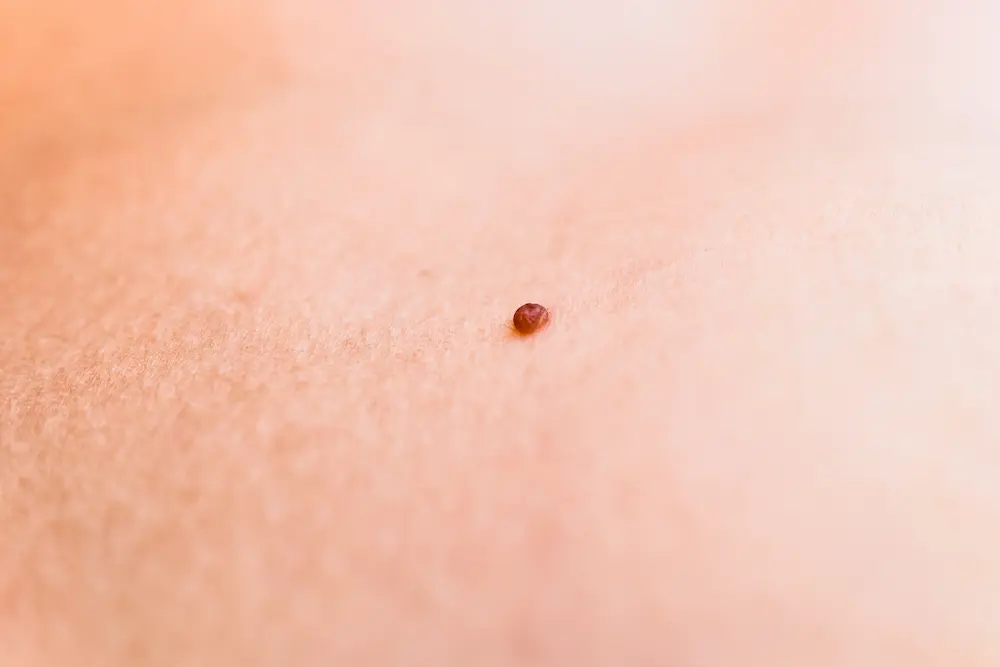
How to recognize a normal mole in a child?
When you notice a mole on your child’s skin, it is natural to want to make sure it is a benign lesion. There are simple criteria to distinguish a typical mole from warning signs.
Signs of a benign mole
A normal mole in a young child generally has reassuring characteristics:
- Regular shape: the mole is round or oval, with visible symmetry.
- Well-defined borders: edges are clear, without irregularities.
- Uniform color: pigmentation is even (light to dark brown), with no black, red, or white areas.
- Small size: in most cases, the diameter is less than 6 mm.
- Smooth surface: the mole is flat or slightly raised, without abnormal texture.
- Stability over time: it does not change quickly in size, shape, or color.
Moles: signs to watch for
Certain changes or symptoms should catch your attention and prompt a consultation with a dermatologist. The ABCDE rule helps identify warning signs:
- Asymmetry: the mole is not round or oval; its shape is irregular.
- Irregular borders: edges are blurred, notched, or poorly defined.
- Uneven color: multiple colors appear (black, blue, red, white, gray, etc.).
- Diameter > 6 mm: the mole grows quickly or measures more than 6 mm.
- Evolution: any rapid change (size, shape, color, elevation, itching, bleeding).
Additionally, watch for:
- The appearance of bumps, scabs, bleeding, or pain.
- A mole located in higher-risk areas such as the palms, soles, mucous membranes, or scalp.
If in doubt, regularly take photos of your child’s moles to monitor their evolution over time. This habit helps detect any suspicious changes early and supports the dermatologist during a consultation.
Although most skin cancers, such as melanoma or carcinoma, remain rare, any unusual change in a mole deserves medical advice. Good to know: the risk of transformation into melanoma or other skin cancers is extremely low. Monitoring is recommended, especially in cases of family history, numerous moles, or repeated sunburns, but there is generally no need to worry.
Also, never attempt to remove a mole yourself. Excision, meaning surgical removal of a mole, is only indicated in very rare cases. Only a dermatologist can determine whether intervention is necessary. 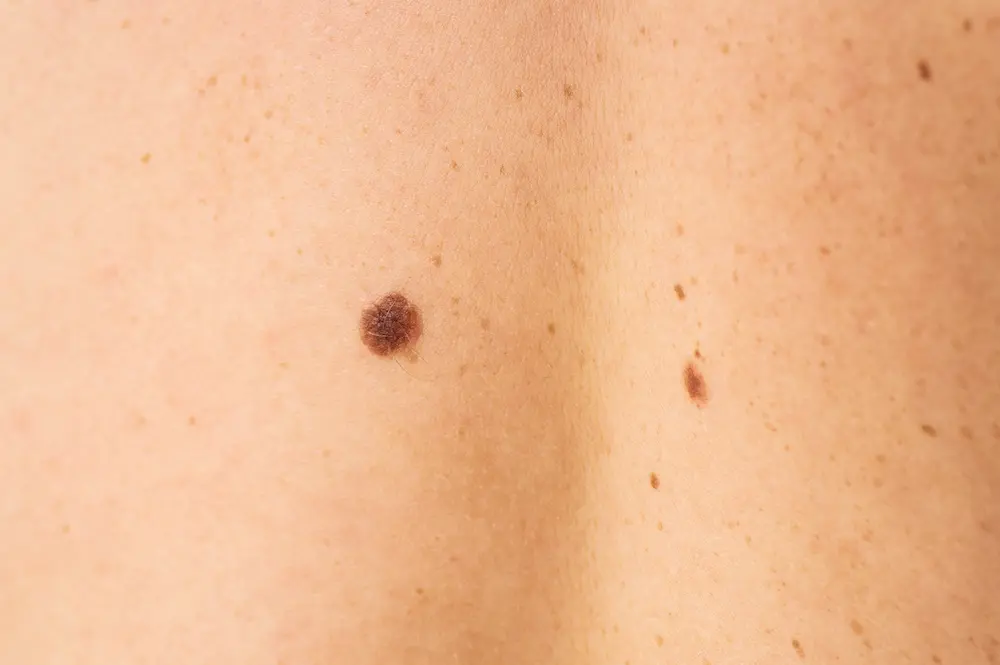
Precautions to protect your baby’s skin
Babies’ skin, which is particularly thin and immature, is much more sensitive to UV rays than adult skin. Poorly managed sun exposure, even brief, can promote the appearance of new moles or skin lesions and, in the long term, increase the risk of skin cancer. It is therefore essential to adopt preventive measures from an early age: Before 1 year:
- Avoid direct sun exposure.
- Do not go outside during the hottest hours of the day.
- Favor shade during outings, use a sunshade on the stroller, and have your baby wear a wide-brimmed hat to protect the face and scalp, along with covering clothing.
- Never use a muslin cloth to cover the stroller, as this dangerously increases the temperature inside.
- Apply sunscreen to exposed areas, especially when babywearing.
After 1 year:
- Avoid exposing your child between 11 a.m. and 4 p.m., when the sun is strongest, and limit sun exposure as much as possible overall.
- Dress your child in light, loose, covering clothing, preferably in light-colored cotton.
- Don’t forget sunglasses as soon as your child can sit up.
- Apply a very high-protection sunscreen to exposed areas, reapplying every two hours and after each swim.
In summary, the appearance of a mole in your 2-year-old baby is generally normal and linked to natural skin development. In the vast majority of cases, these lesions are benign and harmless. If you have any doubts or notice unusual changes, medical advice will reassure you and ensure appropriate follow-up.
**
Photo credits: nastya_gennadievna | joaquincorbalan | StiahailoAnastasiia
This text was translated from French by an artificial intelligence. The information, advice, and sources it contains comply with French standards and may therefore not apply to your situation. Make sure to complement this reading by visiting the May US/UK app and consulting the healthcare professionals who are supporting you.