


Pregnancy Timeline
–
Pregnancy: Popping noise in the belly — should you be concerned?
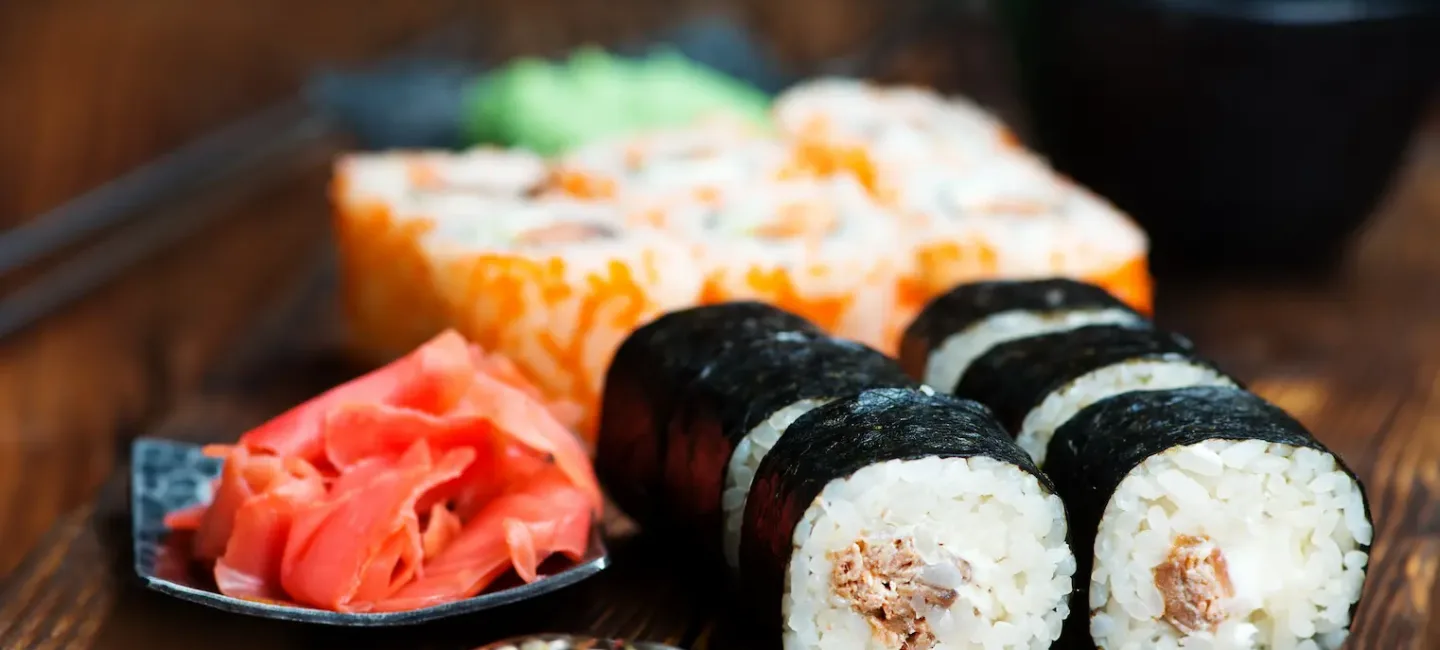
In 2016, Statista reported that in France, 30% of 20–34-year-olds ate sushi regularly, as did 26% of 35–44-year-olds. More recently, the Food Observatory stated that “22% of French people order it at least once a month.” One thing is certain: sushi doesn’t leave anyone indifferent. But are you allowed to eat it during pregnancy?
Sushi while pregnant: we tell you everything.
When you’re pregnant, food-related risks increase and require a few temporary restrictions. In fact, the list of food safety precautions is one of the first documents the healthcare professionals following you will give you. And, unfortunately for Japanese food lovers, sushi is not on the “approved” list.
We won’t keep you waiting any longer: sushi during pregnancy, if it contains raw (or smoked or undercooked) fish, is unfortunately strongly discouraged. Eating raw fish during pregnancy exposes you—and therefore your baby—to risks of listeriosis (we explain those risks a bit further down).
We’re talking about sushi, but of course the same recommendations apply to maki, temaki, chirashi, sashimi, futomaki… And anything that may contain raw, undercooked, or smoked fish (smoking a food is not the same as cooking it).
All these food rules can be hard to remember (especially when they pile up). On May, we’ve prepared summary sheets as well as a practical tool: “Pregnant, can I?”.
We mentioned it above: the biggest risk with eating raw fish is listeriosis… but not only that!
Listeriosis is a disease caused by a bacterium, Listeria, which can lead to risks of complications during pregnancy. These risks include:
The first two points are closely linked to the fever episode that listeriosis can cause. Fortunately, there is an antibiotic for listeriosis. But its effectiveness depends on how quickly it’s given: the sooner, the better. At the slightest worrying symptom (mainly fever, but it can be accompanied by headaches and digestive issues), don’t hesitate to consult your doctor or midwife promptly. Note that the incubation period can last up to two months.
Listeria is a bacterium that is very resistant to cold (but not to heat, hence the importance of thoroughly cooking food). It tends to thrive in the environment and in homes (particularly in refrigerators, since it can colonize foods).
Also note that some fish, whether raw or cooked, may contain mercury. As you can imagine, consuming mercury during pregnancy (and not only then!) is generally discouraged… Above all, large fish (those at the very top of the food chain) pose the greatest risk, such as shark, swordfish, marlin, tuna, wels catfish, etc. (the full list is available on the ANSES website).
Another risk that can go along with eating sushi: toxoplasmosis. Note that this risk is more related to the raw vegetables that sometimes accompany these Japanese dishes (if they aren’t properly washed) than to the raw fish itself. It is an infection caused by a parasite that can cross the placental barrier and transmit congenital toxoplasmosis to the fetus, which can cause developmental abnormalities or even pregnancy loss.
In 90% of cases, the baby is born without symptoms: so the risks are low, but very serious. That’s why it’s best to be cautious about toxoplasmosis.
Good to know: not all women are affected by toxoplasmosis. If you’ve had it before, there’s a good chance you’re immune. The person following your pregnancy can confirm this with a blood test that will automatically be offered to you.
Want to learn more? Feel free to download the May app, where you’ll find plenty of resources to support and guide you throughout your pregnancy.
As we’ve seen, sushi that contains raw or undercooked fish is discouraged during pregnancy because of the risks of listeriosis and toxoplasmosis.
We’d also like to remind you of a few hygiene and dietary precautions to further reduce the risks.
One last recommendation: in cats, toxoplasmosis becomes active and then the parasite is shed in their feces. That’s why women who have cats that hunt or eat other animals (typically birds from the yard) are advised to avoid direct contact with their cat or its litter box.
As you’ve understood, most sushi is discouraged for pregnant women because it contains raw or undercooked fish. Fortunately, Japanese cuisine is full of wonderful options that don’t include raw fish.
For example, think of vegetarian sushi (using tofu, vegetables, or fruit instead of fish), cooked fish (meaning thoroughly cooked, all the way through, not just lightly smoked), or sushi made with rice and spreadable cheese like ®Carré frais or ®Kiri (a type of cheese allowed during pregnancy).
What if you used pregnancy as an opportunity for culinary discoveries (within the limits of your healthcare professional’s recommendations, of course!)? And for that, if you want to take zero risks, the safest sushi (still without raw fish!) is the kind you make yourself. That allows you to:
It might be the perfect time to discover a passion for the art of Japanese-style cooking. In fact, there are plenty of gadgets and tutorials online to help you make sushi easily (the days of the hard-to-handle bamboo mat are over)—we’ll let you explore!
We’ve talked a lot about the dangers of raw fish during pregnancy. But that doesn’t mean you need to cross it off your menu entirely: if it’s well cooked, it can offer many benefits.
Fish contains nutrients with many advantages for your body. These include:
Sushi during pregnancy is therefore discouraged, unless it contains no raw or undercooked fish. On the other hand, nothing stops you from experimenting a bit and trying the vegetarian version! Don’t hesitate to ask advice from a nutritionist specialized in pregnancy and/or the person following your pregnancy.
Photo: tycoon101
This text was translated from French by an artificial intelligence. The information, advice, and sources it contains comply with French standards and may therefore not apply to your situation. Make sure to complement this reading by visiting the May US/UK app and consulting the healthcare professionals who are supporting you.
Some of the links below may no longer be active. In that case, please feel free to refer directly to the relevant websites.
https://fr.statista.com/statistiques/617571/part-consommateurs-reguliers-sushis-par-age-france/
https://www.anses.fr/fr/content/consommation-de-poissons-et-exposition-au-m%C3%A9thylmercure
These resources might interest you
Pregnancy: Popping noise in the belly — should you be concerned?