

Pregnancy Timeline
–
Pregnancy: Popping noise in the belly — should you be concerned?
What is allowed and what isn’t during pregnancy is a broad question. During the holiday season, let’s focus on one topic that can be confusing: what to put on your plate?
Between benefits and potential risks, it’s time to talk about seafood!
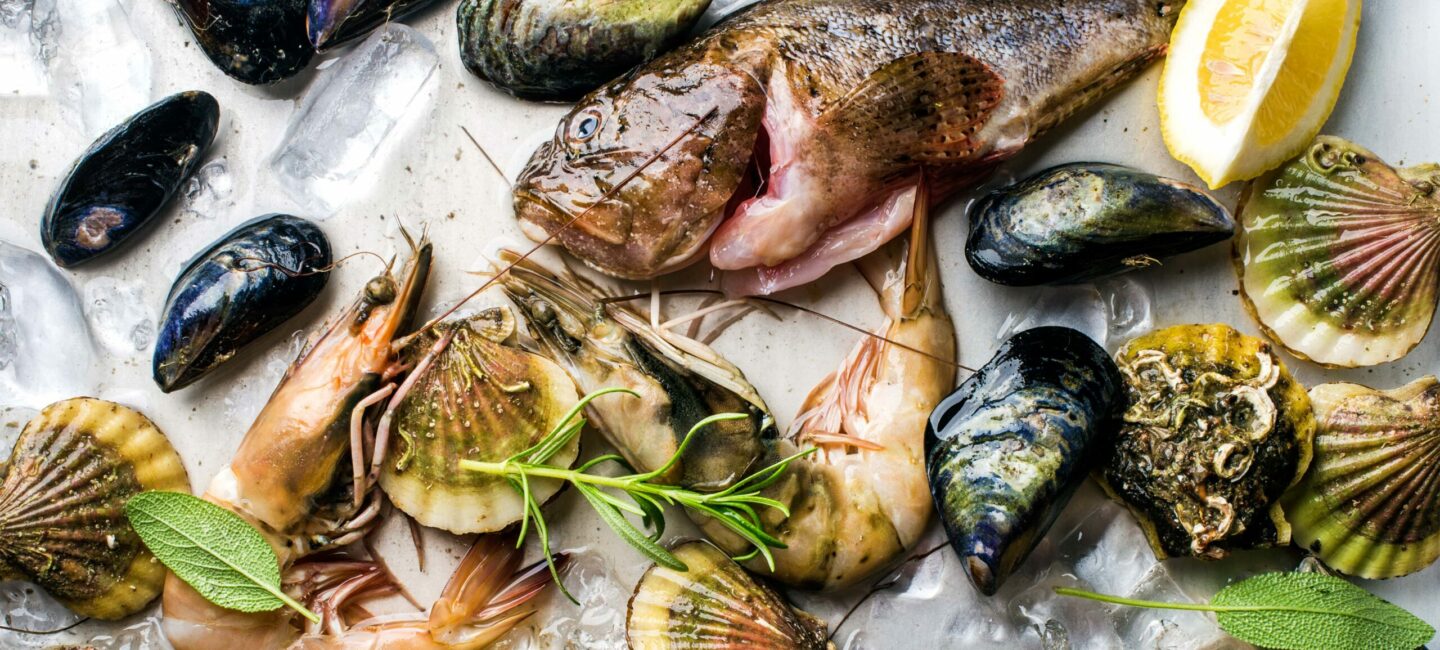
Almost unavoidable on the holiday menu: seafood. But when it comes to cocktail shrimp, scallops, or whelks, what’s allowed when you’re pregnant?
During pregnancy, seafood should be eaten only when well-cooked! And of course, as fresh as possible. That means avoiding anything raw, undercooked, smoked, or marinated.
Here’s what that looks like:
✅ Allowed: shrimp, langoustines, lobsters, whelks, oysters… basically all shellfish if they are well-cooked. The same goes for fish: it’s fine if it’s cooked through, but if not, it’s better to avoid it.
❌ To avoid: raw oysters, caviar, lumpfish roe, tarama… These are strongly discouraged because they present a risk of listeriosis and/or toxoplasmosis.
Indeed, any undercooked or raw animal product may be contaminated with bacteria like listeria (which causes listeriosis) or parasites (including the one that causes toxoplasmosis).
These infections can pose risks to the baby: malformations, developmental delays, minor or severe abnormalities, neonatal infections, miscarriage, or premature birth.
Rest assured: these risks remain relatively low. But since they do exist, we highly recommend following the golden rules of pregnancy nutrition:
For meat and other animal products: choose well-cooked options and avoid deli meats (whether raw or cooked).
For cheese: always remove the rind and choose hard cheeses like Comté.
For fruits and vegetables: wash them thoroughly since they are in direct contact with soil, and avoid raw sprouted seeds (like soy or alfalfa).
Finally, a quick note on kitchen hygiene: regularly wash your utensils, hands, refrigerator, and freezer, and keep raw and cooked foods separate.
Seafood provides essential nutrients for the body:
As we’ve seen, during pregnancy, seafood and fish must always be thoroughly cooked. And since you can never be too careful, it’s best to avoid ordering them at restaurants.
By cooking them yourself, you can ensure not only the freshness of the product but also proper cooking and storage, which already reduces risks.
A quick tip for shellfish: generally, they’re well-cooked when their shells are fully open.
Our app features recipes specially designed for pregnancy, including a festive kit with quick and delicious ideas like a sardine rillette.
Eating well during pregnancy means eating a variety of foods. This helps your body meet all its nutritional needs.
For fish, the French National Agency for Food, Environmental, and Occupational Health & Safety (ANSES) recommends for everyone:
And specifically for pregnant women:
Many fish can be contaminated with methylmercury (which, in high doses, is toxic to the nervous system, especially for fetuses and young children). Eating fish is the main dietary source of methylmercury exposure.
Other fish that may carry this risk include monkfish, Atlantic wolffish, bonito, eel and elver, orange roughy, grenadier, Atlantic halibut, cardines, mullet, pike, pomfrets, Mediterranean capelin, common pailona, ray, large redfish, Atlantic sailfish, silver and black scabbardfish, sea bream, pagrus, black escolar, snake mackerel, sturgeon, and tuna.
If you find yourself at a dinner where one of these fish is served, don’t worry! Eating it occasionally poses no danger.
Also note that mercury can be present in some seafood, like shrimp. So, it’s best to consume seafood in moderation.
Want to learn more? Feel free to download the May app, where you’ll find plenty of resources to support and guide you throughout your pregnancy.
We all know fish are an excellent source of omega-3s. In fact, they’re one of the best sources.
❌ As we’ve seen, during pregnancy it’s better to avoid larger fatty fish like tuna and salmon (due to pollution).
✅ No problem, there are other fatty fish: herring, mackerel, and sardines are excellent sources of omega-3 and are safe as long as they’re well-cooked.
Good to know if you’re not a fan of seafood: walnut oil and canola oil are also rich in omega-3s.
Listeria, the bacteria that causes listeriosis, survives particularly well in cold environments, including the freezer. This is why eating a product that has only been thawed (without cooking) can be risky.
Fortunately, proper cooking significantly reduces this risk, as listeria does not tolerate heat well.
So, frozen seafood is fine — but only if it is thoroughly cooked before eating.
In summary, seafood and fish during pregnancy are safe if cooked through. These foods have many health benefits and contribute to the healthy development of the fetus. They can also add variety and joy to your holiday meals!
**
Photo: sonyakamoz
This text was translated from French by an artificial intelligence. The information, advice, and sources it contains comply with French standards and may therefore not apply to your situation. Make sure to complement this reading by visiting the May US/UK app and consulting the healthcare professionals who are supporting you.
Some of the links below may no longer be active. In that case, please feel free to refer directly to the relevant websites.
Ma grossesse sereine et gourmande, Elise et Marion Destannes
These resources might interest you
Pregnancy: Popping noise in the belly — should you be concerned?