


Baby Sleep
–

During the first weeks of life, a newborn’s nails are particularly thin and soft, requiring special care when trimming them. When can you trim your baby’s nails? What tools should you use? How should you go about it? Let’s take a closer look.
Regularly trimming your baby’s nails mainly helps prevent scratches. Your baby may sometimes make sudden, uncontrolled movements that could injure themselves or others.
Nails that are too long can also collect dirt and encourage bacterial growth. If there is a small wound and your baby scratches it, this may increase the risk of a local infection. Trimming nails is therefore both a hygiene and a preventive care measure.
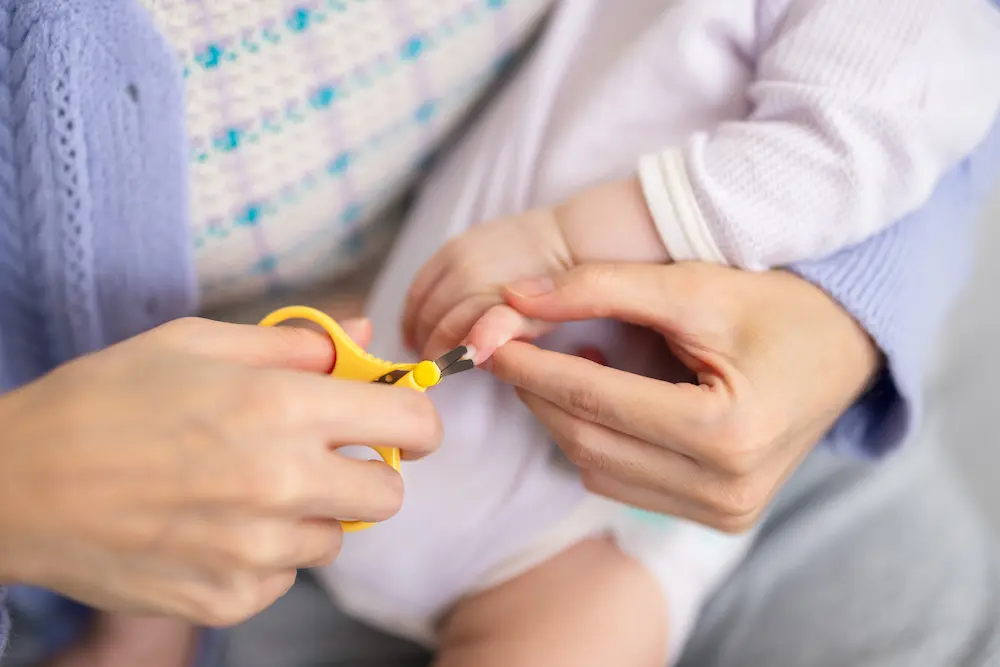
Nails grow at different rates depending on the baby. During the first few weeks of your baby’s life, the question does not really arise because their nails are not long enough to worry about. In any case, it is not recommended to trim your baby’s nails before they are 1 month old.
Before 1 month, their fingernails and toenails are too soft and fragile to be cut. The nail also adheres closely to the skin, making it difficult to separate the two. As a result, you could injure or damage your baby’s skin and nails. Toenails can actually be trimmed much later since they grow much more slowly than fingernails.
Sometimes, a baby’s nails are long enough that they scratch themselves in the first weeks. If this happens, we recommend filing them down with a cardboard emery board rather than using nail clippers. A glass nail file is ideal when the nail tips are short but sharp.
You can also put mittens on your baby’s hands to protect them from long nails and prevent scratches, but this is not ideal in the long term because your baby needs to be able to feel and suck on their hands (which are very reassuring to them).
Want to learn more? Feel free to download the May app, where you’ll find plenty of resources to support and guide you throughout your journey as a new parent.
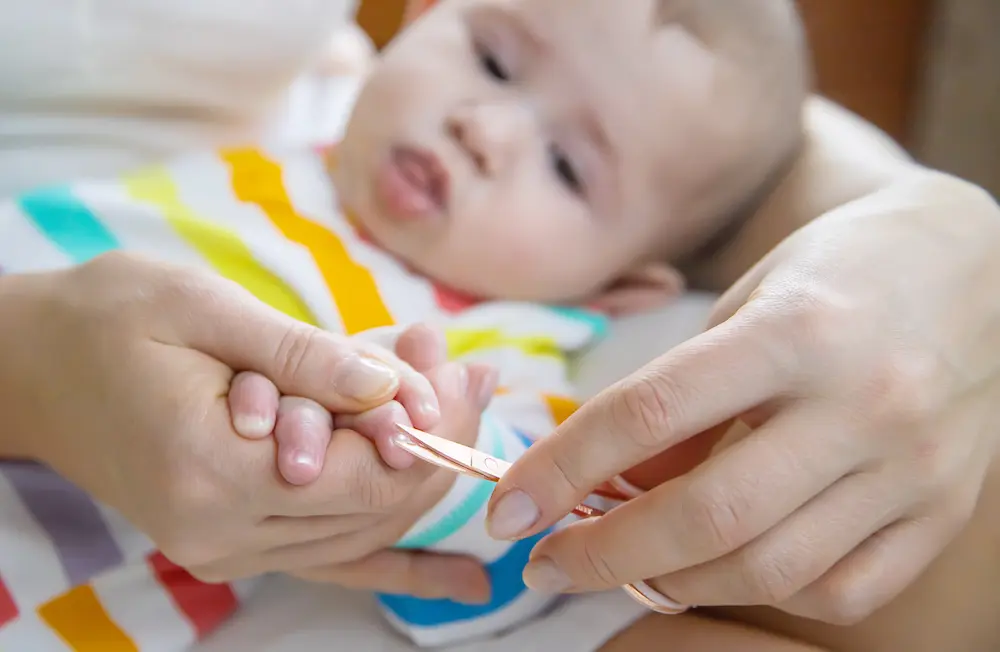
After one month, you can use baby nail scissors or baby nail clippers to trim your baby’s nails. During the first few months, a pair of round-tipped scissors is recommended because your baby’s nails are still soft.
Nails generally become harder around 6 months of age. If you feel comfortable, you can switch to baby nail clippers to shorten their nails at that time. However, you can always choose to file their nails instead. Baby manicure kits and grooming sets are available in many stores. They are designed and adapted to the size of your baby’s fingers.
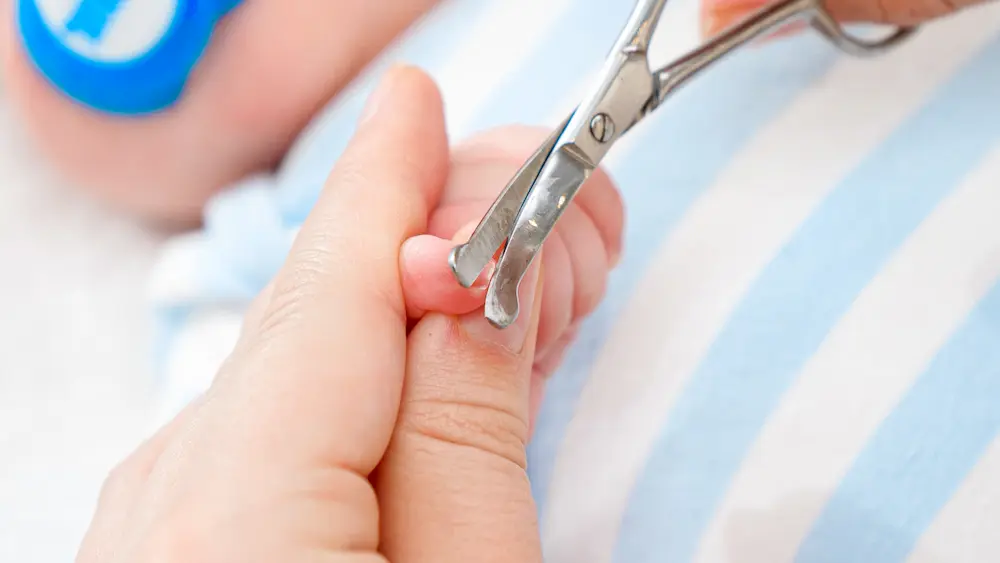
Choose a calm moment to trim your baby’s nails. If you feel that they are restless, it is probably not the best time to trim them.
Generally, the best times to do it are: after a feeding or when they are asleep. If your baby starts wiggling even though they were calm at first, do not hesitate to ask your co-parent to help distract them while you trim their nails!
After 6 months, you can trim their nails after a bath because they will be softened.
But how exactly should you trim your baby’s nails? Simply hold your baby, sit them on your lap, or place them on their changing table. The process is slightly different depending on whether you are trimming fingernails or toenails:
For fingernails:
For toenails:
Remember to describe to your baby what you are doing and stay relaxed so you do not pass on your stress.
It is recommended to keep the scissors or nail clippers in a toiletry bag or in the area dedicated to your baby’s care products.
If you notice that one of their fingers is red, disinfect it with an antiseptic solution. The wound should heal within a few days. Do not hesitate to consult your pediatrician or doctor if your baby seems to have pain in their fingers.
As for frequency, you can trim your baby’s fingernails twice a month, about every two weeks, and once a month for toenails. However, this is not mandatory, as it also depends on how quickly the nails grow.
There is no need to rush to trim your baby’s nails. This care routine can be done occasionally. If, by observing nail growth, you feel that your baby only needs their fingernails trimmed once a month, that is perfectly fine.
In summary, trimming your baby’s nails is a small daily care task that mainly requires patience and gentleness. After 1 month of age, there are no strict rules regarding how often it should be done: simply observe your baby’s nail growth and adapt to their needs.
It is completely normal to feel intimidated—your baby’s fingers are tiny and their nails are very thin. With a little practice, you will gain confidence and this care routine will become second nature.
**
Photo credits: leungchopan | yanadjana | kryzhov
This text was translated from French by an artificial intelligence. The information, advice, and sources it contains comply with French standards and may therefore not apply to your situation. Make sure to complement this reading by visiting the May US/UK app and consulting the healthcare professionals who are supporting you.
Some of the links below may no longer be active. In that case, please feel free to refer directly to the relevant websites.
These resources might interest you

My husband doesn’t support me during pregnancy: how can we improve the situation?