


Pregnancy Timeline
–
Pregnancy: Popping noise in the belly — should you be concerned?

Stopping breastfeeding is an important step, and it can be done gently. How can you manage persistent lactation, avoid engorgement, or help your child transition from the breast to the bottle?
Stopping breastfeeding gently: medical advice and traditional grandmother tips.
The question of weaning can arise at different times, such as when you return to work, when your baby learns to feed in other ways than breast milk, or simply when you feel ready to stop. This process may be initiated by you or, sometimes, by your baby, who, as they grow, may begin to lose interest in breastfeeding, often between ages 2 and 7. There are three different types of weaning:
Weaning can be a sensitive time for you:
Want to learn more? Feel free to download the May app, where you’ll find plenty of resources to support and guide you throughout your journey as a new parent.

By adopting a gradual approach, maintaining a reassuring environment, and involving the co-parent, it is possible to anticipate this transition and approach it gently.
Gradual weaning is preferable. To make it successful, it is recommended to remove one feeding at a time, replacing it with a bottle or another age-appropriate feeding method. This gradual approach allows your body to reduce milk production without causing engorgement or nipple pain.
Grandmother’s tip: it is best to avoid removing the morning feeding first, as it is often associated with strong milk flow, or the evening feeding, which is typically a comforting moment for your baby.
The end of breastfeeding can disrupt your baby’s familiar cues. However, it remains important to maintain your usual bedtime routines. Skin-to-skin, cuddles, massages, and playtime are still just as important for your child. These moments provide comfort at a time when they can no longer nurse as before.
The co-parent can also support your baby during this transition. It is often recommended that the co-parent be the one to offer the bottle during the first attempts. This helps reduce frustration from the absence of the breast and makes it easier for your child to accept the new feeding method. 
Many mothers turn to grandmother tips to stop breastfeeding. These natural, time-tested methods are often passed down through generations and can help gently reduce milk production while helping your baby adapt to their new routine without stress.
Some plants are known to help reduce lactation during weaning:
Caution: always ask your healthcare provider before using herbs, especially if you are still partially breastfeeding or have a specific medical history.
Weaning also involves small adjustments in household organization and habits:
Good to know: another grandmother tip to stop breastfeeding is to introduce the bottle or pacifier outside mealtimes. This helps your child get used to the new sucking motion without pressure. 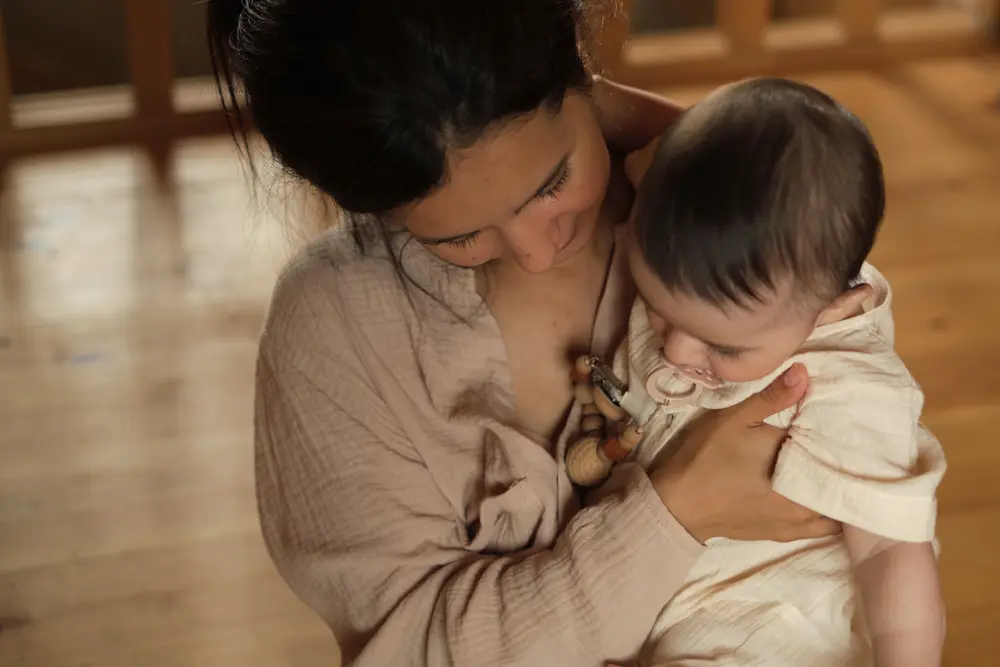
When feedings are spaced out or replaced by bottles, breasts can become tense and painful due to engorgement. Fortunately, there are several grandmother tips to stop breastfeeding while soothing your chest:
Grandmother tip: cabbage leaves work perfectly as cold compresses. Place chilled green cabbage leaves directly on your breasts, under your bra. Although not scientifically proven, cabbage leaves are believed to have anti-inflammatory properties that help relieve engorgement naturally. Change the leaves every 2 to 3 hours.
Breastfeeding creates a strong bond between you and your baby. Ending this chapter can stir emotions. These feelings are normal and deserve to be expressed. Don’t hesitate to talk about your emotions with loved ones or other mothers.
Finally, remember that each mother and baby experiences weaning at their own pace. Grandmother tips for stopping breastfeeding are there to support you, but the most important thing is to listen to yourself.

Weaning can sometimes be challenging, even when applying the best grandmother tips to stop breastfeeding. Medical support can help you navigate this period with confidence. Certain signs should alert you and justify a consultation:
Never hesitate to reach out to your doctor, midwife, pediatrician, or a maternal and child health center. Breastfeeding support associations are also valuable resources for discussing your feelings and receiving tailored advice.
Finally, if you need to take medication or undergo surgery, always discuss with a healthcare professional to determine whether weaning is necessary or what adaptations are possible.
In summary, even though grandmother tips for stopping breastfeeding can greatly ease weaning and help your baby transition from breast to bottle, certain signs require the advice of a healthcare professional. Remember that every breastfeeding journey is unique, and the most important thing is to listen to yourself and move at your own pace.
**
Crédits photos : ImageSourceCur | davidprahl | yavdat | YuriArcursPeopleimages
This text was translated from French by an artificial intelligence. The information, advice, and sources it contains comply with French standards and may therefore not apply to your situation. Make sure to complement this reading by visiting the May US/UK app and consulting the healthcare professionals who are supporting you.
Some of the links below may no longer be active. In that case, please feel free to refer directly to the relevant websites.
These resources might interest you
Pregnancy: Popping noise in the belly — should you be concerned?