


Postpartum Pain
–
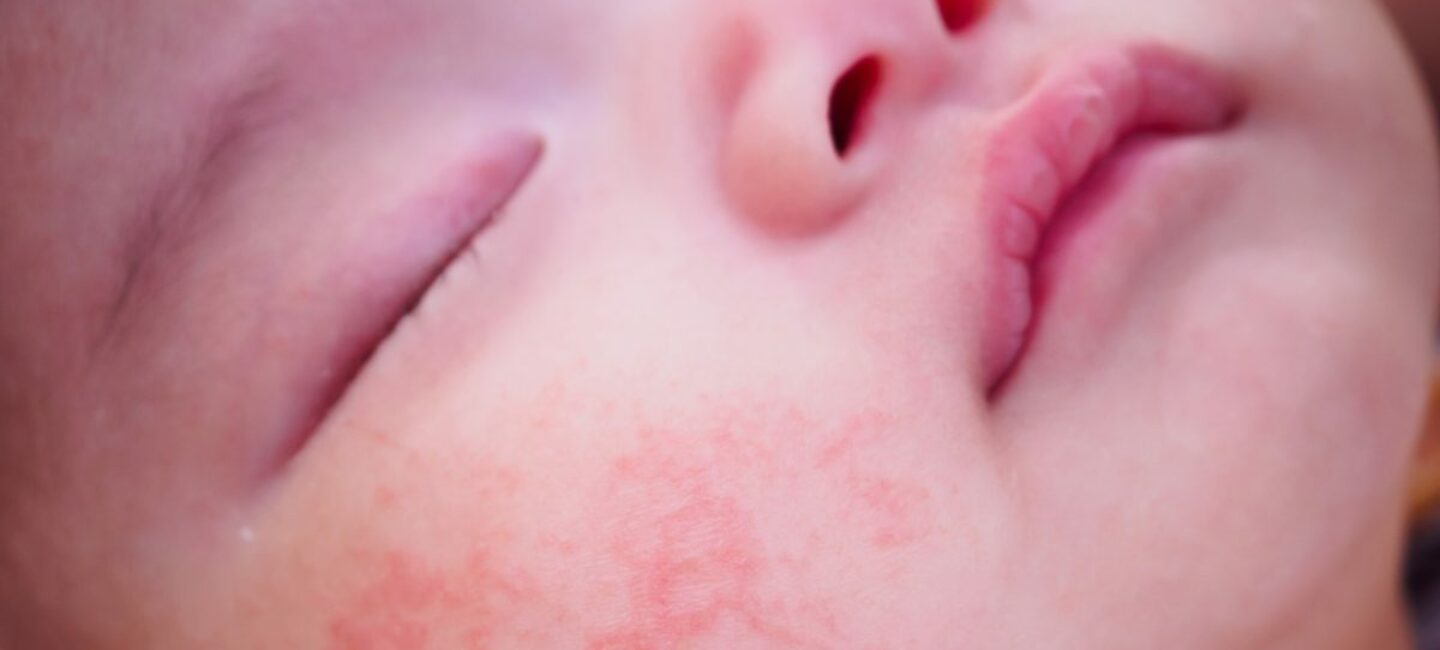
Eczema, also known as atopic dermatitis, is a common non-contagious skin condition in babies and young children. Flare-ups most often appear as very dry skin, red patches, and itching, also called pruritus, which can sometimes be intense. How can you recognize eczema? Which creams should be used? What should you do or avoid? Eczema and atopic dermatitis in children/babies: here’s what you need to know.
Eczema appears in recurring flare-ups. These are the well-known eczema flare-ups. Over time, the condition generally progresses with periods of flare-ups alternating with remission phases. These flare-ups are often accompanied by redness and inflammatory lesions visible on your child’s skin. Its duration varies depending on the child and can last from a few months to several years. In most cases, atopic eczema gradually improves and eventually disappears during childhood. According to French Health Insurance, atopic dermatitis persists into adulthood in only 5% of cases. Symptoms to watch for in your child:
In this case, there’s little doubt—it’s likely eczema. A diagnosis by a doctor is still necessary. Make an appointment with your pediatrician to confirm the diagnosis. In case of severe or persistent symptoms, a consultation with a dermatologist may also be recommended. Good to know: atopic eczema is often hereditary. According to French Health Insurance, in 50 to 70% of cases, a first-degree relative has already had it. Want to learn more? Feel free to download the May app, where you’ll find plenty of resources to support and guide you throughout your journey as a new parent. 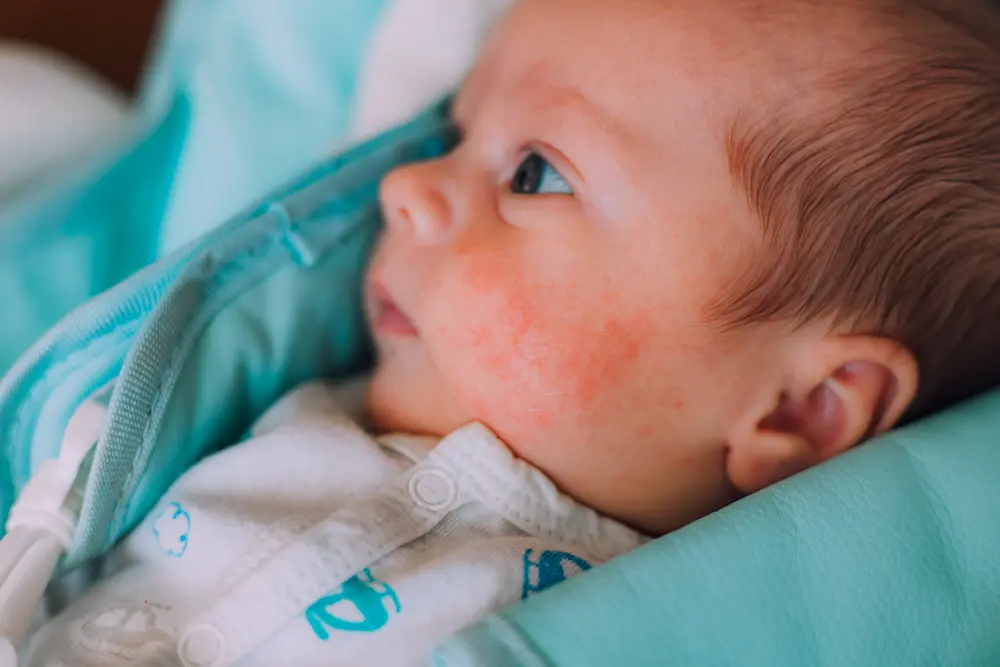
Atopic eczema in children can present differently depending on age. The location of lesions, their appearance, and the affected areas of the body evolve over time.
In babies aged 0 to 1 year, infant eczema usually appears symmetrically. Lesions mainly affect the convex areas of the face (forehead, cheeks, chin) as well as certain parts of the limbs such as arms and legs. However, the nose and buttocks are usually spared. The folds behind and under the ears may show cracks and oozing, while the front neck fold is also often affected. Good to know: if small greasy white or yellowish patches appear on your baby’s scalp, they are probably cradle cap.
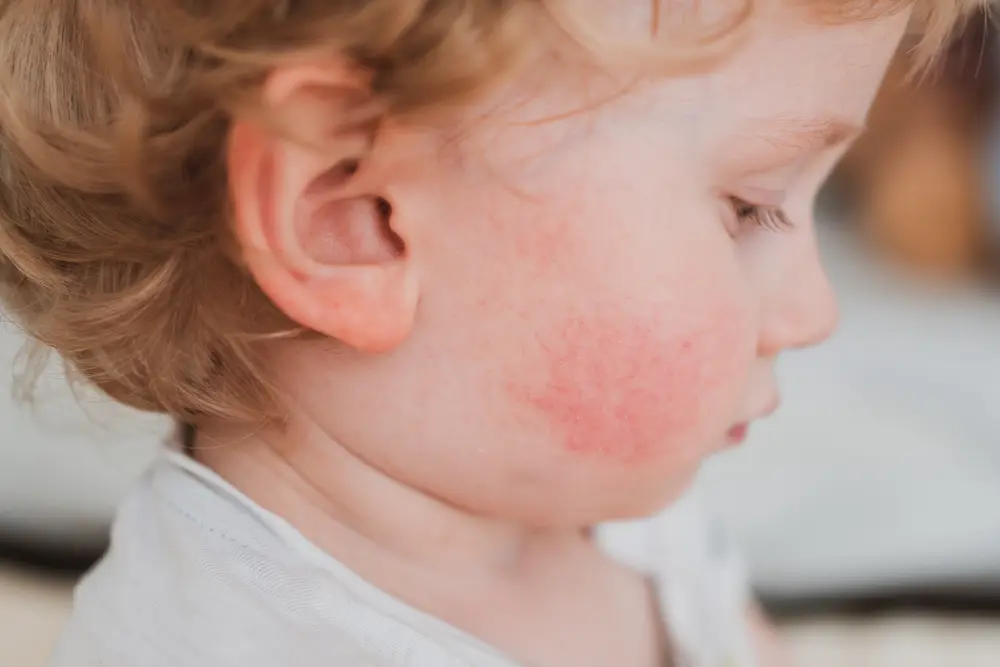
Between 1 and 2 years, atopic eczema appears mainly on the head, neck, and flexural folds. Lesions may also appear on the trunk and limbs, forming round red patches about the size of a coin. In general, the palms, soles of the feet, and nose are rarely affected.
After age 2, atopic eczema lesions often become thicker and whitish, with a lichenified appearance, causing significant itching. The face is less frequently affected, but the area under the lower eyelids may appear darker, thicker, and marked by pronounced folds. The area around the mouth may also be affected. Lesions are mainly located in skin folds (neck, behind the ears, elbows, knees), but also on the hands, wrists, and ankles. More rarely, they may extend to other parts of the limbs. The skin is generally very dry, especially on the hands, where it may become cracked or fissured. 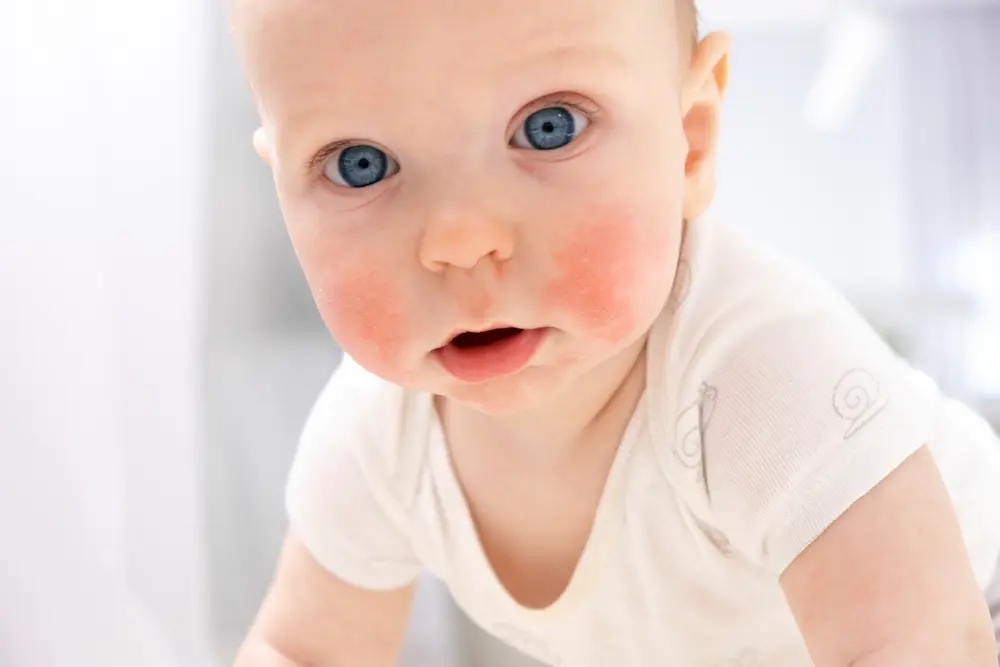
Treatments to relieve eczema in babies and children exist and are highly effective.
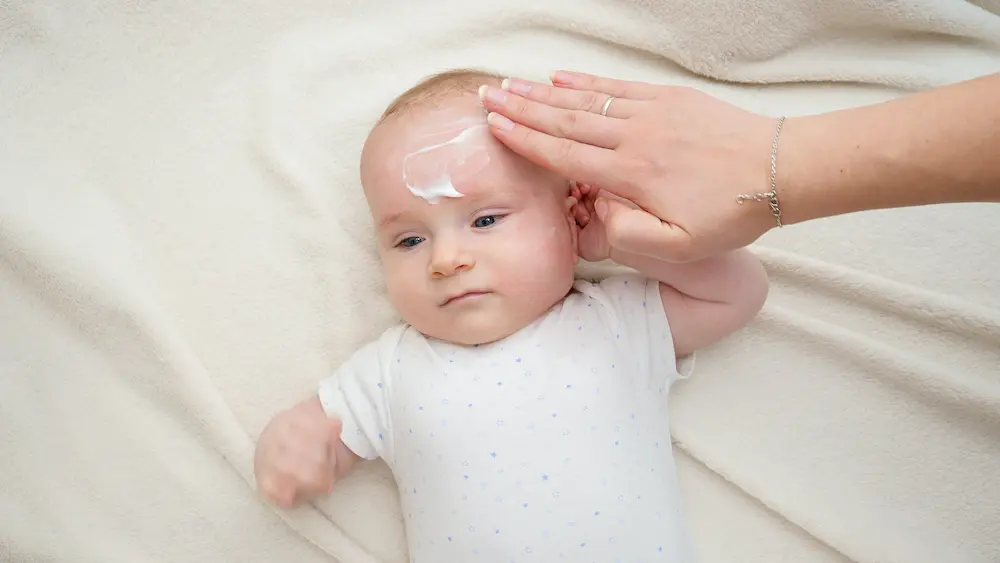
Good hydration helps limit dryness and protect the skin from irritation. Here’s how to proceed: Wash your child with a syndet (“soap-free”) fragrance-free cleanser that won’t further dry out the skin. Rinse thoroughly. Use an emollient cream without fragrance, preferably in balm form such as Exomega Balm® or Xémose Balm®. You can apply this balm twice a day. Apply it preferably after bathing as it will penetrate the skin better, since the pores are more open. Emollient treatment is the foundation of eczema care in babies. It helps space out flare-ups and may even protect against the development of allergies by restoring the skin’s barrier function.
These are cortisone-based creams that treat your child’s skin and help eczema disappear. They should be applied once a day to affected areas until symptoms completely disappear. Warning: usually a different cream is used for the face and the body. For the body, doctors tend to prescribe a stronger corticosteroid, while for the face a milder, moderate-strength cream is used. Many parents are afraid of cortisone creams and apply them too sparingly. In reality, the skin is more damaged by eczema than by topical corticosteroids, which are essential for healing your baby’s eczema.
Eczema can lead to more serious skin infections such as impetigo. These are usually bacterial infections. Consult your pediatrician quickly if your child does not respond to standard treatments or shows one of the following symptoms:
Atopy is a genetic predisposition to develop “allergic” diseases such as eczema (also called atopic dermatitis), asthma, respiratory allergies (such as hay fever or dust mite allergic rhinitis), and food allergies. If your child has eczema, they are at higher risk than other children of developing one of these conditions. But that does not necessarily mean they have a food allergy! Food allergy tests are only performed if eczema does not respond to well-managed treatment or if it is accompanied by other symptoms suggestive of a food allergy. In summary, eczema is a common condition in babies and children, characterized by flare-ups of red patches, very dry skin, and significant itching. Fortunately, proper skin hydration and effective treatment generally help relieve your child and control flare-ups. ** Photo credits: aliona2194 | ta_bu | kryzhov | natalyaraeva This text was translated from French by an artificial intelligence. The information, advice, and sources it contains comply with French standards and may therefore not apply to your situation. Make sure to complement this reading by visiting the May US/UK app and consulting the healthcare professionals who are supporting you.
Some of the links below may no longer be active. In that case, please feel free to refer directly to the relevant websites.
These resources might interest you

Armpit pain during pregnancy: causes, symptoms, and solutions