


Baby Sleep
–

Your breastfed baby cries and asks to nurse more often? Are you noticing changes in their sleep? This may possibly be a growth spurt, a period that babies are sometimes faced with during their first year of life. What should you do when a growth spurt occurs, and how can you help your baby get through it?
Growth spurts during the breastfeeding period: let’s take a closer look.
A growth spurt refers to a period during which your baby needs to nurse more frequently. Nowadays, professionals often prefer to talk about “peak days” rather than growth spurts, as the term is not entirely accurate.
Indeed, weight and length gain are not necessarily much greater during this period. In practical terms, growth spurts should be distinguished from the true growth phases children experience as they grow.
Want to learn more? Feel free to download the May app, where you’ll find plenty of resources to support and guide you throughout your journey as a new parent.

You will easily recognize a growth spurt because your baby’s behavior will change. You may feel like they are insatiable, as they want to nurse continuously. This is accompanied by a disrupted and fragmented sleep rhythm, as your baby struggles to fall asleep for long periods. Your baby may also cry more, appear more restless, and be more irritable. 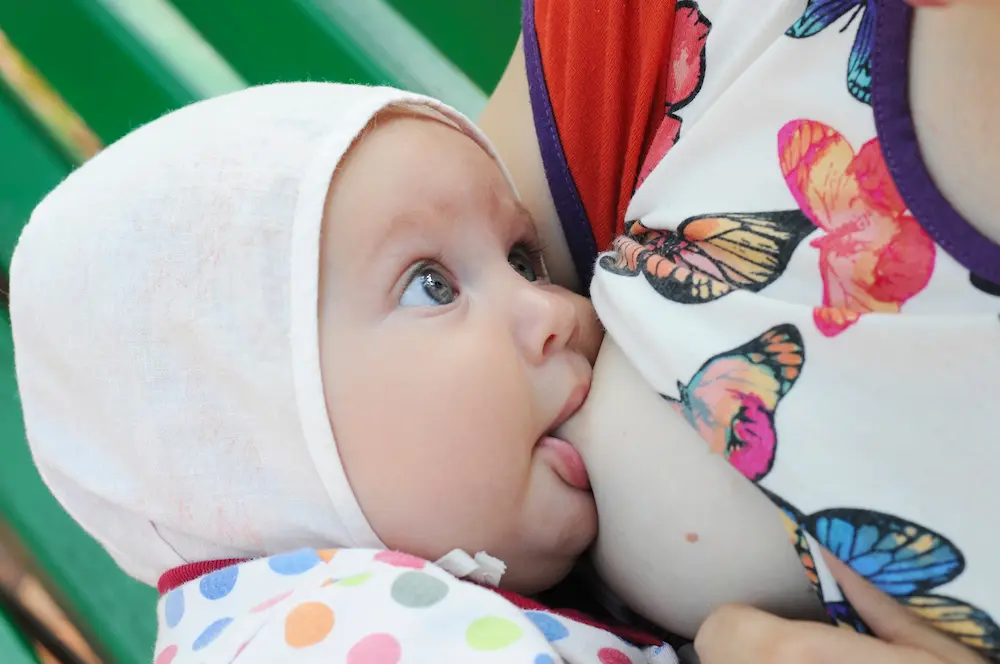
Growth spurts generally follow the 3–6–9 rule: 3, 6, and 9 weeks, then 3, 6, and 9 months. These phases are therefore particularly common during the first days and first months of your baby’s life, a key period for exclusive breastfeeding. Keep in mind that this is only a guideline—every baby is different, and yours may not necessarily follow this pattern. It is impossible to predict exactly when growth spurts will occur.
Their duration usually ranges between 48 and 72 hours.
These growth spurts occur when your infant is about to reach an important milestone (smiling, motor skill development, teething, etc.). A significant change in your baby’s life or a stressful period (moving house, separation, childcare arrangements, etc.) can also trigger a growth spurt.
Although less common, growth spurts can also reappear around the age of 1 year or 2–3 years when breastfeeding has not been shortened.

Your milk production mainly depends on your baby’s sucking. When your baby nurses, receptors located around your areolas are stimulated and send a message to the brain. The brain then releases two hormones essential for breastfeeding:
In addition, when the alveoli are full, a natural mechanism called the feedback inhibitor of lactation (FIL) slows down production. Conversely, when the breast is well emptied, this factor disappears and production resumes. Thus, the more effectively the baby nurses, the more milk production is stimulated.
In short, breastfeeding works on a principle of adaptation: your baby’s sucking triggers and regulates lactation, allowing your body to produce the amount of milk that matches their needs. So during peak days, no need to worry—your body adapts perfectly!

The best way to handle a growth spurt is to respond positively to your baby’s increased demand. Offer the breast as often as they want. Gradually, they will return to a more regular rhythm. If your baby seems unsettled, don’t hesitate to cuddle them or keep them close with skin-to-skin contact to help soothe them.
Growth spurt periods are often challenging. Breastfeeding at the breast can be particularly exhausting, especially when you need energy and are dealing with fatigue. Here are a few strategies to help manage a growth spurt:
During a growth spurt, nipple pain may occur because they are much more stimulated than usual. Remember that pain is never normal, and solutions do exist.
Cracked nipples are small fissures in the skin of the nipple. To promote healing, the first step is to check that the breastfeeding position is appropriate. The baby should open their mouth wide enough to take in a large portion of the nipple. Their lips should be flanged outward and should not pinch or clamp down on your breast.
If needed, suitable ointments are available to care for your nipples. Don’t hesitate either to apply a few drops of breast milk to help prevent cracked nipples, and use breast milk compresses to help heal them.
As for engorgement, it is generally less common because babies nurse very frequently, but it can still happen. If this occurs, it is recommended to apply hot and cold compresses for relief (cold between feedings and warm during and after).
In addition to these small strategies, healthcare professionals often provide advice to breastfeeding mothers to help increase milk production.
This advice is primarily based on breastfeeding management, offering both breasts at each feeding and checking that your baby’s sucking is effective. You may drink breastfeeding herbal teas or consume galactagogue plants such as fenugreek, but these are only small additions and will not be effective if breastfeeding is not otherwise optimal (duration and frequency of feedings, baby’s sucking).
Keep in mind that it is the frequency of feedings that naturally adjusts your milk production.
Finally, breastfeeding is not easy every day. In cases of physical and emotional fatigue, it is essential to:

All babies experience growth spurts. These are natural phases linked to infant development. While some significantly disrupt daily life, others may go completely unnoticed. This is why some parents believe their baby never experienced a growth spurt. 
During the first month of life, the fact that your baby asks to nurse very frequently is normal and helpful for stimulating the establishment of an adequate milk supply. After this first month, if your baby continues to gain weight well and, above all, has well-filled diapers (at least 6 to 7 heavy wet diapers per day), it can be said that they are receiving enough milk.
Growth spurts are not synonymous with low milk supply. Therefore, your baby does not need formula supplements. That said, don’t hesitate to try one or more of the tips shared above to help increase your milk production, or to consult your pediatrician or a lactation consultant for more personalized advice.
Unfortunately, it happens quite frequently that mothers question breastfeeding due to a lack of information about growth spurts, sometimes even to the point of considering weaning their baby. If your baby is doing well, their stools and urine output are normal, and there is no significant weight loss, there is no reason to worry!
In summary, growth spurts—or peak days—are an integral part of the normal development of breastfed babies. They are a sign that your baby is growing, developing, and that your body is capable of adapting to their needs. Keep in mind that these phases are temporary, that they do not indicate a lack of milk, and that you are not alone.
**
Photo credits: bnenin | ksenia_she | bearevay | YuriArcursPeopleimages | Prostock-studio | leszekglasner
This text was translated from French by an artificial intelligence. The information, advice, and sources it contains comply with French standards and may therefore not apply to your situation. Make sure to complement this reading by visiting the May US/UK app and consulting the healthcare professionals who are supporting you.
Some of the links below may no longer be active. In that case, please feel free to refer directly to the relevant websites.
These resources might interest you