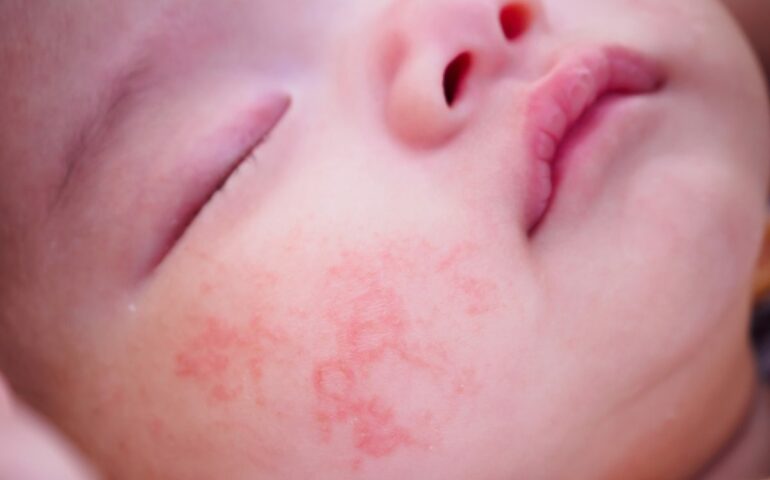



Burned child : how to respond in the event of a burn?

Written by Pierre Kadlub
Updated on 19 February 2026
Baby Health
4 minutes

Share the article

Burns in children are a common household accident that can happen very quickly, often in everyday situations: a liquid that is too hot, a hot object, bath water that is too warm… Is it serious? Should you seek medical care? What should you do right away? Burned child: here’s what you need to know.

Burned child: warning signs you should not ignore

A burn is damage to the skin affecting the epidermis and sometimes the dermis. It is a skin injury that can develop into an infection if not properly treated. Depending on its depth and the body surface area involved, a burn can be superficial or deep, and may cause a local inflammatory reaction with redness, pain, irritation, or itching. If your child has been burned and you are in one of the following situations, do not hesitate, call 911 immediately :

  • Age: your child is under 1 year old.
  • Location of the burn: face, throat, hands, skin folds, genitals.
  • Size of the burn: the burned area is greater than 5% of the body surface (about 5 of your child’s handprints) for a child under 5 years old or 10% (about 10 handprints) for a child over 5 years old.
  • Appearance of the burn: if your child’s skin looks white or black and has a leathery appearance. This is called a third-degree burn.
  • Cause of the burn: electrical (electrocution), chemical, fire, or explosion.

To assess the severity of a burn, it is helpful to know the different degrees and their symptoms:

  • First-degree burn: red, painful skin without blisters.
  • Second-degree burn: red skin with blisters and significant pain.
  • Third-degree burn: white or black skin. The burn may sometimes be less painful because the nerve endings have been damaged. The depth of the burn requires urgent medical care.

A word from pediatrician Emmanuelle Rondeleux:

“Do not judge the severity of a burn based on how much pain your child is in. A deep burn may hurt relatively little and vice versa. Assessing severity based solely on pain can be misleading.” As always, call 911 if you notice any of the following symptoms:

  • Behavior : your child is lethargic, drowsy, irritable, or has a fever. They are not acting as usual. They sleep a lot and are difficult to wake.
  • Color : they are very pale, have dark circles under their eyes, their eyes appear sunken, or their skin looks mottled.
  • Breathing : they are having trouble breathing or are breathing rapidly.

Want to learn more? Feel free to download the May app, where you’ll find plenty of resources to support and guide you throughout your journey as a new parent. Burned child: how to react in case of a burn? - May App Health
What should you do if your child gets burned?

You are dealing with a first-degree burn (red skin, typically sunburn) or a limited second-degree burn (red skin + blisters). Here are the first aid steps to follow:

  • Remove your child from the source of heat.
  • Remove clothing around the burned area. If clothing is stuck to the skin, cut around it and do not pull it off.
  • Place the burned area (even if clothing is stuck) under lukewarm running water (59°F / 15°C) for at least 15 minutes and as long as the burn is painful. This helps limit the spread of the burn. Lukewarm water is recommended for your child’s comfort, as 15 minutes under cold water could lead to hypothermia. While cooling the burn, make sure to cover the rest of your child’s body to keep them warm.
  • Pat dry gently without rubbing.
  • Relieve pain by giving your child acetaminophen (Tylenol®, etc.).
  • In case of simple redness, you may apply a soothing and moisturizing ointment such as Biafine® or Flammazine® (use with caution under 2 years old) and cover if necessary with a sterile non-stick dressing.
  • Seek medical advice if you suspect a second-degree burn.

If in doubt, if symptoms worsen, or if the burn has not healed after one week, it is important to seek medical care. Burned child: how to react in case of a burn? - May App Health
Burned child: what not to do

If your child has been burned, certain actions may make the situation worse. It is important to:

  • Do not remove clothing or jewelry stuck to the skin.
  • Do not pop any blisters.
  • Do not apply cotton that could stick to the skin.
  • Do not use ice or ice water, which could further damage the skin.
  • Do not apply oil, butter, or any food product to the burn.
  • Do not put Betadine® or Eosin® on the burn.
  • Do not apply a paraffin gauze dressing (green).

Warning: antibiotics are not automatically required and should only be used in cases of confirmed infection and with a medical prescription.
Burned child: how to react in case of a burn? - May App Health

What are the right habits to prevent burns in children?

Burns in children most often happen during everyday activities, sometimes in just a few seconds. Constant supervision and a few simple precautions can effectively prevent these household accidents and protect your child from risks related to heat, electricity, or the sun.

Burned child: beware of hot liquids

Burns caused by hot liquids are the most common. Be especially careful with:

  • Bath water temperature: it should be 98.6°F (37°C). Finish filling the tub with cold water and never leave your child alone in the bath. They could turn on the hot water and get burned.
  • Hot liquids in the kitchen: turn pot handles toward the wall and keep kettles and deep fryers out of reach.
  • Very hot drinks:
    • Avoid heating bottles in the microwave.
    • Always check the temperature of the milk. Shake the bottle and pour a few drops on your wrist.
    • Do not leave a cup of hot tea or coffee on a low table within a child’s reach.

Good to know: if your child swallows a liquid that is too hot, it is important to quickly cool the digestive tract by immediately giving a bottle of cool water.

Burned child: objects that pose a burn risk

Many objects can be dangerous and should be put away quickly after use:

  • irons, stovetops, and burners that remain hot after being turned off,
  • unprotected electrical outlets and light bulbs,
  • chemical products,
  • plugged-in extension cords,
  • secure access to the oven and fireplace,
  • never use alcohol or gasoline on a barbecue,
  • do not leave candles, lighters, or matches within your child’s reach.

Warning: electrical burns can cause internal injuries that may be serious and progressive. Even if your child is conscious and seems fine, a medical evaluation is always necessary and should be done immediately. If your child is still in contact with electricity, turn off the power at the breaker before touching them. Finally, one of the best ways to prevent burns is to avoid exposing your child to the sun. Their skin and eyes are particularly sensitive. Sunscreen should have an SPF of at least 50+.

In summary, burns are among the most common household accidents in children, but a few simple habits can truly make a difference. Knowing how to recognize risky situations, applying the right first aid measures quickly, and seeking medical advice when in doubt can help limit complications, relieve pain, and promote proper healing. If you are unsure, do not hesitate to consult your doctor.

**

Photo credits: westend61 | sokorspace | FamilyStock

This text was translated from French by an artificial intelligence. The information, advice, and sources it contains comply with French standards and may therefore not apply to your situation. Make sure to complement this reading by visiting the May US/UK app and consulting the healthcare professionals who are supporting you.


Links and references

Some of the links below may no longer be active. In that case, please feel free to refer directly to the relevant websites.

These resources might interest you