


Baby Health
–

Crying at bedtime, restlessness, frequent awakenings… These difficulties are common and can have multiple causes, often related to your baby’s development and physiological needs. What are the common sleep issues in a baby struggling to fall asleep? What are their needs? How can you help them fall asleep? Let’s take a closer look.
In a baby who struggles to fall asleep, certain causes are particularly common.
Your baby may struggle to fall asleep due to their physiological needs:
Good to know: from 3–4 months onward, changes in wakefulness also influence your infant’s sleep. Depending on the baby, this phase can lead to calmer nights because they expend more energy during the day, or conversely to more restless nights, as their curiosity may sometimes override fatigue.
Some babies experience sleep disturbances due to medical causes. Here are the main situations to consider:
The environment in which your baby goes to sleep plays a key role in their ability to fall asleep peacefully. Here are the main elements to monitor:
Want to learn more? Feel free to download the May app, where you’ll find plenty of resources to support and guide you throughout your journey as a new parent. 
Sleep needs in terms of hours vary greatly depending on your baby’s age and stage of development. At birth, a newborn can sleep up to 20 hours per day, divided into several short cycles interspersed with wakeful periods. Deep sleep and the ability to distinguish between day and night develop only gradually, as your baby’s biological clock becomes established. Therefore, it is normal for your baby to wake frequently and struggle to fall asleep independently during the first months of life. A lack of sleep or poor-quality naps can also lead to an accumulation of fatigue and make bedtime more difficult. Good to know: this pattern evolves quickly. These figures are indicative and may vary from one child to another: 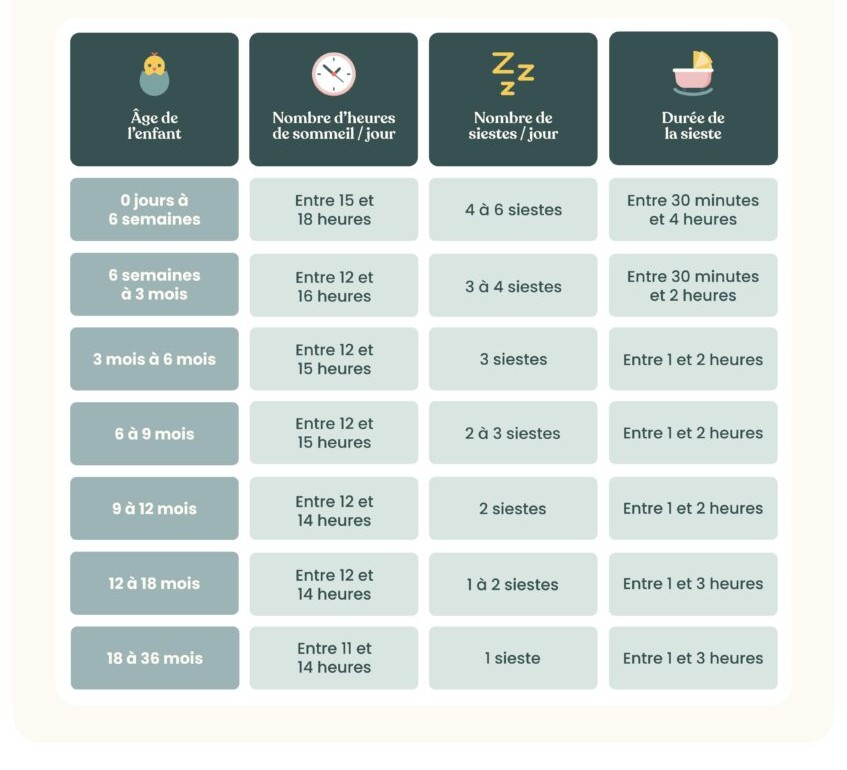
Restlessness at bedtime is one of the most common signs in a baby who struggles to fall asleep. A child who has difficulty calming down may show:
These reactions are often a sign that your baby cannot let go, either because they are overstimulated or already overtired. 
There are practical solutions to improve your baby’s sleep quality, including establishing a reassuring routine and gradually supporting more independent sleep onset.
A consistent and predictable evening routine helps your baby anticipate bedtime. This reassuring cue promotes the transition from wakefulness to sleep. Here are some routine ideas to adapt to your habits:
The key is to repeat the same actions every evening, in the same order, to help your baby understand that bedtime is approaching.
“The bedtime routine must take your child’s level of fatigue into account! An overtired child is not able to benefit from a routine, and it may turn into a nightmare! That’s why it’s important to recognize the right bedtime moment in order to anticipate the routine.”
From 4 to 6 months of age, your baby can go several hours without feeding, distinguish between day and night, and benefit from longer sleep cycles. They can then gradually learn to fall asleep on their own. Each baby develops this skill at their own pace. If you would like to help them develop independent sleep onset, you can gradually get them used to falling asleep without your presence. To do this, progressively reduce the time you spend with your baby at bedtime. To achieve this:
Good to know: try to identify signs of fatigue (yawning, rubbing eyes) so you can offer bedtime at the right moment. If possible, put your child to bed within 15 to 30 minutes after the first signs of tiredness appear. 
Sometimes, despite your best efforts, your baby may continue to have difficulty falling asleep. It is then recommended to seek your doctor’s advice in the following situations:
A healthcare professional can assess whether there is an underlying medical or emotional cause and guide you toward solutions suited to your situation. In summary, sleep issues in babies can have many causes. Helping a baby who struggles to fall asleep involves listening to their needs and establishing a reassuring bedtime routine. Observing signs of fatigue and respecting your baby’s sleep cycles can make it easier for them to fall asleep and improve sleep quality.
**
Photo credits: ArseniiPalivoda | joaquincorbalan | OlgaSmolina
This text was translated from French by an artificial intelligence. The information, advice, and sources it contains comply with French standards and may therefore not apply to your situation. Make sure to complement this reading by visiting the May US/UK app and consulting the healthcare professionals who are supporting you.
Some of the links below may no longer be active. In that case, please feel free to refer directly to the relevant websites.
These resources might interest you