

Pregnancy Timeline
–

At 12 months, your baby’s food diversification is already well underway. Your child can now eat the vast majority of foods. How can you make sure they have the richest diet possible with the most varied ingredients?
From classic purée to fruit pancakes and cereals, here are our recipe ideas for your 12-month-old baby.
Foods all provide different nutritional benefits. As your baby becomes more active, their energy needs increase. The main challenge is to establish a diet that supports your child’s health and harmonious growth while varying ingredients as much as possible. To do this, your baby’s diet should mainly consist of fruits and vegetables, protein-rich foods, dairy products, and cereals.
For example, you can vary sources of starches by offering rice, quinoa, lentils, or dried peas, which provide energy and fiber.
Since your baby’s immune system is not yet fully developed, you should be cautious when giving foods that carry risks of food poisoning such as eggs or raw fish (salmon, tuna…). Also watch out for foods that present a choking risk, such as nuts or raw hard vegetables (carrots, celery, fennel…).
Your baby has specific nutritional needs that are essential for their development. It is important to remember that foods complement each other and that no single food provides all nutrients on its own. With varied recipes and diverse ingredients, you can help your baby eat in a healthy and balanced way. This also allows them to discover different flavors and textures and refine their tastes.
Good to know: at 12 months, your baby is still too young to cook alongside you. Around 18 months, they can start helping by stirring or transferring ingredients. This helps develop your child’s cooperation and creativity!
Want to learn more? Feel free to download the May app, where you’ll find plenty of resources to support and guide you throughout your journey as a new parent.
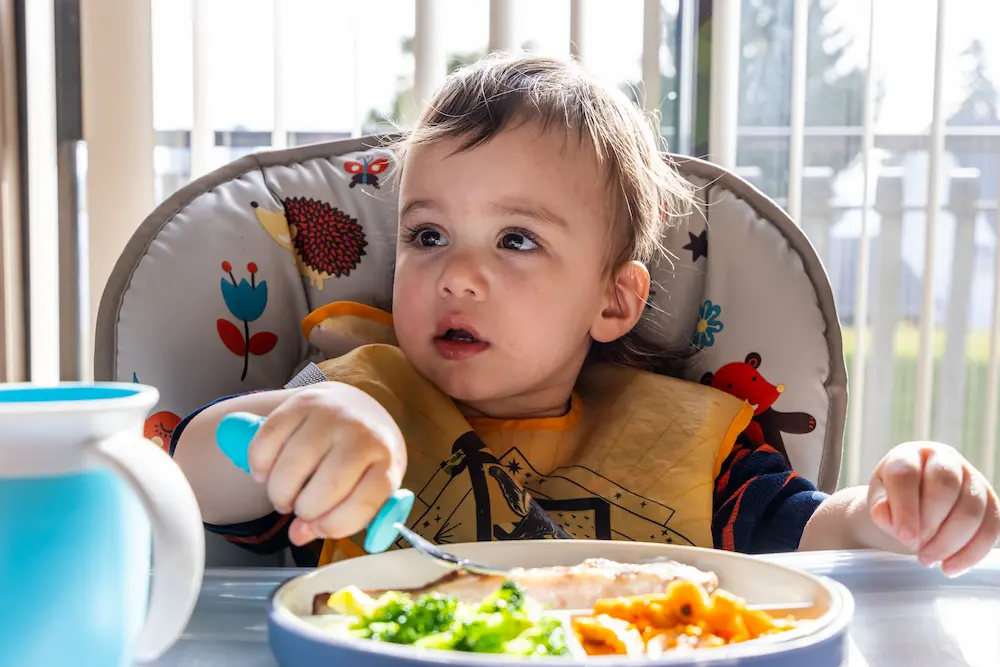
At 12 months, your baby’s diet continues to evolve and gradually becomes structured around four meals per day: breakfast, lunch, snack time, and dinner.
At 12 months, solid foods are increasingly part of your baby’s daily routine even though breast milk (or infant formula) still plays an important role in their diet. For breakfast, it is recommended to give 210 to 250 ml of breast milk/toddler milk, which you can accompany with cereal or a piece of bread. You can also add a raw or cooked fruit if you notice that your baby is still hungry.
For lunch, a plate containing 2/3 vegetables, 1/3 starches, and 20 g of protein is recommended. Remember to add 2 teaspoons of vegetable oil or a small knob of butter to provide essential fatty acids. For dessert, you can offer a dairy product or cheese and a fruit or a fruit compote.
Warning: the French Agency for Food, Environmental and Occupational Health & Safety (ANSES) recommends avoiding raw-milk cheese for young children before the age of 5. Instead, choose pasteurized cheese.
For snack time, it is recommended to give babies 150 ml of breast milk/toddler milk or a dairy product along with 1 fruit or 1 fruit compote. A small piece of bread or a biscuit can occasionally be offered.
Warning: children naturally have a strong attraction to sweet flavors from birth. This preference is partly biological: sugar provides energy and reminds them of the taste of breast milk.
However, it is important to limit added sugars because children often already consume enough through everyday foods (fruit, milk, cereals, processed foods). Excess sugar can promote cavities, hyperactivity, and in the long term, health problems such as overweight or diabetes.
Before age 3, very sugary products should remain occasional. After that, they can be consumed in moderation. The key is to establish healthy eating habits early on, avoiding using sugar as a reward and prioritizing a varied and balanced diet.
Baby dinners are generally lighter than the other meals of the day. Most often, vegetables and starches cooked with 2 tablespoons of vegetable oil are recommended. For dessert, you can choose a dairy product, a breastfeeding session, or a bottle of breast milk/infant formula of about 180 ml.
Protein intake should be measured so as not to exceed 20 g per day during the second year of life.
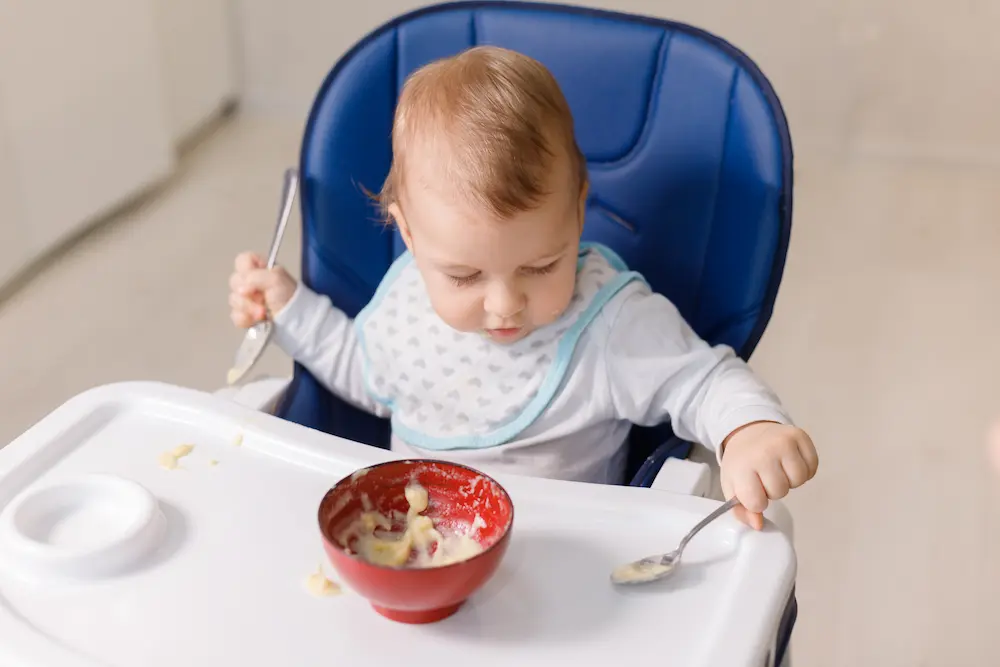
If you’re running out of inspiration, here are some recipe ideas for your 12-month-old baby:
To change things up from cereal, here is a delicious pancake recipe:
Not sure what to make for meals? Here is a homemade shepherd’s pie. For the mashed potatoes:
For the ground meat:
Preparing the tomatoes:
Preparing the crumble topping:
In summary, your 12-month-old baby is discovering an increasingly varied diet while still continuing to consume breast milk or toddler milk. This period is ideal for introducing new flavors, textures, and food combinations while ensuring meals remain balanced and suited to their nutritional needs. Fruits, vegetables, starches, proteins, and dairy products gradually find their place in their daily routine.
Simple, homemade recipes are often the best for helping them gently discover new foods. Fruit pancakes, shepherd’s pie, or vegetable crumble: these easy preparations can help develop your child’s curiosity about food while sharing enjoyable moments together.
**
Crédits photos : edb3_16 | vladdeep
This text was translated from French by an artificial intelligence. The information, advice, and sources it contains comply with French standards and may therefore not apply to your situation. Make sure to complement this reading by visiting the May US/UK app and consulting the healthcare professionals who are supporting you.
Some of the links below may no longer be active. In that case, please feel free to refer directly to the relevant websites.
These resources might interest you

Negative blood test but no period : understanding the causes