


Preparation for Childbirth
–

You’re pregnant, and suddenly a cold crashes the party. Hard to avoid, especially during pregnancy, when the immune system is more fragile. Since self-medication is strongly discouraged during pregnancy, what natural solutions exist, and when should you consult a healthcare professional?
How can you manage a cold during pregnancy? Let’s take a closer look.
A cold, also known as rhinopharyngitis, is a mild condition that usually resolves on its own without treatment. However, certain measures can help reduce discomfort while waiting for recovery. A medical consultation may be required if complications arise.
There is one very important point to remember regarding medications during pregnancy: it is recommended to avoid self-medication at all costs. This is always true, but it is especially important during pregnancy. The advice of a healthcare professional is essential before starting any treatment, no matter how minor it may seem. If your condition may require treatment, we therefore recommend making an appointment with a healthcare professional.
It is also important to remember that cold symptoms, caused by respiratory viruses, can sometimes resemble those of the flu, although the flu generally causes a higher fever. These infections are most often viral, which means antibiotics are not useful in the majority of cases.
If your first instinct is to go to the pharmacy to relieve your symptoms, be sure to mention that you are pregnant so the pharmacist can guide you appropriately. This is a matter of safety, as many medications sold with or without a prescription are not compatible with pregnancy and may pose risks to the fetus.
If your symptoms are mild and your condition does not necessarily require a consultation, you can also try natural remedies that are compatible with pregnancy, in order to relieve your symptoms as effectively as possible.
Warning: the use of essential oils and tiger balm during pregnancy is also discouraged.

This is THE most uncomfortable symptom during a cold. To reduce nasal congestion without medication during pregnancy, you can start by rinsing your nose with seawater or saline solution. Salt water, in addition to being harmless, is effective at absorbing nasal secretions and flushing them out during rinsing.
There are very inexpensive devices, such as the Rhino Horn, for example, that help maintain good “nasal hygiene,” sometimes even more effective than all the usual sprays and medications.

If you catch a cold during pregnancy, and if your condition allows it, we recommend prioritizing natural methods over medications, including over-the-counter pharmacy products, which are not always harmless for your health.
Here are a few home remedies for each symptom.
Sore throats are linked to irritation of the mucous membranes. Sometimes, mucus builds up and makes breathing uncomfortable.
Play with temperature variations: cold water has a natural anti-inflammatory and pain-relieving effect on the body. Hot water, on the other hand, promotes relaxation of the throat muscles. That’s why we can only recommend drinking herbal tea. Try different options to gently relieve your discomfort!
Increasingly, the reflex “cough = syrup” is disappearing, and rightly so. Effective cough suppressants are not always harmless: some act on the central nervous system, and some belong to the opioid derivative class, for example. What’s more, a cough is generally useful—it is a respiratory reflex to expel secretions or foreign bodies. To relieve yourself, therefore, favor methods that do not stop the cough but help soothe it.
For example, a traditional remedy such as steam inhalation with water (no essential oils!) helps superficially hydrate the mucous membranes and soothe irritation.
Sleeping in a more upright position also helps reduce the impact of lying down on coughing.
Finally, coughing can sometimes turn into a dry, very irritating cough. In this case, humidifying the air can help soothe the bronchial tubes. Humidifiers exist, but you can also increase humidity by air-drying laundry in the room, for example.
Want to learn more? Feel free to download the May app, where you’ll find plenty of resources to support and guide you throughout your pregnancy.
During a cold, and in everyday life, it is important to drink water to stay properly hydrated. The recommendation is 1.5 to 2 liters of water per day. Hydration helps thin nasal secretions and keeps you well hydrated. If you have trouble drinking plain water, you can also drink herbal teas and/or broths. 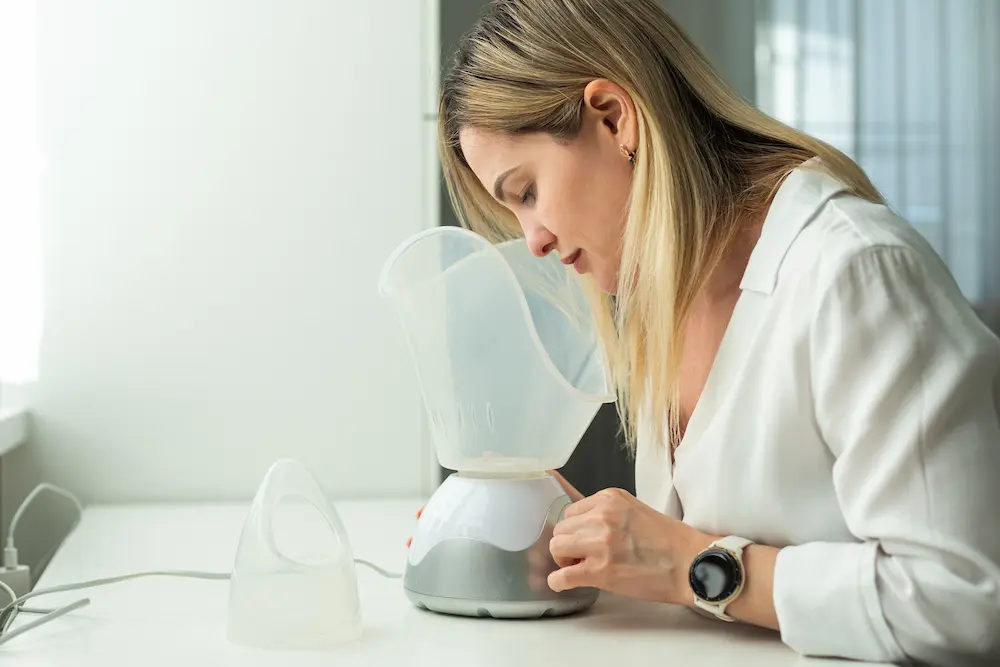
A cold is caught when you come into contact with the secretions of an infected person. To prevent a cold during pregnancy, you can follow a few standard protective measures:
By following these recommendations, the risk of catching a cold during pregnancy is greatly reduced. 
A cold does not pose a risk in itself for a pregnant woman. However, it can be a source of intense fatigue and complications, particularly in cases of fever. This is why we recommend consulting a healthcare professional as soon as you develop a fever or if your symptoms worsen, such as difficulty breathing. 
When you are pregnant, as soon as you have a fever, we recommend making an appointment with your healthcare professional. Do not let a rise in temperature linger while waiting for it to pass or by taking acetaminophen as you might normally do. Fever is generally a sign of infection and requires attention.
In some cases, a cold may be accompanied by thick nasal discharge or headaches, a sign that the sinuses are irritated. This does not necessarily mean you have sinusitis, but if symptoms persist, the opinion of an ENT specialist may be helpful.
When a virus is responsible for the fever, the infection is benign in most cases. However, during pregnancy, it is best to assume that any infection can worsen and have consequences for you or your baby. That is why it is better to remain cautious and schedule an appointment with your specialist.
In summary, a cold during pregnancy is most often mild, but it requires particular vigilance. Since self-medication is discouraged, it is essential to seek the advice of a healthcare professional before taking any medication. At the same time, many natural, safe, and easy-to-implement solutions can effectively relieve symptoms. Do not hesitate to consult if your symptoms worsen, if you have difficulty breathing, if fever appears, or if you have any doubts.
Rest assured, most common infections resolve on their own. When you consult, remember to mention that you are pregnant, especially in the first few months when it may not yet be visible, so that the practitioner can adapt their therapeutic strategy.
**
Photo: Prostock-studio | Prostock-studio | Angelov1 | LightFieldStudios | valeriygoncharukphoto
This text was translated from French by an artificial intelligence. The information, advice, and sources it contains comply with French standards and may therefore not apply to your situation. Make sure to complement this reading by visiting the May US/UK app and consulting the healthcare professionals who are supporting you.
These resources might interest you