


Pregnancy Timeline
–
Hypotension at 7 Months Pregnant: Symptoms, Causes, and Solutions

Beyond the baby blues and postpartum depression, the term “maternal distress” includes other postpartum mental health issues: hypervigilance, post-traumatic stress disorder, anxiety and worry, and intrusive harm thoughts. How can you recognize them? What remains mild (although taboo), and what should raise concern?
Maternal hypervigilance, PTSD, and intrusive harm thoughts : let’s take a closer look.
After pregnancy and childbirth, you suddenly find yourself thrown into the whirlwind of the postpartum period, which comes with its share of idealizations and taboos. Of course, it is also a time filled with great joy and unique discoveries. But for many of you, that’s not the whole story.
This period is not always idyllic and can create conditions that favor certain mental health difficulties.
The postpartum period deeply reshapes your identity in several ways:
All these changes are far from trivial. The stress and pressure associated with motherhood can therefore lead to certain psychological difficulties.
From a strictly medical perspective, the postpartum period corresponds to the 6 to 8 weeks following childbirth, which is the time needed for the uterus to gradually return to its pre-pregnancy size and position.
However, mental health difficulties can appear well beyond this medical timeframe, sometimes several months after birth. In reality, postpartum also includes all the hormonal, physical, emotional, and psychological changes that accompany the arrival of a child. From this perspective, its duration becomes much more variable and unique to each woman.
According to midwife Anna Roy, the conclusion is clear: “In my opinion, the postpartum period lasts 3 years. Three years because postpartum shifts our center of gravity: we used to live within ourselves, for ourselves, responsible only for ourselves, and from now on we must also live within someone else, for someone else, responsible for someone else… and above all… ad vitam aeternam ! As exciting as it is dizzying, as exhilarating as it is anxiety-provoking.”

After childbirth, many mothers experience a constant state of alert regarding their baby’s needs and safety: this is known as maternal hypervigilance.
We know that the brain becomes hypersensitive after childbirth, and its very structure changes. Every stimulus becomes amplified: light, sound, smells… The risk is falling into a state of panic or obsessive hypervigilance that greatly disrupts sleep, which is already fragile.
Hypervigilance is a nearly constant state of heightened alertness that causes sleep disturbances because, even when exhausted, you struggle to fall asleep and keep one eye on your baby. Normally, this condition is temporary (around one week), and fortunately so, because it creates a dangerous vicious cycle: anxiety prevents you from sleeping, which then intensifies the anxiety…
If you feel that letting go is difficult: raise the alarm, entrust your baby to someone else, even for a very short period. The idea is to no longer have to watch over them for a moment so you can think about something else or get some sleep.
If the problem persists despite this, don’t ignore it: talk about it with a trusted health professional. It may be one of the symptoms of baby blues or even a true postpartum depression.
Want to learn more? Feel free to download the May app, where you’ll find plenty of resources to support and guide you throughout your journey as a new parent.
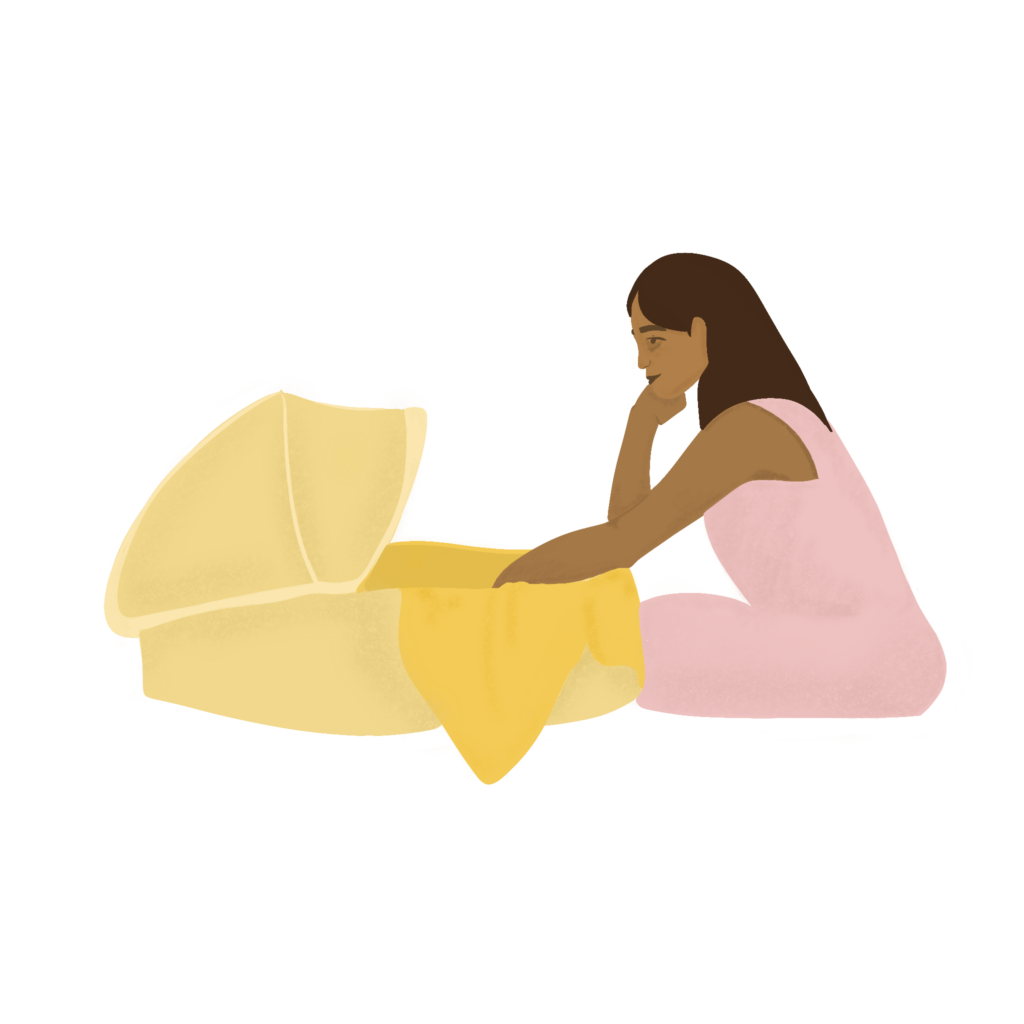
The guilt of not feeling the expected maternal happiness is central to the issue of postpartum depression and intrusive harm thoughts may appear.
They refer to the intrusive and involuntary fear of harming your baby.
For example, you might fear drowning your baby during bath time, suffocating them in their bed, dropping them from the changing table, poisoning them… These thoughts are irrational and violent, but above all extremely guilt-inducing and almost impossible to admit.
These obsessive thoughts can be traumatic and create intense suffering and acute stress for the person experiencing them.
Yet this is a common symptom and does not mean you are dangerous or that your condition is severe. No, you are not crazy. In fact, these thoughts often arise from a heightened sense of responsibility related to caring for a child. The hypervigilance that exists after birth can create anxiety that imagines terrible scenarios while actually reflecting a protective attitude.
Talk about it: often, simply being heard or hearing from other mothers who have experienced the same stress-related struggles is enough to reassure you and ease these intrusive thoughts. Intrusive harm thoughts sometimes disappear quickly once you feel confident in your ability to care for your baby. In any case, if you experience thoughts like these, talk to a healthcare professional and don’t stay alone with them.
We often talk about separation anxiety, but this condition may lead you to distance yourself from your child out of fear of harming them. You are legitimate in your role, you are doing your best, and that is already wonderful! These intrusive thoughts are not linked to a risk of abuse—don’t forget that.

After a difficult birth or an event experienced as overwhelming, it can happen that the body and mind remain “stuck” in the experience. Understanding post-traumatic stress disorder can help you put words to what you are going through and know when to seek help.
Post-traumatic stress disorders occur after a traumatic situation and involve repeatedly reliving the event through flashbacks and nightmares for example, accompanied by physical reactions related to the intense emotions experienced. They can affect personal, social, and/or professional life.
We often hear about PTSD among victims of traumatic events such as terror attacks or soldiers returning from war. However, any event experienced with intense stress and a feeling of helplessness can trigger post-traumatic stress. A very difficult birth that is far from what you imagined can absolutely be a cause, and it is not unreasonable to name what you are feeling this way.
It may help to clarify what PTSD looks like. Possible signs include:
The intensity and duration of these symptoms may be influenced by your life history—meaning possible past traumas (accidents, assaults, violence…). A complicated birth may reactivate these earlier experiences.
Fortunately, symptoms often fade a few weeks or months after the event, especially with proper support (therapy or psychotherapy) or at least strong support from loved ones.
On the other hand, when left untreated, post-traumatic stress can become chronic and may be associated with other symptoms that resemble those of postpartum depression.
In any case, if you experience thoughts about your childbirth that return regularly, if you have nightmares about it, or if you cannot talk about it without intense emotion, do not hesitate to speak with a therapist, psychiatrist, or another healthcare professional.

The diagnosis of postpartum depression must always be made by a healthcare professional. However, one screening tool is widely used: the Edinburgh Postnatal Depression Scale (EPDS), which can help you pre-assess your current emotional state.
It is a self-assessment questionnaire composed of 10 questions designed to measure emotional distress after the birth of your child.
The topics covered are divided as follows:
Each question has 4 possible answers, scored from 0 to 3. The total score can therefore reach 30.
This test has the advantage of being quick: it takes about 5 minutes to complete.
The EPDS can be completed starting in the 4th week after childbirth, but it may be offered earlier if necessary. As a preventive measure, it is recommended to repeat it every two months.
A high score suggests greater emotional distress. From 13/30, many professionals believe psychological support should be considered. It is important to remember that this questionnaire does not provide a diagnosis: if you have concerns or a worrying result, it is essential to discuss it with your midwife or doctor.
The EPDS is a useful reference point to assess your emotional well-being, but only a healthcare professional can confirm a diagnosis and propose appropriate care, particularly in the case of late-onset postpartum depression.
Since July 1, 2022, French law provides for a mandatory postnatal consultation held between the 4th and 8th week after childbirth. Usually conducted by a midwife, this discussion aims to:
A second consultation may be offered between the 10th and 14th week, particularly if risk factors are present.
The co-parent can also experience psychological difficulties during this period:
“Your mental health matters just as much, so don’t put it on hold—if only because caring for others requires you to be well yourself. Hypervigilance, intrusive harm thoughts, post-traumatic stress (for example if you feared losing your partner and/or your baby) can affect co-parents as well. If that happens, there is one thing to do: talk about it with your loved ones and with a trusted healthcare professional.
Together you must learn to accept ambivalence: moments when you feel capable of anything, and others when you feel useless… If your partner experiences doubt, doesn’t know what to do, or feels useless, remind them that it’s normal… And vice versa!
Above all, if you feel it’s becoming too much: step away from the baby after placing them safely in their bed and take a moment to breathe.”
In summary, these experiences are more common than we might imagine and say nothing about your value as a mother or your ability to love and protect your child.
Of course—and it cannot be said enough—nothing replaces a consultation with a healthcare professional you trust. But if these few lines help you recognize yourself and spark a realization, that is already a good start. The next step is taking care of yourself and your mental health by breaking your isolation.
**
Photo credits: halfpoint | AnnaStills | JuiceFlair
This text was translated from French by an artificial intelligence. The information, advice, and sources it contains comply with French standards and may therefore not apply to your situation. Make sure to complement this reading by visiting the May US/UK app and consulting the healthcare professionals who are supporting you.
Some of the links below may no longer be active. In that case, please feel free to refer directly to the relevant websites.
These resources might interest you
Hypotension at 7 Months Pregnant: Symptoms, Causes, and Solutions