



When we think about breastfeeding, we think of the breast, the bottle, or the breast pump. However, there are several types of alternative feeding containers to continue breastfeeding your newborn without immediately resorting to weaning when the “classic” options are not or are no longer suitable. Which alternative container should you choose for your infant? How do you go about it?
What are the alternatives to a bottle? Let’s take a look!
Why use alternatives to a bottle?
For reasons of their own, some mothers cannot or do not want to breastfeed at the breast. Some simply want their child to be able to be fed when they are away, while others choose an alternative container because breastfeeding at the breast does not work for them.
It may also be necessary to use alternative feeding containers when milk production is insufficient or when the baby has difficulty latching and suckling effectively at the breast.
Using alternative containers can also be due to physiological and anatomical reasons. For example, some premature babies cannot yet be put to the breast in the first weeks after delivery.
Whatever the reason, it is absolutely possible for your child to benefit from the advantages of breastfeeding (nutrients, antibodies, etc.) even if it is not possible to feed at the breast.
Want to learn more? Feel free to download the May app, where you’ll find plenty of resources to support and guide you throughout your journey as a new parent.
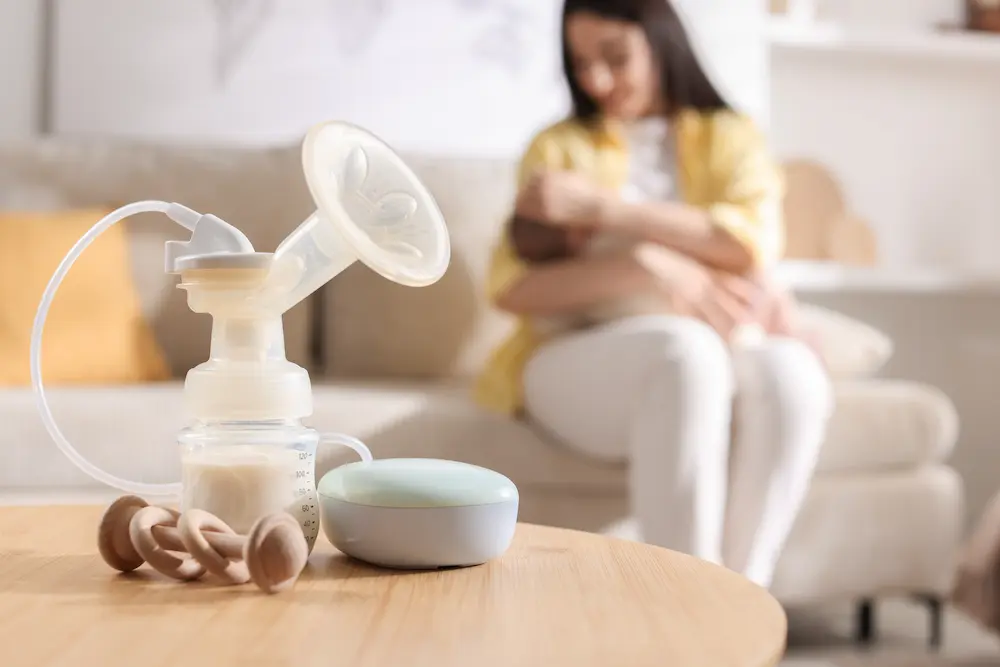
What are the alternatives to a bottle for breastfeeding?
There are different types of alternative feeding containers for breastfeeding:
- the supplemental nursing system (SNS) at the breast,
- SNS at the finger, or “finger feeding,”
- a needleless syringe,
- a spoon,
- a spoon feeder bottle or soft cup,
- a cup or small tumbler.

How do I choose the right alternatives to a bottle for my infant? How should I offer them?
Choosing the type of container for your infant can be done based on your observations and with the help of a lactation consultant. Here are a few examples of alternative containers:
Alternatives to a bottle: the supplemental nursing system (SNS) at the breast
This is a thin tube with one end placed in a bottle (often a baby bottle) filled with breast milk, and the other end positioned on your nipple while your baby nurses. Your baby will nurse at the breast while drinking the supplement through the small tube.
How should you offer it?
- Pick up your baby and get comfortable.
- Once your baby is latched, bring the small tube close and gently insert it into their mouth at the corner of their lips.
- Let your baby nurse at their own pace.
When the tube is properly positioned, you will be able to see the milk rising and you will feel a temperature change at your nipple. If not, move the tube by rolling it between your thumb and index finger until your baby draws the milk in.
The benefits: It helps stimulate milk supply because your baby nurses while also drinking the supplement. The sucking process is then activated and milk production continues. It is a way to continue breastfeeding even when the baby is not getting enough milk during feeds. This device also has the advantage of being easy to make at home at a low cost.
Alternatives to a bottle: finger feeding with an SNS
Finger feeding with an SNS involves giving your baby breast milk or formula using a very thin feeding tube while they suck on your finger. It is recommended to use it for only 1 to 2 days if your nipples are sore after a cracked nipple, or if you are not available.
How should you offer it?
- Wash your hands.
- Place your baby in a semi-upright position on your lap.
- Support them with one hand on their upper back and neck.
- Place the rounded end of the feeding tube along the side of your finger. It should not extend past your fingertip.
- Make sure the other end is fully immersed in the expressed milk (by pump or by hand expression).
- Tickle your baby’s lower lip so they open their mouth, then slide your finger along their palate. The soft pad of your finger should face up and touch the palate).
- Position your finger properly in their mouth, making sure not to go too far to avoid triggering a gag reflex or discomfort.
Your baby will eventually latch onto your finger and suck. They will manage the pace themselves.
The benefits: Finger feeding is an excellent way to prepare for breastfeeding if your child has not yet learned to latch. In addition, the sucking technique is similar to breastfeeding and helps improve your baby’s suck. It helps avoid bottle preference before breastfeeding is established. It also makes it possible to estimate the amount of milk your baby drinks.
The downsides: Feeding your baby with your little finger is not always easy, and the tube is not easy to clean.
Alternatives to a bottle: a needleless syringe
You can use it from birth. The needleless syringe is often recommended for breastfed babies who need an occasional supplemental feeding early on (in that case, always prefer offering a cow’s milk protein hydrolysate since it’s only for a few feeds and it will help avoid triggering a future allergy).
How should you offer it?
- Fill the tip of the syringe with breast milk or formula.
- Sit your baby in a semi-upright position on your lap.
- Support them with one hand on their upper back and neck.
- Place the tip of the needleless syringe in your baby’s mouth.
- Let your baby draw in the milk, or gently press the plunger to help them receive the milk while they suck.
The benefits: a syringe allows you to offer small amounts of milk without risking compromising future breastfeeding latch and suck.
The downsides: It requires inserting a plastic tip, which is less intuitive than a nipple or a little finger.
Alternatives to a bottle: the spoon
A spoon is a good alternative to a bottle or the breast.
How should you offer a spoon?
- Sit your baby on your lap in an upright position.
- Support them with one hand on their upper back and neck.
- Place a cloth under their chin.
- Offer small spoonfuls of milk by placing the tip of the spoon on their lower lip.
- Let your baby lap up the milk and swallow at their own pace.
The benefits: It allows your baby to control the speed at which they drink, which is harder with a bottle whose flow is often fast. It’s also a way to avoid compromising future breastfeeding latch and suck.
The downsides: This feeding method is often quite time-consuming and therefore requires time and availability. If the technique is not well mastered, it is easy to spill milk.
Alternatives to a bottle: the spoon feeder bottle or soft-cup
A spoon feeder bottle is perfect for breastfeeding over a short period and for helping infants who have difficulty suckling. The soft cup sits somewhere between a cup and a bottle. It is a bottle without a nipple, with a flexible spout shaped like a spoon.
The benefits: The spoon-shaped spout makes it easy to feed your breastfed infant. The amount of milk taken is controlled because you manage the flow by applying slight pressure once your baby has finished their spoonful. The milk flow is therefore well regulated, which limits the risk of spilling milk.
The downside: Soft cups are often very expensive.
Alternatives to a bottle: the cup / tumbler
A cup is a good alternative to a bottle. It can be used from birth regardless of the type of milk (breast milk or formula). Any type of cup can be used; just make sure it is open, clean, and has a smooth surface.
How should you offer it?
- Fill a cup with milk (we recommend filling it to no more than one third to better control the flow)
- Sit your baby on your lap in an upright position
- Support them with one hand on their upper back and neck
- Bring the cup to the edge of the lower lip and tilt it slowly so the milk reaches the rim, near your baby’s lips (you must not pour the milk into your baby’s mouth).
Your baby should set the pace of the sips. With cup feeding, breastfed babies may suck, sip, or lap up the milk with their tongue.
The benefits: it does not require any special equipment and helps work on your baby’s tongue extension.
The downsides: There is a risk of choking if the technique is not done correctly.
A cup can also be offered to breastfed infants who refuse the bottle (for example, when starting childcare or during weaning).
The choice of alternative container depends on the baby and the situation. One thing remains essential, however: the container must meet the baby’s need to suck so as not to disrupt them!
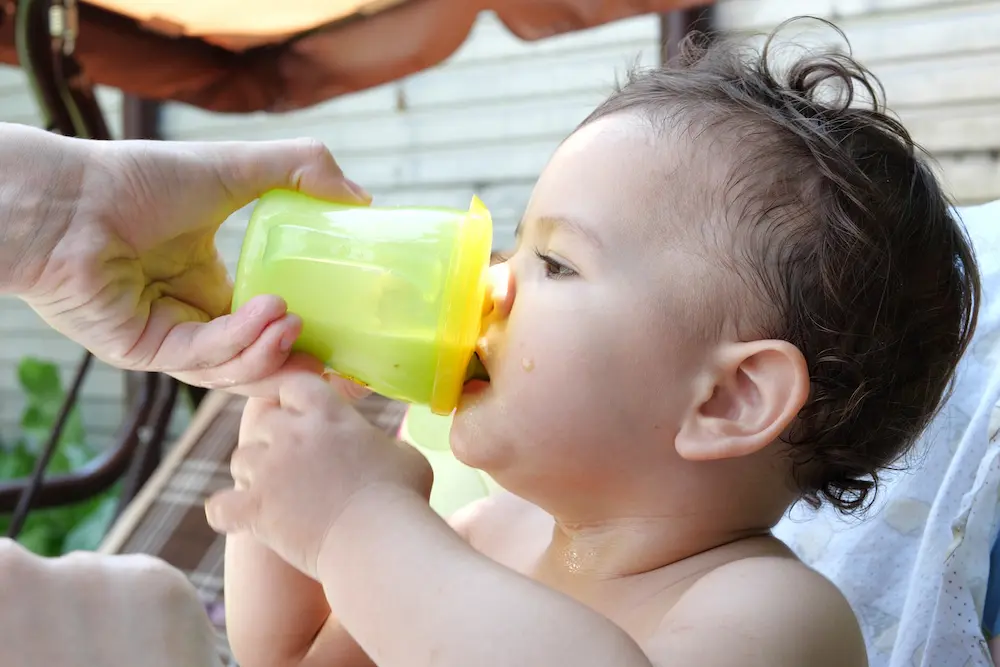
Can using alternatives to a bottle affect breastfeeding at the breast?
Breastfeeding can take different forms. It is possible to breastfeed in ways other than offering the breast or a bottle. Whatever your situation, many techniques exist to continue combination feeding or exclusive breastfeeding if you wish. On the May app, you will also find recommendations to keep stimulating your milk supply.
In summary, there are now many alternatives to bottles that make it possible to feed your baby while respecting their pace, their need to suck, and your breastfeeding plan.
Whether to deal with bottle refusal, a temporary separation, suckling difficulties, or to support gentle weaning, alternative containers offer solutions suited to many situations. Don’t hesitate to discuss it with a lactation consultant so they can guide you toward the most suitable solution for you and your baby.
**
Photo credits: africaimages | leungchopan | skana80 | snegok1967
This text was translated from French by an artificial intelligence. The information, advice, and sources it contains comply with French standards and may therefore not apply to your situation. Make sure to complement this reading by visiting the May US/UK app and consulting the healthcare professionals who are supporting you.