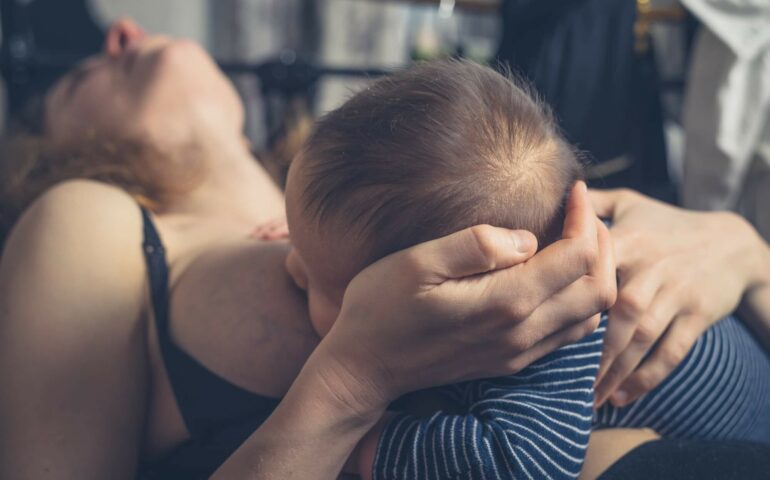



Separation anxiety, often referred to as fear of abandonment, occurs when your baby shows discomfort when you move away from them. This creates a new emotional reaction that can be difficult to understand.
How can you soothe separation anxiety and the fear of abandonment in your baby? Let’s take a closer look.
What is separation anxiety and the fear of abandonment in babies?
The fear of abandonment, or separation anxiety, was theorized by René Spitz in 1960 to explain the behavior of a baby who shows difficulties when separated from their attachment figure. Today, the terms “fear” and “anxiety” seem a bit too strong to describe this perfectly normal stage in a child’s development. Moreover, it is not a mandatory milestone, nor is it always accompanied by anxious feelings. We therefore prefer to talk about separation anxiety rather than fear of abandonment.
Throughout their development, your baby learns to find reference points in the world around them. Among these major reference points: you. You are one of their primary attachment figures.
Between 6 and 9 months, this phenomenon intensifies. Your baby can now distinguish people and realizes that at the park or daycare, there are many people they don’t know. This developmental stage may lead to new behaviors, especially during separations:
- they try to stay close to their attachment figure and may cry or scream when that person walks away,
- they suddenly become worried or defensive around unfamiliar people, whereas previously they smiled at everyone.
This is perfectly normal. It’s an important step in their emotional development and intellect. It’s a sign that your baby is growing and becoming aware of the world around them. As a parent, you can help make this developmental stage easier by ensuring they feel secure.
Not all children will react the same way: some may show great interest in new faces, while others might not show any noticeable change in behavior.
Rather than “separation anxiety,” many prefer to call this phase a “realization of separation and prioritization of attachment figures.” Most babies are not truly “anxious,” but may simply feel a bit unsettled.
Want to learn more? Feel free to download the May app, where you’ll find plenty of resources to support and guide you throughout your journey as a new parent.
At what age can a baby start experiencing separation anxiety or the fear of abandonment?
Each baby is unique, so their developmental pace will never be exactly the same as another’s. Traditionally, people associate this “fear of abandonment” with the 8-month milestone based on René Spitz’s research. Today, studies on babies’ psychological development have evolved and question the relevance of this so-called “eighth-month anxiety.”
In reality, there is no set age for your baby to experience this awareness of separation. Research suggests that babies can recognize certain faces (such as their mother’s) from birth and begin developing object permanence around 4 months, or even earlier.
Indeed, since birth, their perception of the world and the people around them continuously evolves. Between 3 and 6 months, your baby has already grown closer to you, their primary attachment figure. Between 6 and 9 months, they can identify their primary attachment figures (parents, siblings…) along with their secondary attachment figures (nannies, daycare workers, grandparents…) and strangers.
They distinguish people not based on attachment but on the situations associated with them (for example, with mom it’s baths and cuddles, with the nanny it’s stroller walks in the park…).
The more advanced your child becomes in these skills, the more likely they are to show signs of anxiety during separations or new encounters.
How can you recognize the signs of separation anxiety or the fear of abandonment in a baby?
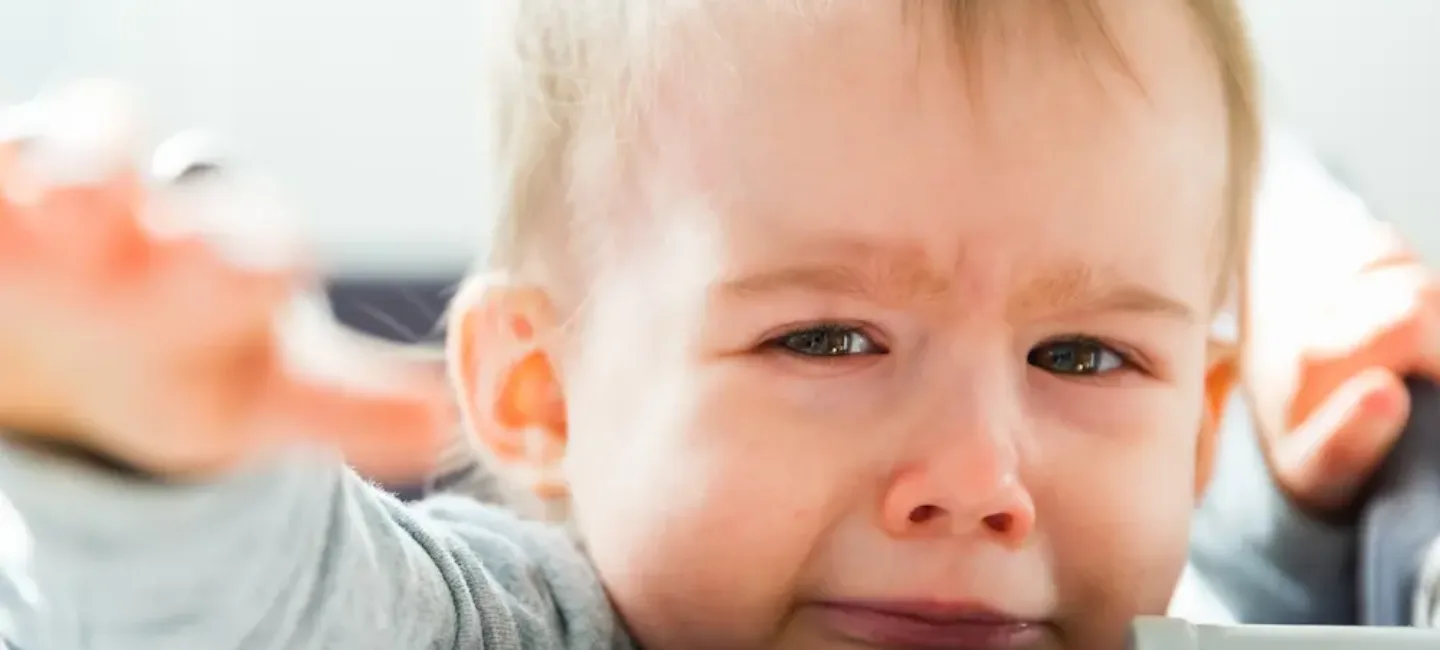
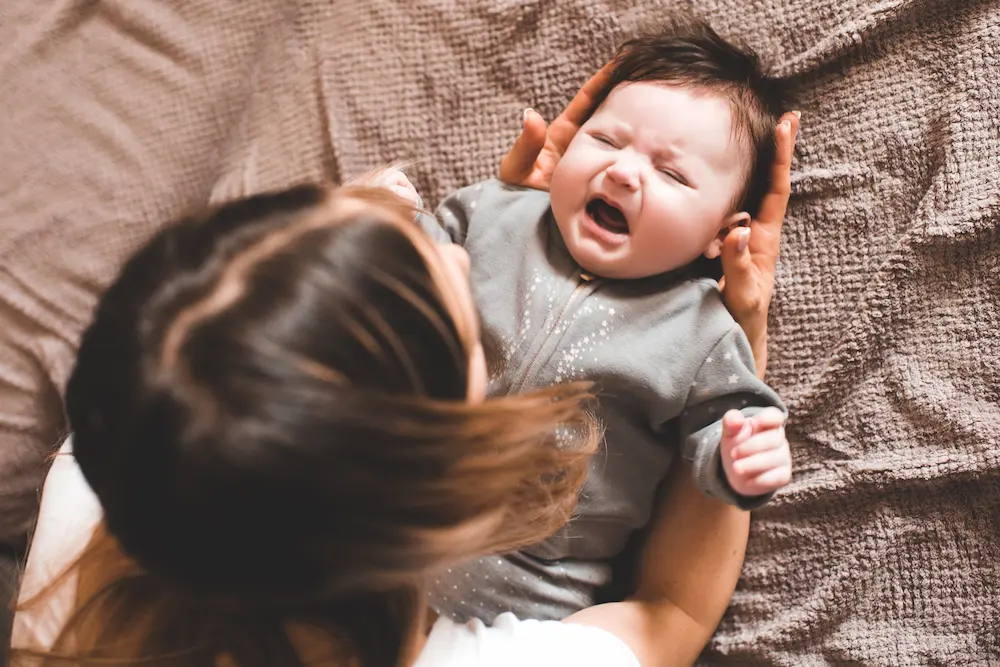
One of the most obvious signs that your baby is experiencing this “fear of abandonment” is a change in behavior when exploring a new environment, losing visual contact with parents, or meeting someone new. They may cry, scream, fidget, or become unable to focus on play…
Bedtime can also become more difficult, as it represents a moment of separation, even if your baby previously slept well: they may now cry when you leave the room after putting them to bed and may wake during the night crying and needing your presence for reassurance.
All children are different: while some may show these signs, others may go through this stage without displaying any particular worries.
What causes separation anxiety and the fear of abandonment?
As mentioned earlier, these stressful moments are due to the prioritization of attachment figures that intensifies between 6 and 9 months. Your child increasingly categorizes the faces they encounter, from those they trust most (direct circle) to those they don’t know at all. They become better at identifying strangers, which can cause stress or discomfort when none of their primary attachment figures are present.
It is also possible that your child has not fully acquired object permanence: they don’t yet understand that someone or something continues to exist even when out of sight, and therefore is not gone forever.
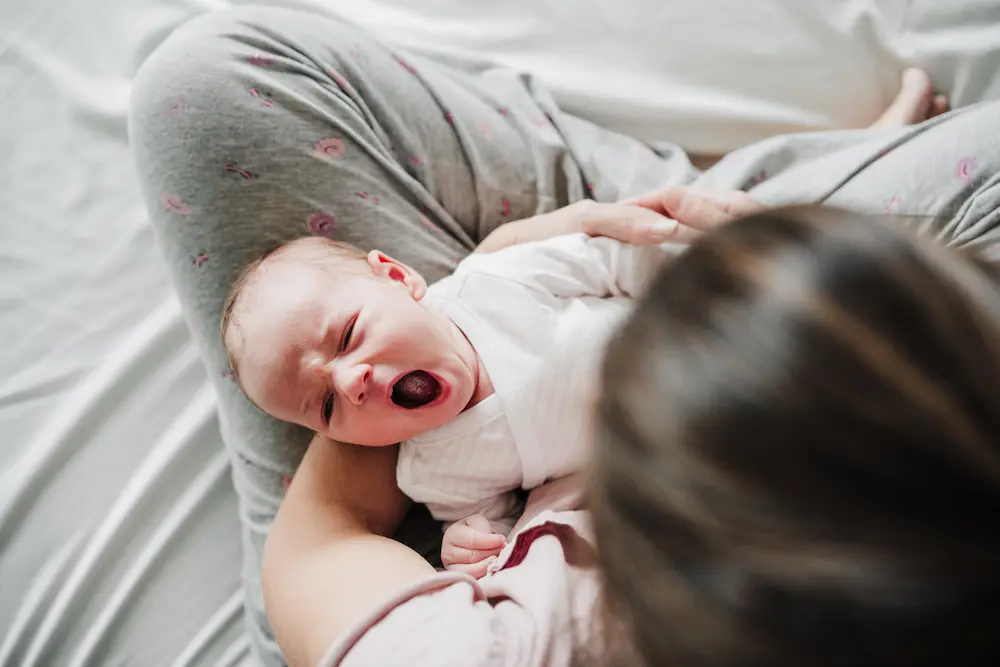
How can you soothe your child’s fear of abandonment?
The moment of separation can trigger anxiety, for both you and your child. They will gradually learn to let go and open up to others, but it may take some adjustment. To comfort and guide them during this period, here are a few tips you can apply:
- Try to maintain a confident attitude: since birth, children mimic behaviors. If they sense you are anxious, they may become anxious too.
- When someone new is taking care of your child, ask them to arrive early so they can get to know and play with your baby before you leave.
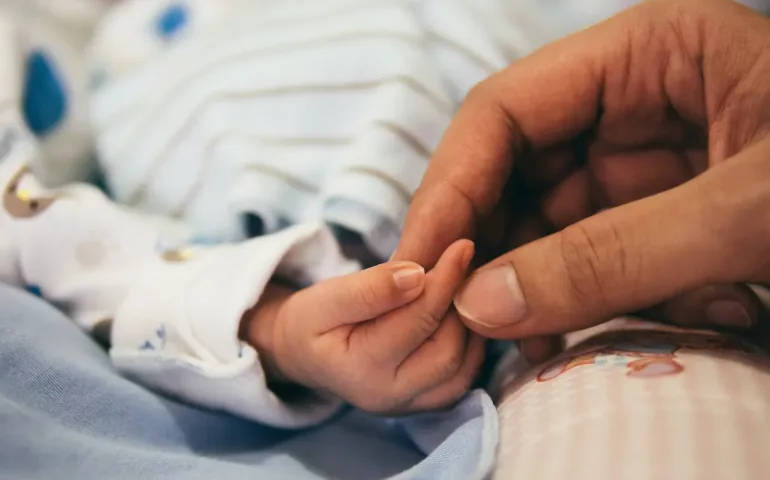
- If your baby is worried when meeting a new person, you can reassure them by holding them or taking their hand. Don’t force them to interact immediately—let them engage at their own pace.
- Help them fully understand object permanence (the idea that something continues to exist even when unseen). You can play peekaboo with an object or yourself to show that things still exist even when temporarily out of sight.
- Their comfort object (security blanket) can be a great ally: it acts as a transitional object and comforts them when needed.
- Give them something that belongs to you, so they know you will come back to retrieve it.
- Bring an item from home that they can keep during the day (a book, a toy…).
- Draw a small heart on their wrist, which they can touch when they miss you.
Separation moments are important to support! Make sure to focus on the fact that you will return rather than on the separation itself: for instance, mention that you’ll be back after snack time. You can also talk about an activity you’ll do together when you return—a walk, a story, preparing dinner, playing… This reassures them that you will come back.
Also take the time to properly say goodbye. However, it’s important to identify the right moment to leave—for example, when your child seems calm and starts an activity, it may be the perfect time. But don’t forget to show them that you’re leaving and to say goodbye.
Reunions can also be challenging: just as they got used to your absence, you return! Even if you explained you would come back, they may not immediately jump into your arms and might need to release tension accumulated during the day with you, their trusted attachment figure. Give them time! Once they seem receptive, talk about their day and yours so they understand what happens when you’re away.
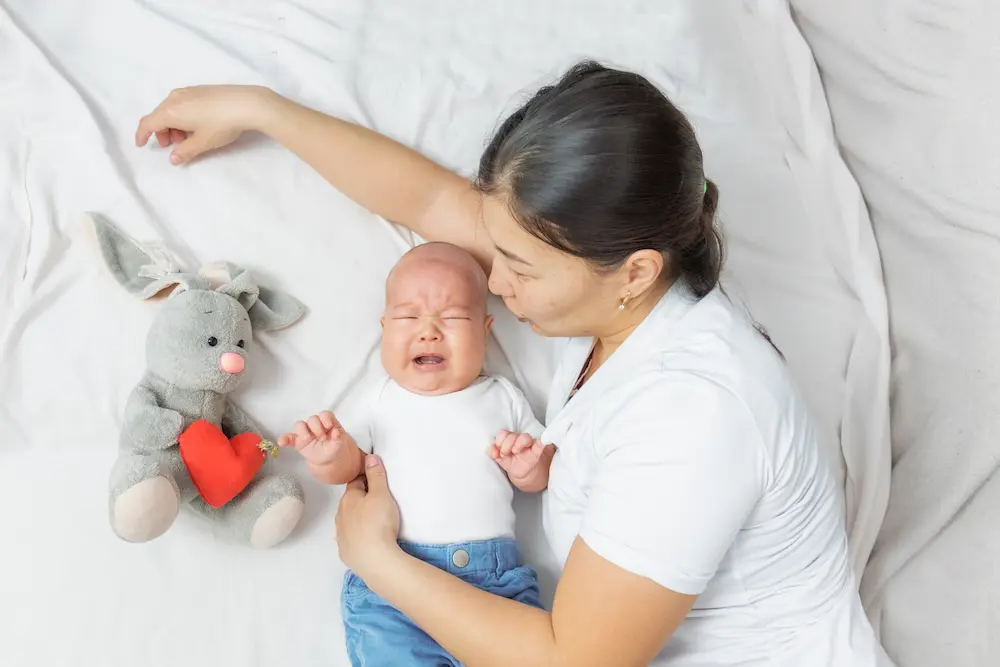
When should you consult a professional about your baby’s separation anxiety?
Once again, this “fear” of abandonment is perfectly normal: all babies go through it. It is not a disorder, simply a stage of development. Generally, providing your baby with reassurance and support is enough, and this anxiety fades on its own.
However, if you are concerned because this fear appears with high intensity or without any improvement over time, listen to your instincts and talk to a healthcare professional, such as a pediatrician, who can guide you through this period.
Depending on your child’s temperament, this adjustment phase may last longer and may be more or less intense. Although this stage is completely normal, it can be challenging for babies and parents alike—but don’t worry, you’ll get through it together as a family!
Advice from Emmanuelle Rigeade, pediatric nurse:
“A comfort object (security blanket) is essential for your child because it represents you when you’re not there and symbolizes home when your child is elsewhere. It may be a stuffed animal or any unexpected object your baby has chosen. Don’t hesitate to include this comfort object in your daily routine, take it everywhere with your baby, and make sure they can access it whenever needed.”
To conclude, separation anxiety is an integral part of your baby’s emotional development. While this stage can sometimes disrupt everyday life, it is usually temporary and gradually subsides thanks to your reassuring presence and consistent rituals.
By offering your child a predictable environment, clear separations, and warm reunions, you help them build solid inner security. And if, despite your efforts, their reactions seem unusual or persist, a professional’s guidance can provide valuable support.
**
Crédits photos : IciakPhotos | morrowlight | evablanco | omosman950
This text was translated from French by an artificial intelligence. The information, advice, and sources it contains comply with French standards and may therefore not apply to your situation. Make sure to complement this reading by visiting the May US/UK app and consulting the healthcare professionals who are supporting you.