Pregnancy Pains
–
Armpit pain during pregnancy: causes, symptoms, and solutions
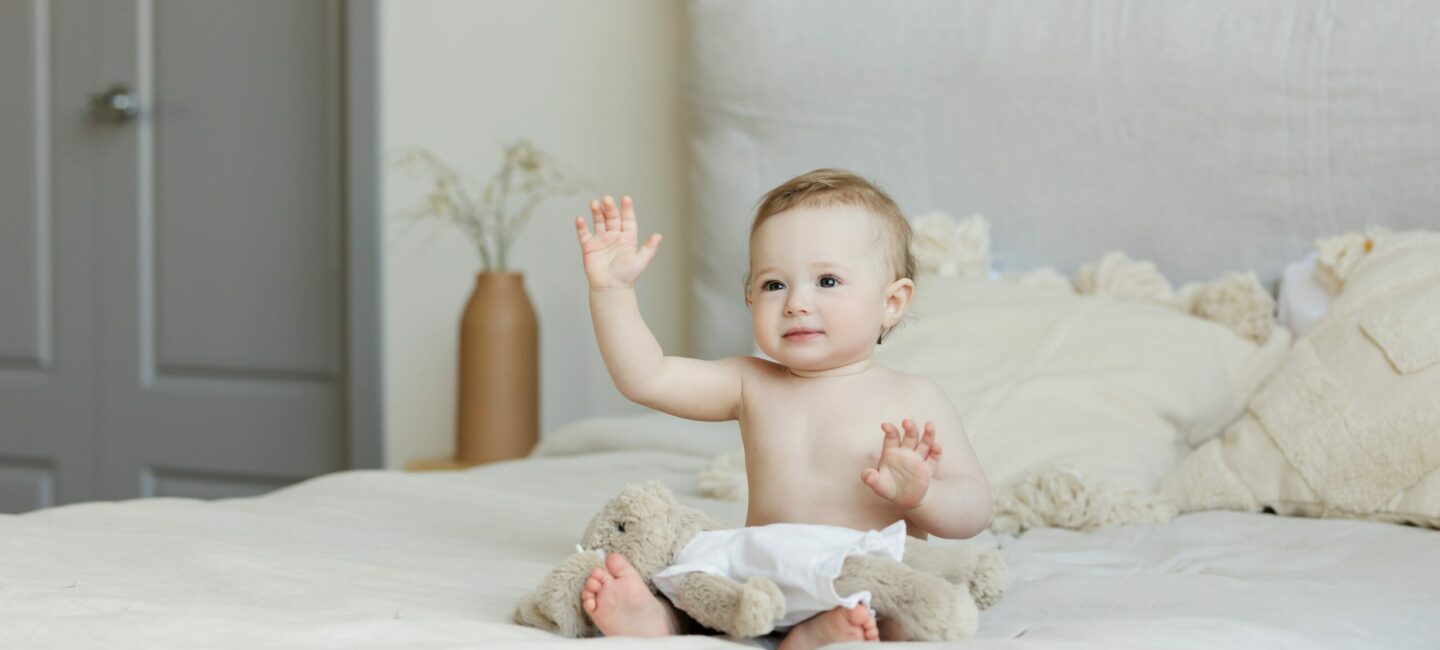
Sitting is a major milestone, eagerly awaited by parents! It’s a first step toward your child’s motor independence. Not only does it allow them to have their hands free to play, but it also gives them a wider field of vision of their environment.
When does a baby start sitting independently? Let’s take a closer look.
The sitting position is one of the major developmental milestones and plays a key role in your baby’s overall psychomotor development.
However, as with every stage of your baby’s development, there are prerequisites. As long as your baby is not able to hold their head up properly, it simply means that their spine and neck muscles are not yet ready to support an upright posture such as sitting.
Your baby must also know how to roll over (from back to tummy and tummy to back), crawl and get into the mermaid position (the beach-style sitting position). It’s the same as with language: a baby can’t start speaking without first understanding the basics of language. Your baby learns step by step, and only one thing at a time.
In general, a baby starts sitting independently between 7 and 10 months. This is only a general estimate, and it does not apply to all babies. Every child develops at their own pace when it comes to motor skills development, including their first steps.
As long as your baby is not sitting up on their own, it means their body—especially their back—is not ready yet. It’s therefore best to avoid placing them in this position.
Want to learn more? Feel free to download the May app, where you’ll find plenty of resources to support and guide you throughout your journey as a new parent.
No! Your baby is unique and, as mentioned earlier, will develop at their own pace. Some babies focus much more on observing their environment and the people around them (and therefore put motor development on the back burner), while others focus on motor activity (and may acquire language much later). All developmental stages are important, which is why it’s essential to give your baby the time they need to acquire each one.
“Every child develops at their own pace! A child cannot move on to a new stage until the previous one has been fully acquired. Don’t worry if your baby progresses faster or slower than another.”
Are you familiar with the concept of “free movement” (or autonomous movement)? It means letting your baby discover their body and abilities freely. This is known as spontaneous activity: your baby is naturally programmed to find their way toward each motor milestone.
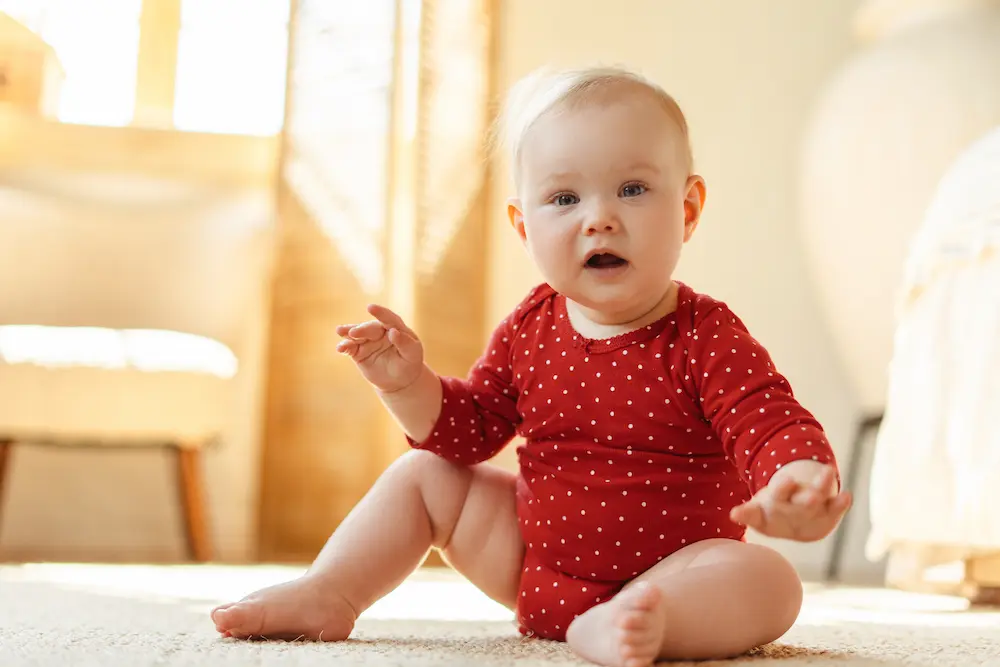
Even though the goal is to let your baby progress at their own pace, there’s nothing stopping you from observing them closely. And when it comes to sitting, there are some clear signs!
If your baby is used to crawling on all fours, they will shift their hips to one side and straighten up until they reach a sitting position.
If your baby doesn’t crawl on all fours (which is quite common), they will likely move from a semi-seated position (the “beach” position) to sitting by pushing against the floor with one hand to lift themselves onto their bottom.
As mentioned earlier, there are prerequisites for sitting. If you see that your baby can already get into the beach position, then sitting will follow soon. These motor skills are made possible by the strengthening of the spine. In order, you’ll see your baby move: from back to tummy, tummy to back, crawling, the beach position, and finally sitting.
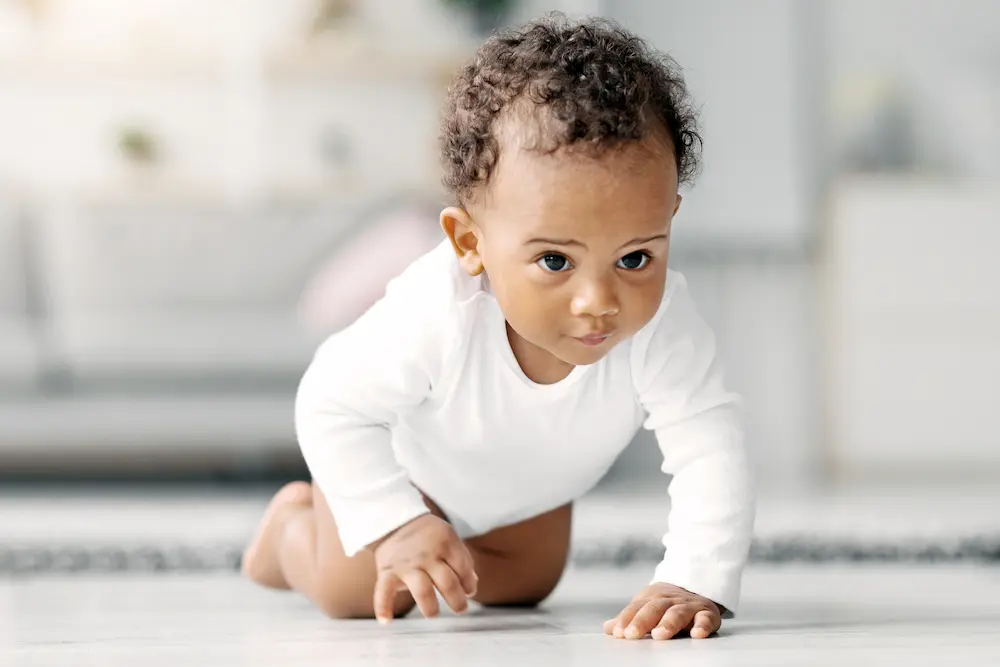
We get it—you’re excited to see your baby progress in every area, and for that, nothing beats a little encouragement. Be careful, though: encouragement is fine, but you should never push them.
For a position to be truly mastered, it’s also important for your baby to be able to get into that position on their own so they can maintain it without help afterward. If you do it for them, they won’t be able to learn how to hold the position on their own. By respecting their pace, you build their confidence while strengthening their desire to explore.
So how can you encourage your baby?
On the other hand, if you place your baby in a sitting position when they can’t get there on their own:

As you’ve probably gathered, if your baby isn’t sitting yet, it’s mainly because their back isn’t ready to support them. One of the best ways to help is, once again, to let your baby manage on their own, at their own pace. It’s by changing positions independently that their muscles will develop.
These bodily experiences also prepare future milestones such as standing.
You can still give them a little boost by making sure they’re completely comfortable exploring their motor skills. For example, you can:
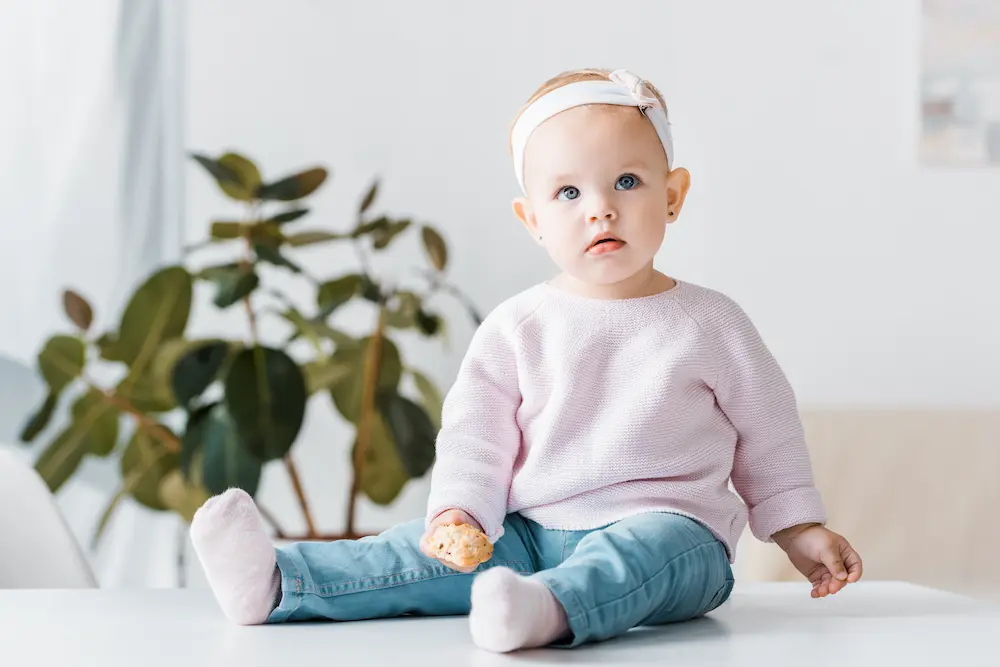
Nothing prevents you from making supports available to help your baby pull themselves up, such as a low (secured) piece of furniture, cushions, or crates. Just keep in mind that it’s up to your baby to make the effort to sit up.
Don’t try to rush things by pushing them into a position they haven’t mastered yet. They could become discouraged if they fail. Let them move at their own pace—it’s the best way to help them.
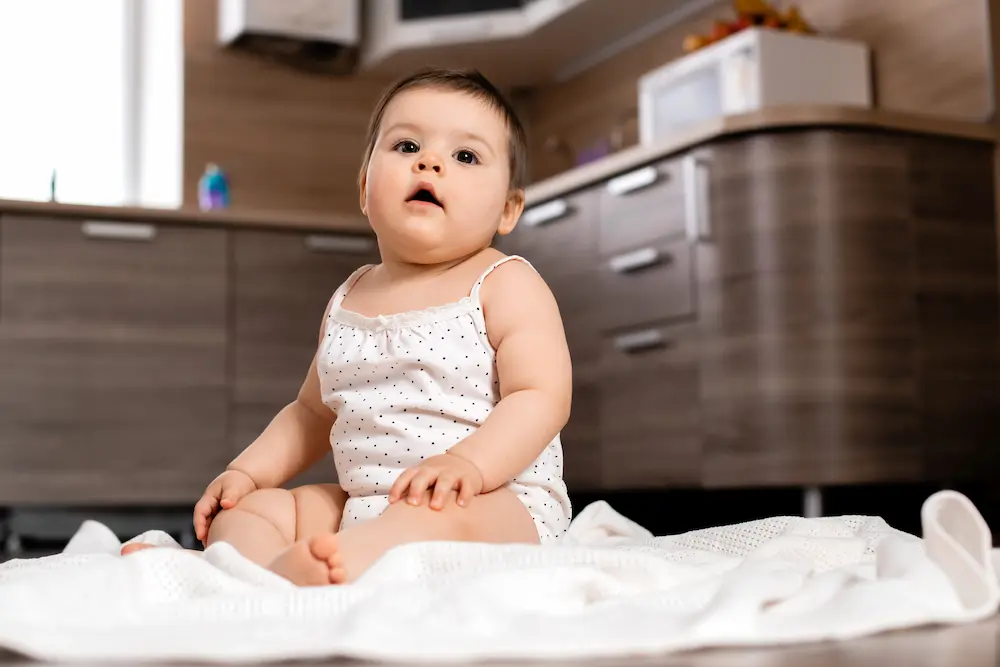
When your baby masters the sitting position, watch out for what’s around them! Once sitting is well established, your baby will be able to lean, rebalance and, most importantly, have their hands and arms completely free.
Like many babies, there’s a good chance yours will also be very curious… about pretty much everything that enters their field of vision! They’ll want to grab and manipulate anything within reach.
As since birth, the first precaution is therefore to make the environment as safe as possible and to keep an eye on what your baby touches or puts in their mouth. Special attention should be paid to electrical outlets, cabinets containing household products or medications, drawers with cutlery, sharp table corners, small objects that could be swallowed… In short, for their safety, it’s recommended not to leave any potentially dangerous objects in the room.
Once they know how to sit, your baby may start favoring the sitting position over lying down!
To help them reconnect with lying down, it will be necessary to reintroduce the play mat by staying with them, playing together, or making a few toys available. You can sometimes support them in acquiring postures (rolling, crawling, sitting…), by giving a little guidance to show the way—but without skipping steps.
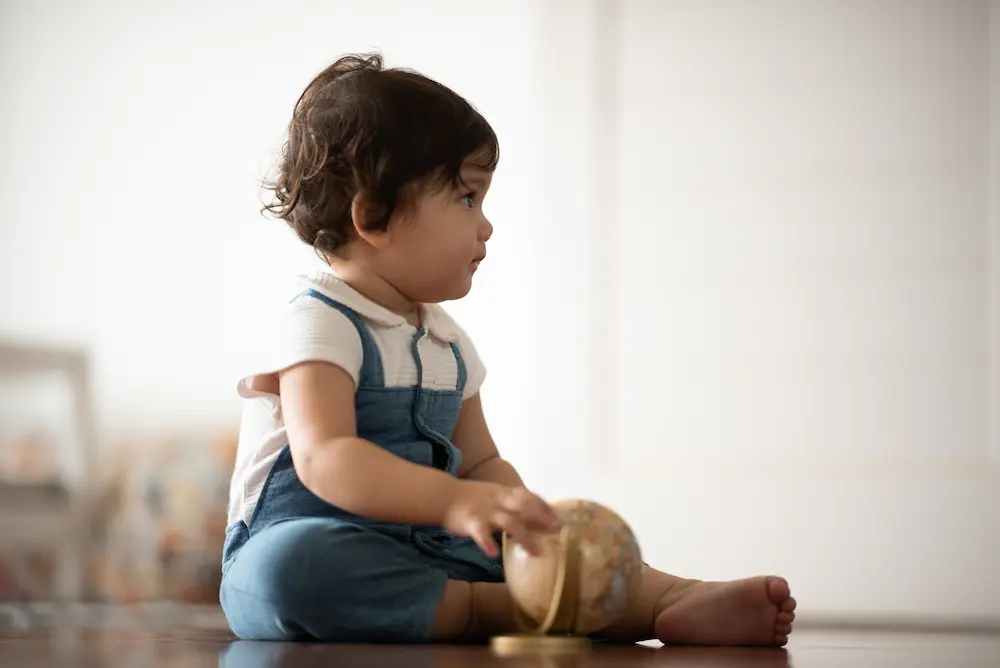
As we’ve seen, all stages of a baby’s development are interconnected. And yes, sitting will indeed become one of the prerequisites for walking!
In order to walk, your baby will also need to be able to stand on their own. By standing on their feet, they build muscle tone and the balance essential for walking. Once again, they’ll progress at their own pace.
So if your baby isn’t sitting steadily on their own, don’t try to make them stand up. Unlike crawling, the sitting position is a mandatory prerequisite for walking. Skipping a step is likely to destabilize them and won’t help their learning. They need to go through intermediate positions that will strengthen their supports and muscles.
In summary, the key to helping your baby sit is to let them do it! By praising their efforts without rushing them, you’ll soon experience this major developmental milestone together. And if you ever have concerns about their motor development, you can always mention it at the next medical check-up. Your pediatrician or healthcare professional will be able to reassure you if you have doubts about your child’s motor development pace.
**
Crédits photos : YuriArcursPeopleimages | msvyatkovska | nateemee | SakyraImageInc | LightFieldStudios | MaplesImages | ckstockphoto
This text was translated from French by an artificial intelligence. The information, advice, and sources it contains comply with French standards and may therefore not apply to your situation. Make sure to complement this reading by visiting the May US/UK app and consulting the healthcare professionals who are supporting you.
Some of the links below may no longer be active. In that case, please feel free to refer directly to the relevant websites.
These resources might interest you
Armpit pain during pregnancy: causes, symptoms, and solutions