
Pregnancy Pains
–
Armpit pain during pregnancy: causes, symptoms, and solutions
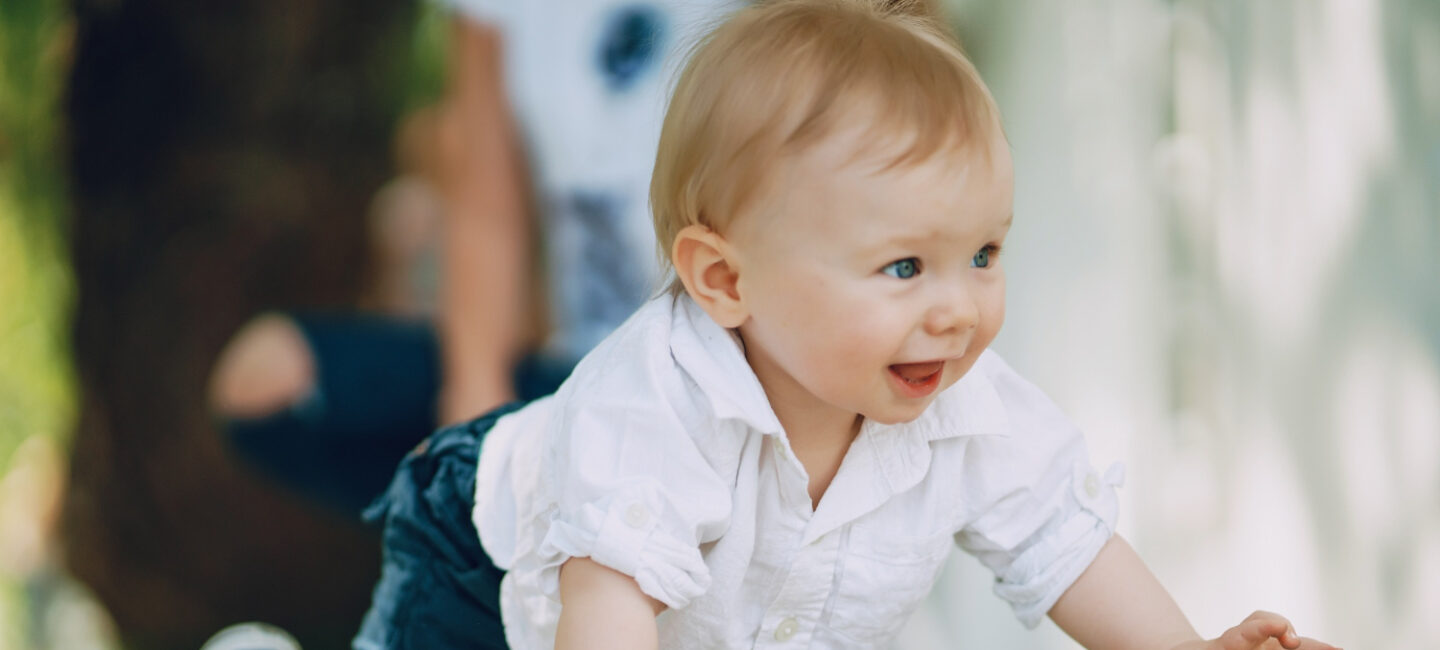
Your baby is growing, and crawling often marks the beginning of their first explorations. You’re probably wondering when they will start moving around. At what age will your baby begin to crawl? Should you encourage them? Let’s take a closer look.
When your baby crawls, they make a reptile-like movement to try to get around. Babies start crawling after going through two other key stages of psychomotor development: tummy time and rolling over. Through tummy time, babies build the muscles they will later need to crawl.
It is generally between 7 and 9 months that babies manage to fully roll from back to stomach and from stomach to back. Babies usually start crawling from around 7 months old.
Keep in mind, this is only a general age guideline, as each child develops at their own pace (and some children won’t crawl at all!).
Want to learn more? Feel free to download the May app, where you’ll find plenty of resources to support and guide you throughout your journey as a new parent.
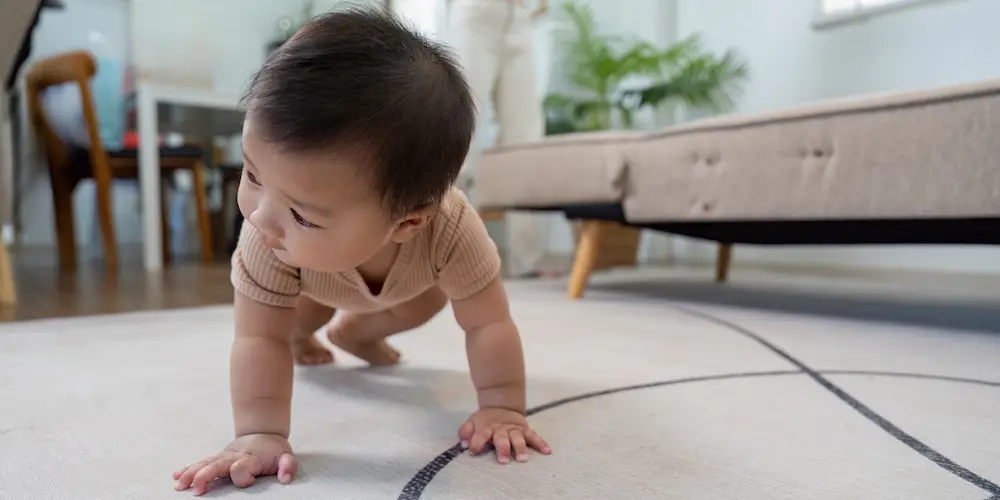
Generally, a baby is ready to crawl once they can hold their head up without difficulty and are comfortable with rolling over and tummy time. These stages strengthen the muscles in their arms, legs, and body, which are essential for crawling. They will gradually start trying to move in order to explore their environment.
They may feel a bit frustrated at not being able to go exactly where they want since they can’t walk yet, but this creeping phase can be the first step toward movement. In fact, it is one of the stages of motor development that usually comes before standing and, ultimately, walking.
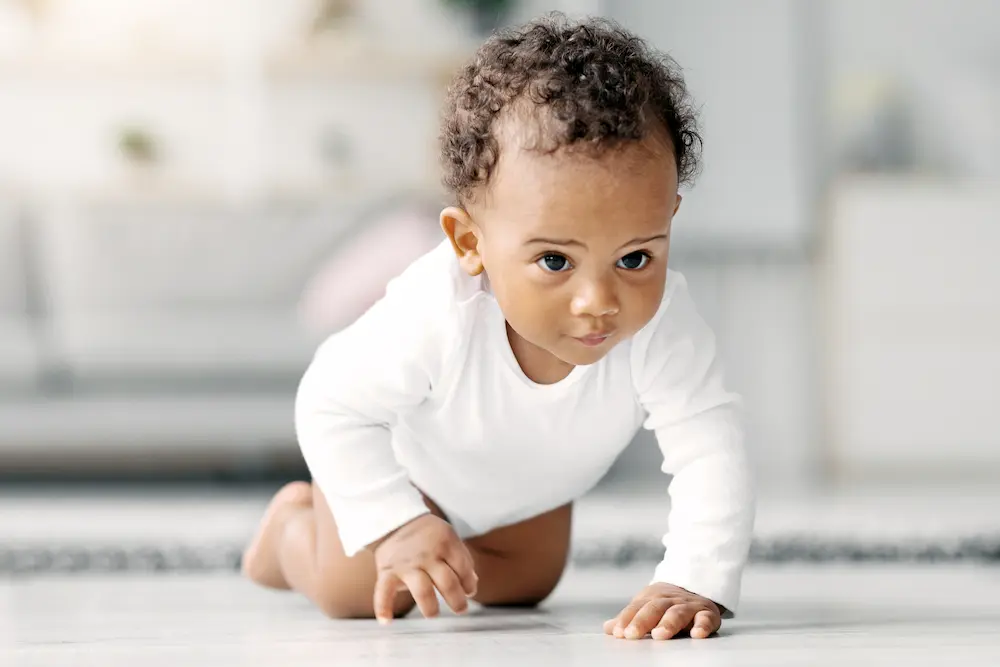
If your baby is going to crawl, they will do so when they feel ready. They cannot move on to a new stage until the previous one is fully mastered. Keep in mind that every baby develops at their own pace, and it’s perfectly fine if your baby progresses faster or slower than others.
To support their progress, you can simply encourage them to crawl. Don’t hesitate to place them on their tummy on a play mat to help them control their head and strengthen their upper body muscles. This will be very helpful for crawling and exploring their surroundings.
You can also place toys and images nearby to capture their attention and encourage them to reach for them and move toward them.
Although crawling is very useful in a baby’s motor development, like crawling on all fours, it is not an essential step for learning to walk. Some babies skip this stage, meaning they do not crawl and go straight to walking.
Your child’s development happens in successive stages. They may go through periods where progress seems to slow down, followed by faster phases during which they acquire new skills and may surprise you with their learning.
Good to know: babies sometimes adopt very unusual ways of moving, and they can be quite amusing! However, if weakness is constant, if your baby never uses one limb, or lacks tone on one side, we recommend consulting a healthcare professional.
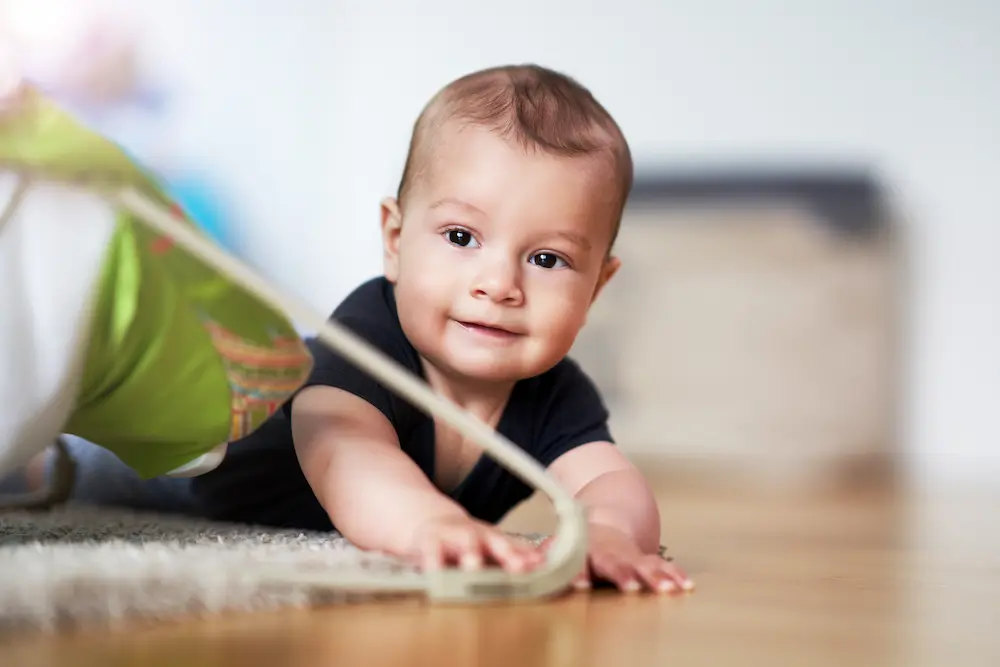
When your baby starts crawling, it marks the beginning of big explorations. They will try to move around, explore, rummage, and venture into every corner of the room.
It is therefore essential to ensure their safety so they can move and explore without danger. We recommend properly securing the space by checking that there are no small objects they could swallow, and that outlets, cabinets, or storage areas containing cleaning products or medications are out of reach. Also be careful around stairs.
At this age, they have no awareness of danger. So, in addition to a safe environment, constant supervision is necessary.
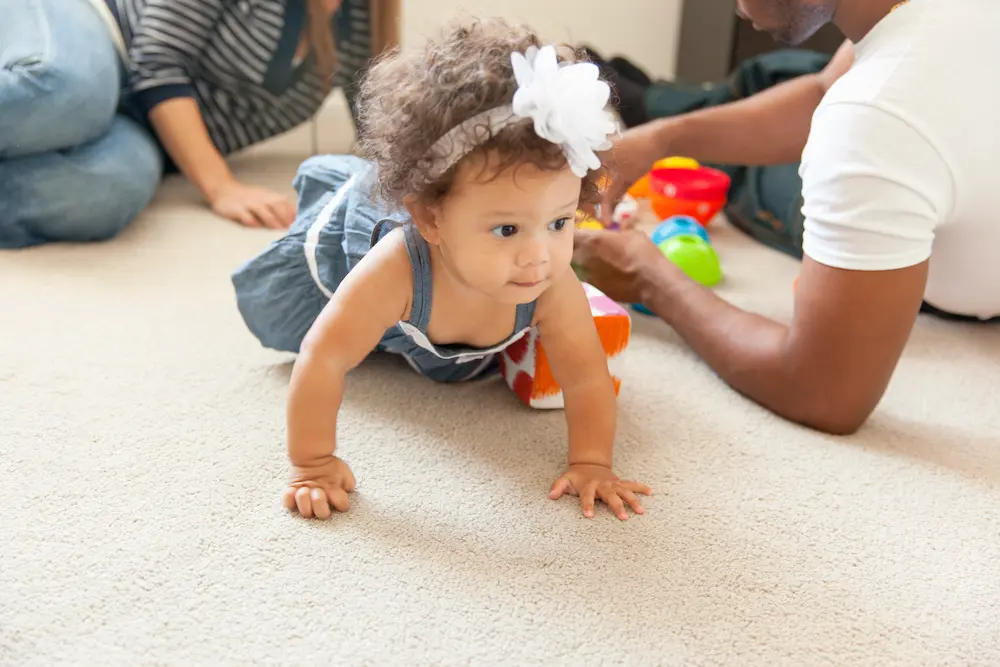
At first, the play mat is your baby’s main sensory play area. It should be comfortable and spacious enough to allow free movement while supporting fine motor skills, curiosity, and observation abilities.
Over time, your child will naturally want to explore beyond this space. It is therefore important to provide a safe, varied, and stimulating environment.
You can organize an accessible space around them with different objects stored in baskets or containers. Rotating items helps maintain their interest. For example:
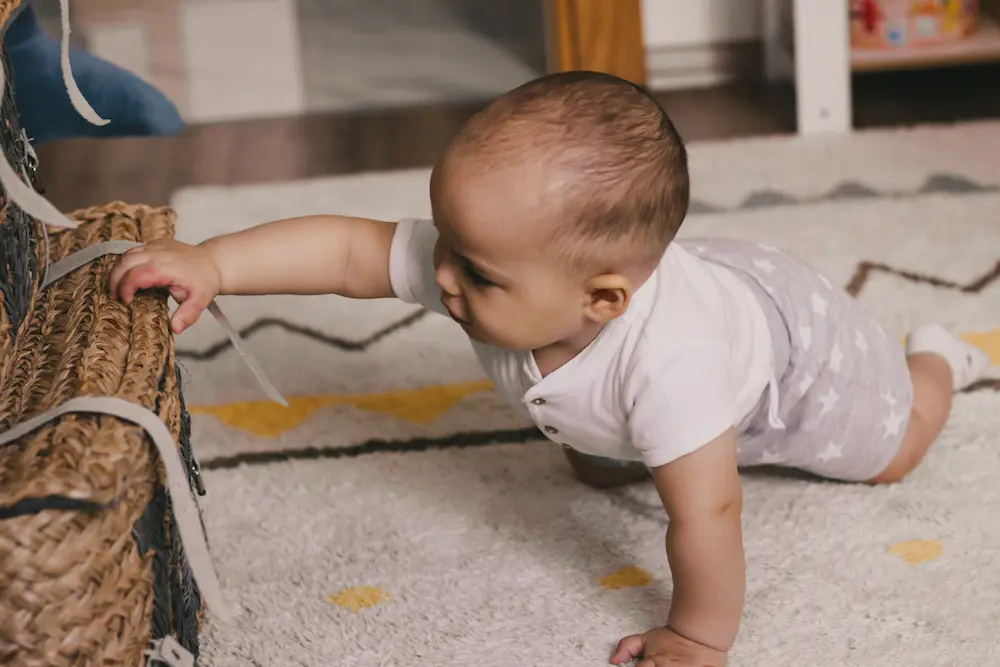
Around one year old, your baby may start moving in ways other than crawling. At this age, they can move while holding onto support and may go from one piece of furniture to another while standing. Also, between 9 and 12 months, babies may learn to move on all fours (though some babies never go through this stage!).
About one year after birth, typically between 10 and 20 months, your baby has developed all the abilities needed to take their first steps. To stand up and walk, their body and nervous system must reach a certain stage of development. Some developmental milestones, including walking, reflect the acquisition of prerequisites:
Good to know: it is not recommended to push your baby too much to walk. They do not need a training program to learn to walk. Their natural curiosity and desire to explore will gradually increase their motivation to move and lead them toward walking. It’s also best to choose soft, comfortable clothing so your baby can move freely.
In summary, crawling is a common—but not essential—stage in your baby’s motor development. While it often appears around 7 months, each child progresses at their own pace and may follow a different path toward mobility, with some even skipping this phase. The key is to provide your baby with a safe, stimulating, and appropriate environment so they can explore and develop their abilities with confidence.
**
Photo credits: nateemee | Prostock-studio | macniak | Image-Source | Yannamelissa
This text was translated from French by an artificial intelligence. The information, advice, and sources it contains comply with French standards and may therefore not apply to your situation. Make sure to complement this reading by visiting the May US/UK app and consulting the healthcare professionals who are supporting you.
Some of the links below may no longer be active. In that case, please feel free to refer directly to the relevant websites.
These resources might interest you
Armpit pain during pregnancy: causes, symptoms, and solutions