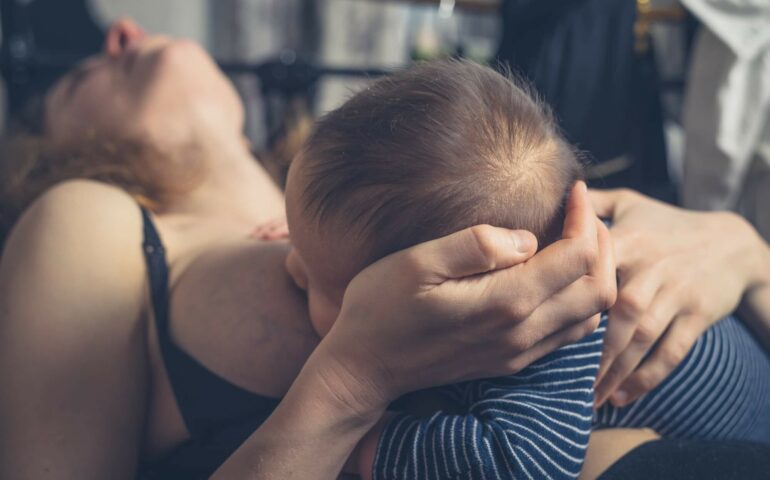



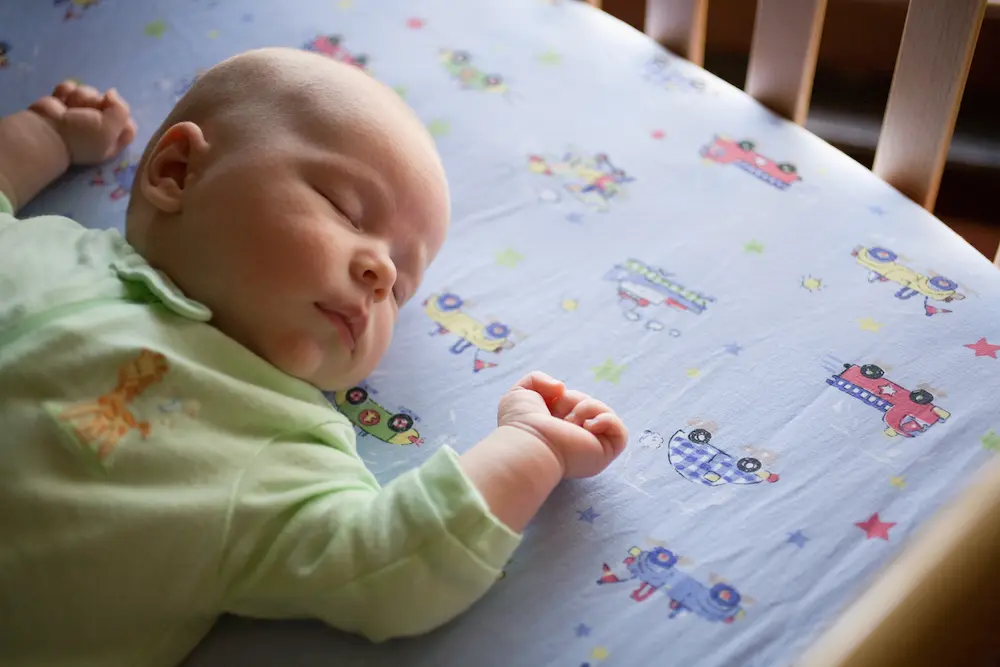
We always hear that babies should be placed on their backs in order to reduce the risk of complications related to sudden infant death syndrome (SIDS). However, for some time now, you have noticed that your 6-month-old baby sleeps on their stomach at night and during naps. What should you do in this case? From what age can your baby sleep on their stomach without it being dangerous?
My 6-month-old baby sleeps on their stomach: let’s take a closer look.
Why does my 6-month-old baby roll over and sleep on their stomach?
Rolling over is your baby’s first movement. It is natural, spontaneous, and allows them to move on their own. Once your baby masters the tummy position, they are able to look forward, discover their environment, and develop their senses differently. Babies generally feel the urge to roll from their back to their stomach around 5–6 months of age.
It is very common for a 6-month-old baby to roll over and sleep on their stomach during the night or during a nap. At this age, if they get into this position on their own, it is a sign that they are gaining independence and developing their motor skills. This may worry you because it goes against recommendations for preventing sudden infant death syndrome (SIDS), and we completely understand.
The risk of SIDS is mainly associated with inappropriate sleeping conditions that promote suffocation or cause breathing difficulties. It is therefore recommended to place your baby on their back when putting them to sleep, while taking into account the safety of their sleeping environment and their level of motor development.
Warning : after acquiring the tummy position, it is important to closely monitor your baby, especially during awake time and when they are elevated, for example on a changing table. Having reached a new stage in their development, your baby is constantly seeking discovery and exploration, which encourages them to roll and move a lot.
Want to learn more? Feel free to download the May app, where you’ll find plenty of resources to support and guide you throughout your journey as a new parent.

My 6-month-old baby sleeps on their stomach: is it dangerous?
According to the French National Authority for Health (HAS), you should always place your 6-month-old baby on their back to sleep. From 5–6 months onward, your baby may begin to roll onto their stomach on their own while sleeping. We recommend turning them back onto their back whenever possible if you see them sleeping on their stomach.
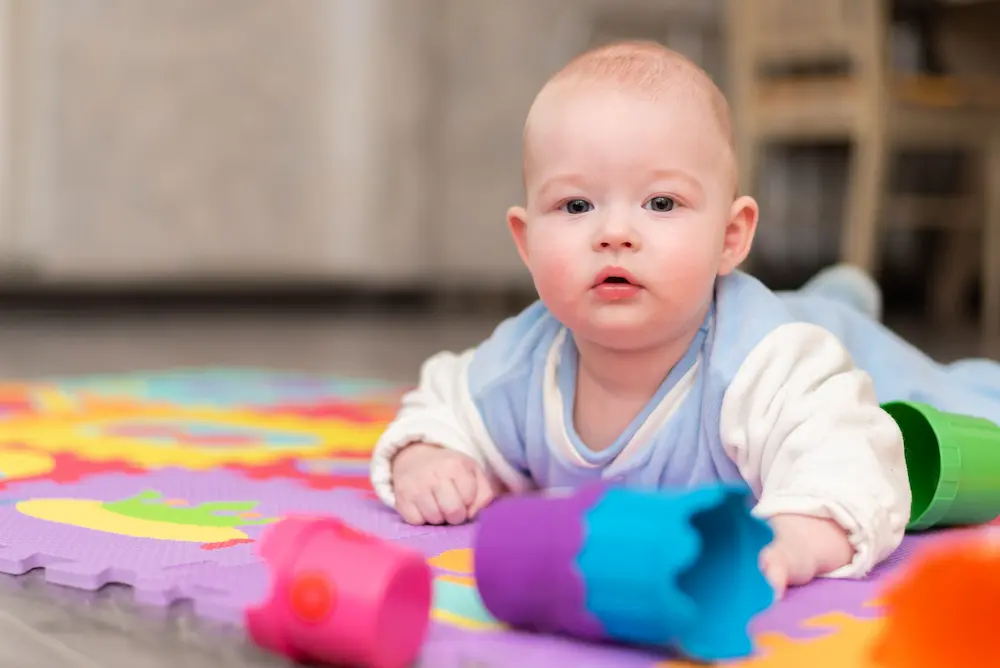
There is no specific age at which it can be said that a child can be left on their stomach without risk if they roll over in their sleep, but you can consider two key factors: first, their motor ease during the day on a play mat. If they are comfortable rolling over easily on both sides, you can be reassured that they will likely be able to do so at night as well.
Next, certain precautionary measures can help ensure that their sleeping environment is safe :
- Choose a firm, flat mattress that fits the crib and is covered with a fitted sheet.
- The crib must comply with safety standards, with properly spaced bars.
- No pillow, comforter, blanket, lovey, or stuffed toy in the sleeping area: use a sleep sack instead of blankets until age 2.
- Ideally, practice room-sharing during the infant’s first 6 months of life..
- Maintain a temperature between 64 and 68°F (18–20°C) in the baby’s room during winter.
- Do not let your baby sleep in the parents’ bed.
- Limit exposure to tobacco smoke.
All of these recommendations aim to reduce the risk of SIDS, formerly known as sudden infant death syndrome. It affects an average of 250 to 350 babies per year and generally occurs due to unsafe sleeping conditions leading to suffocation or asphyxiation. SIDS most commonly occurs between 2 and 4 months of age but can affect infants from birth to 1 year, hence the importance of taking precautions.
Do not hesitate to schedule an appointment with your pediatrician to receive advice and personalized support for establishing your baby’s sleep routines.
The age guidelines mentioned in this article are meant to provide a general idea, but of course every baby develops at their own pace. It is essential to observe your child to determine whether they are able to sleep on their stomach safely.
How can I encourage my baby to sleep on their back rather than on their stomach?
By placing your baby on their back at bedtime, there is a good chance they will remain in that position throughout the night.
The sleep sack can also be a good solution to help encourage your baby to stay in the position in which you placed them. It keeps your baby in a cozy cocoon, allowing them to remain free to move while reducing sudden movements that tend to wake them and potentially prompt them to change position during sleep.
However, this is not a miracle solution, and your baby may still roll onto their stomach while wearing their sleep sack.
Do not place your baby on their side thinking it will encourage them to sleep on their back, as this is an unstable position that makes rolling over easier and therefore leads to sleeping on the stomach.
When can I let my baby lie on their stomach?
While it is not recommended to let your baby sleep on their stomach at night during the first few months, during awake time it is strongly recommended to allow your child to lie on their stomach. This helps reduce flat head syndrome, known as plagiocephaly. This is a benign and temporary skull deformation with no impact on the baby’s health or development.
At birth, an infant’s skull is soft to allow for childbirth. During the first months of life, this flexibility makes it sensitive to prolonged pressure, which can lead to plagiocephaly when the baby remains in the same position for extended periods.
Prevention and correction of plagiocephaly rely primarily on movement. It is essential to vary your baby’s positions during awake time and therefore to regularly place them on their stomach, always under supervision.
Your 6-month-old baby may roll over and sleep on their stomach. This reflects a key milestone in their motor development and independence. However, safety recommendations remain essential. It is still advised to place your baby on their back when putting them to sleep, while accepting that they may later change position on their own.
The most important thing is to provide a perfectly safe sleeping environment. If you have any doubts, do not hesitate to discuss them with your healthcare professional·s.
**
Photo credits: YuriArcursPeopleimages | Nestea06 | MaplesImages | imagesourcecurated
This text was translated from French by an artificial intelligence. The information, advice, and sources it contains comply with French standards and may therefore not apply to your situation. Make sure to complement this reading by visiting the May US/UK app and consulting the healthcare professionals who are supporting you.