


The return of menses refers to the first period after childbirth. When do menstruation cycles resume? How long do they last? When should you be concerned?
The return of menses: let’s take stock.
When does the return of menses occur?
The return of menses is the term used for the first period that occurs after childbirth. This return marks the resumption of a cycle, but it does not mean that ovulation has not already occurred beforehand. Quite the opposite! This is why it is important to remember that even without the return of menses, ovulation—and therefore pregnancy—is possible as early as 15 days after childbirth.
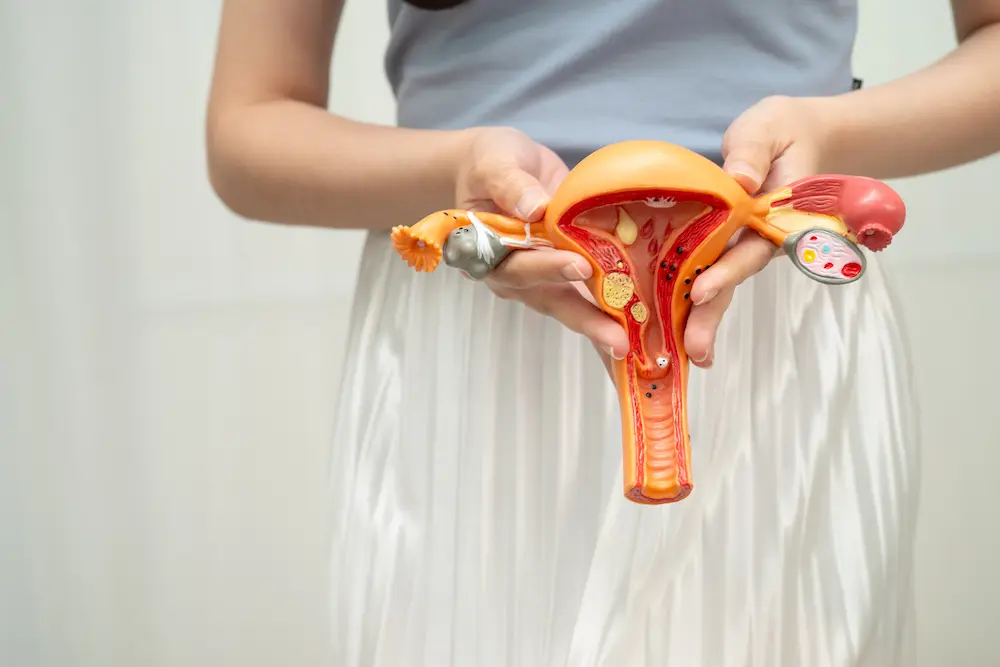
Let’s briefly review how periods work. Menstruation corresponds to bleeding that occurs 14 days after ovulation (this number can of course vary from one woman to another and even from one cycle to the next). The uterine lining thickens to welcome a potential embryo but eventually sheds when none implants.
Thus, when periods occur, it means there has been ovulation or an attempt at ovulation. The ovulation process is enabled by a hormone secreted in the brain: GnRH. This hormone alone controls all the mechanisms of ovarian activity, from puberty through menopause.
The timing of the return of periods and the duration of postpartum bleeding are not the same for all women and depend in particular on breastfeeding. In the absence of breastfeeding, the first period may return as early as the first postpartum month and up to 3 months after childbirth.
If you are breastfeeding, the return of menses may occur up to 3 months after complete cessation of breastfeeding. However, it may also happen a bit earlier without being abnormal. This later return is explained by prolactin. This hormone secreted during pregnancy and throughout breastfeeding partially blocks GnRH and therefore the menstrual cycle. However, be careful: it does not completely block ovulation, so remember that no period does not mean no ovulation. To also block ovulation, breastfeeding must be very strict (see the LAM method).
Want to learn more? Feel free to download the May app, where you’ll find plenty of resources to support and guide you throughout your pregnancy.

Return of menses: are postpartum bleeding periods?
After childbirth, blood loss that is initially bright red, then pink, then brown, and gradually less heavy flows from your uterus. This discharge is called lochia and has nothing to do with menstruation.
Bleeding begins after delivery (expulsion of the placenta) and consists of placental membrane debris, uterine lining, discharge from uterine and vaginal wounds, and blood clots that the body expels.
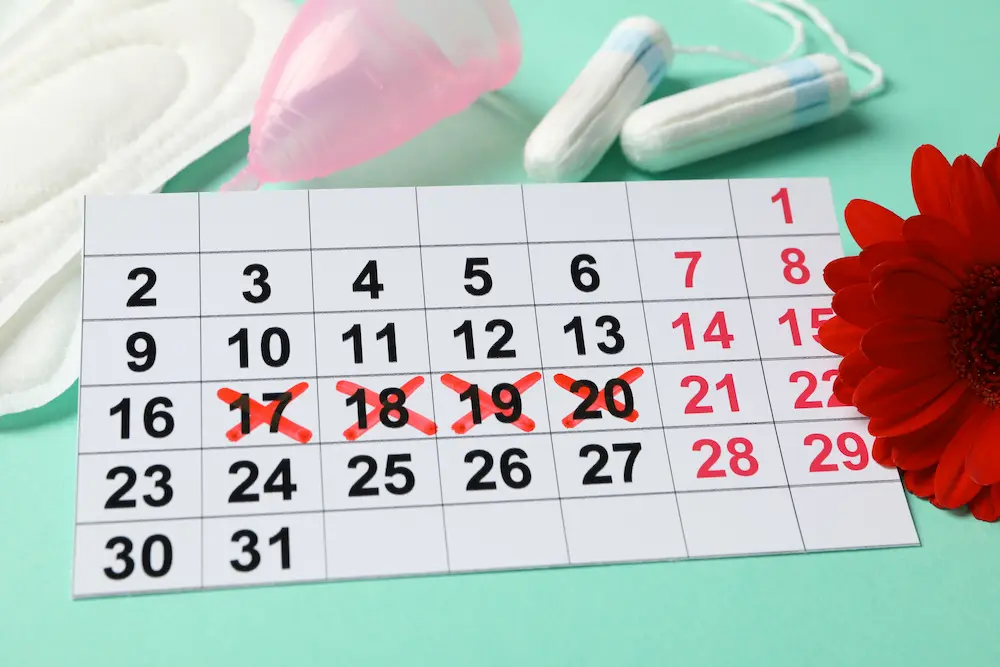
It is very heavy during the first few days and then, like periods, decreases day by day, stopping on average 2 to 3 weeks after childbirth. These lochia may persist for up to 6 weeks after childbirth without being abnormal. Thick sanitary pads are recommended during this time. However, these are not periods. By contrast, the return of menses in the postpartum period does indeed correspond to menstruation even if the regularity of your menstrual cycle may take several months to establish. Lochia may be accompanied by lower abdominal cramps, especially during the first week; however, these pains should remain tolerable.
Good to know: the mode of delivery, whether vaginal or by cesarean section, generally does not influence the timing of the return of menses.
Are periods after childbirth different from normal periods?
The return of periods can be surprising for some women because they may differ from usual. They may start with uterine contractions or light spotting for a few days before true menstrual flow begins. Very often, the return of menses is heavier than usual periods, both in volume and duration (bleeding may last around ten days).
In some women, periods are heavier or even more painful. In others, menstrual pain is much more manageable than before pregnancy.
Some women affected by endometriosis notice a change, positive or negative, in their symptoms during menstruation. In all cases, it is normal to observe a change in cycle patterns.
Postpartum contraception can also play a role in the amount of blood lost during periods. The IUD (copper IUD) often increases bleeding, whereas the progestin-only pill reduces it or may even stop periods altogether.

Is it normal not to have periods or to have irregular periods after childbirth?
The absence of periods after childbirth is possible. However, if you notice a complete absence of the return of menses more than 3 months after childbirth (or after complete weaning in the case of breastfeeding) and you have a negative pregnancy test, it is recommended to consult a midwife, gynecologist, or general practitioner to obtain a diagnosis and ensure everything is fine.
An irregular menstrual cycle is also possible during this period. Rest assured, these menstrual disturbances are not abnormal. The postpartum cycle may need time to stabilize, especially if you are breastfeeding, since prolactin production interferes with ovulation. You will therefore need to be patient and kind to yourself, as your ovaries are also recovering from pregnancy.

Can you get pregnant before periods resume after childbirth?
If sexual activity resumes soon after childbirth, you are not protected from a new pregnancy before the return of menses. Periods occur after ovulation. If the first postpartum ovulation is fertilized, there will be no menstruation and you will become pregnant. Ovulation can occur as early as 15 days after childbirth, hence the importance of using contraception if a closely spaced pregnancy is not desired.
Healthcare professionals also review your postpartum contraception during your stay in the maternity ward.
Return of menses: contraception options after childbirth
After childbirth, several contraceptive methods can be considered depending on your situation, including breastfeeding, your medical history, and personal preferences. Some can be used very early in the postpartum period, while others require a waiting period.
The progestin-only pill
The progestin-only pill is the only pill that can be used immediately after childbirth. Low-dose, it has few contraindications and is suitable for most women.
Compatible with breastfeeding, it can be started around day 21 postpartum, with full effectiveness after 7 days of use. It may cause a harmless absence of periods or, conversely, irregular bleeding called spotting. If sexual intercourse resumes before then, remember to use condoms.
The contraceptive implant
The implant is a small rod inserted under the skin of the arm during a postnatal consultation. It provides very reliable contraception (99.9%) for 3 years. Its contraindications are similar to those of the progestin-only pill. Like the pill, it may cause amenorrhea or spotting. Its effectiveness may, however, be slightly reduced in cases of overweight or obesity. In some cases, it can be inserted during the maternity stay or 21 days after childbirth.
Combined estrogen-progestin contraception
Pills, patches, or vaginal rings combining estrogen and progesterone can be used starting 6 weeks after childbirth, or even 21 days in the absence of thromboembolic risk. However, they are contraindicated in breastfeeding women during the first 6 months and have numerous medical contraindications.
The copper intrauterine device
The copper intrauterine device (IUD) is a highly effective non-hormonal contraceptive (over 99%). It can be inserted starting 4 weeks after childbirth and is compatible with breastfeeding. Periods may be heavier and more painful depending on the initial profile.
The hormonal intrauterine device
The hormonal IUD can be inserted starting 4 weeks postpartum. Unlike the copper IUD, it can lead to a significant reduction in periods, or even their disappearance. Insertion is generally better tolerated after childbirth, as the cervix is still slightly open.
Barrier methods
Diaphragms, cervical caps, and spermicides can be used starting 6 weeks after childbirth. These methods must be used with every intercourse and involve specific constraints for insertion and removal. Their effectiveness is around 80%, improved when combined with a spermicide. A consultation is essential to choose the appropriate size and learn how to use them.
Condoms
Male or female condoms are the only method that effectively protects against sexually transmitted infections. Their contraceptive effectiveness is around 80% with typical use, due to improper use. Latex male condoms are partially reimbursed with a medical prescription.
Sterilization
Sterilization is a permanent option, available starting 6 weeks after childbirth. It is irreversible and subject to a legal reflection period of 4 months between the request and the procedure.
Male sterilization
It can be performed as soon as possible, whenever desired.
Natural methods
Observation of cervical mucus, more or less combined with temperature tracking and/or examination of the cervix, can be resumed after at least 3 cycles following the return of menses. Initially, cycles are often irregular, so observation is not yet reliable, or at least should not be relied upon.
The lactational amenorrhea method (LAM)
To delay the return of menses, it is possible to use the lactational amenorrhea method (LAM), which relies on maintaining frequent and effective breastfeeding sessions. Breastfeeding thus leads to an absence of periods and serves as a natural contraceptive method. To be effective, several conditions must be met simultaneously:
- You must not have had a return of menses.
- Your baby must be exclusively breastfed, without supplements. Therefore, the baby must be under 6 months old, as the introduction of other foods during complementary feeding changes the feeding rhythm.
- Feedings must be frequent, with no interval exceeding 4 to 6 hours, both day and night, and each feeding must last at least 20 minutes.
When all these criteria are met, ovulation generally remains suppressed.
Warning: this method is obviously not 100% effective and only works during your baby’s first 6 months.
You can read our information sheet about the LAM method on the May app!
In summary, the return of menses is, once again, a story of hormones. It is a sign that your body is gradually recovering from pregnancy and childbirth and returning to its usual state.
They should not be confused with lochia, normal postpartum bleeding. Periods may be different and irregular at first, while the cycle regulates itself. Finally, ovulation—and therefore pregnancy—is possible before periods return, which is why it is important to quickly implement appropriate contraception.
**
Photo credits: GSR-PhotoStudio | chormail | Prostock-studio | sedrik2007 | AtlasComposer
This text was translated from French by an artificial intelligence. The information, advice, and sources it contains comply with French standards and may therefore not apply to your situation. Make sure to complement this reading by visiting the May US/UK app and consulting the healthcare professionals who are supporting you.